Characteristics
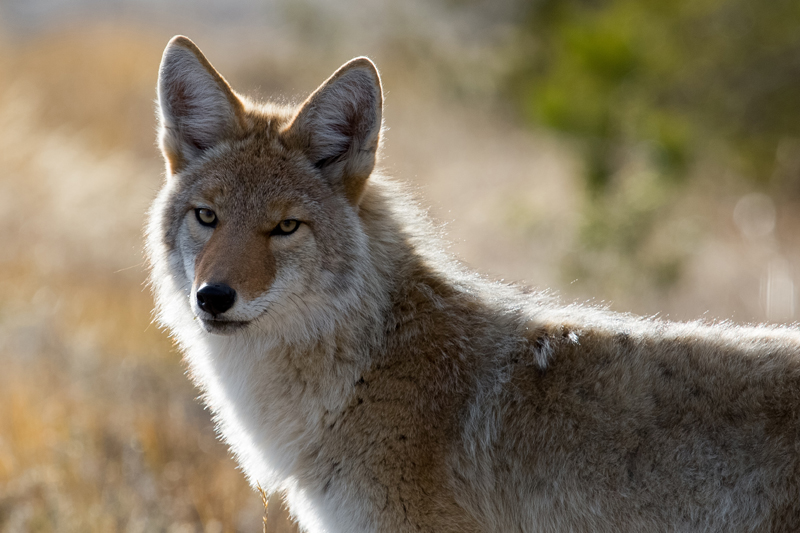
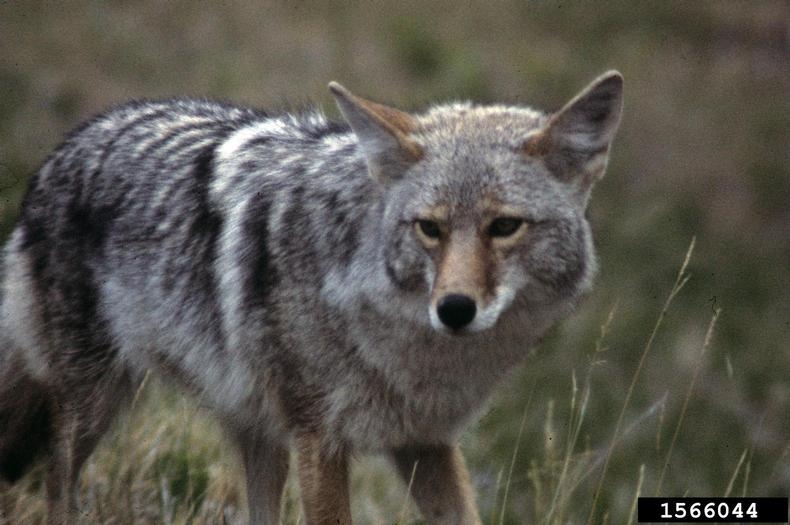
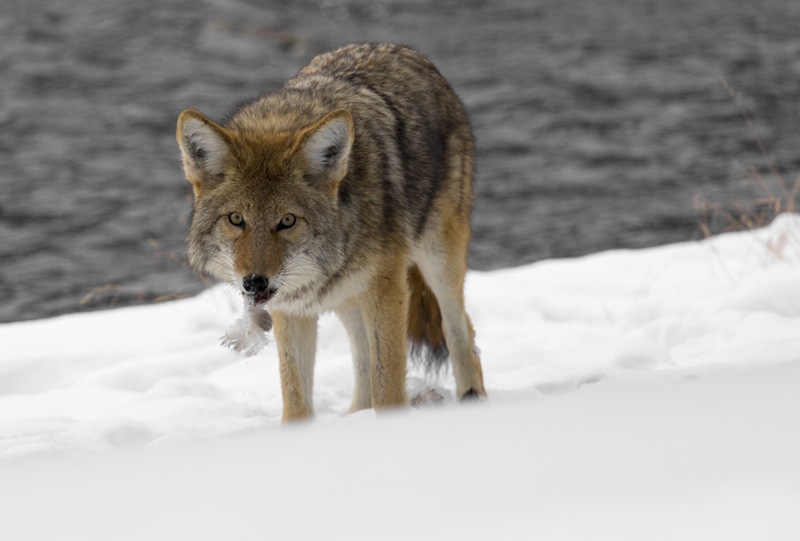
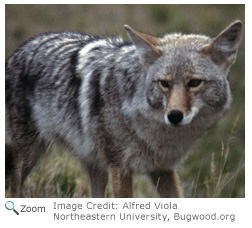 The coyote has grayish-brown to yellowish-brown fur on top and whitish fur on its underparts. It has large triangular ears on the top of its head and a long, narrow muzzle. It has a black nose; yellow eyes; and a long, bushy tail. The coyote has grayish-brown to yellowish-brown fur on top and whitish fur on its underparts. It has large triangular ears on the top of its head and a long, narrow muzzle. It has a black nose; yellow eyes; and a long, bushy tail.
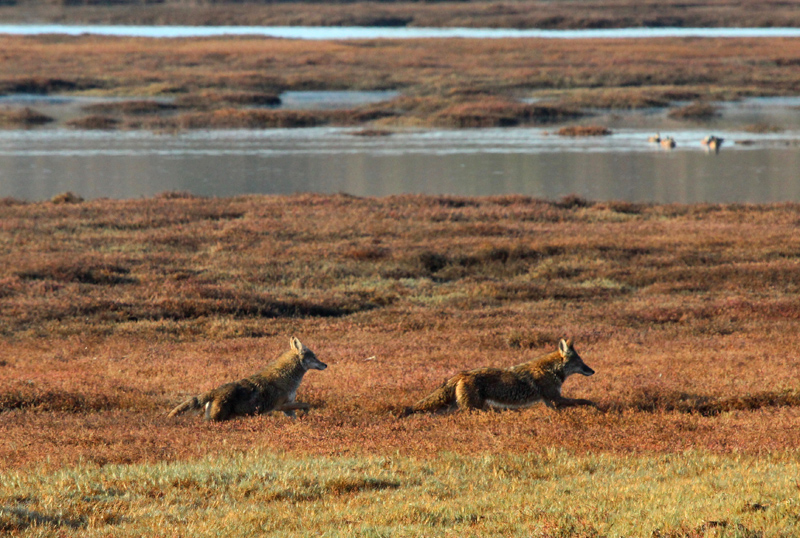
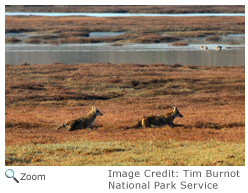 One way to tell the coyote apart from wolves and dogs is to watch its tail when it runs. The coyote runs with its tail down. Dogs run with their tails up, and wolves run with their tails straight out. One way to tell the coyote apart from wolves and dogs is to watch its tail when it runs. The coyote runs with its tail down. Dogs run with their tails up, and wolves run with their tails straight out.
Range
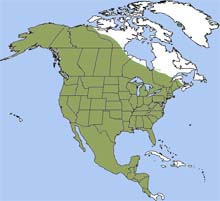 Coyotes are found in all parts of the United States, except for Hawaii. They are also found in Mexico, Central America, and most of Canada. The coyote is most likely a non-native species in New England and New Hampshire. The first report of a coyote in New Hampshire occurred in 1944 in Holderness. Since that time, the coyote population has spread throughout the state, and the coyote is found in rural, suburban, and even urban areas. Coyotes are found in all parts of the United States, except for Hawaii. They are also found in Mexico, Central America, and most of Canada. The coyote is most likely a non-native species in New England and New Hampshire. The first report of a coyote in New Hampshire occurred in 1944 in Holderness. Since that time, the coyote population has spread throughout the state, and the coyote is found in rural, suburban, and even urban areas.
Habitat
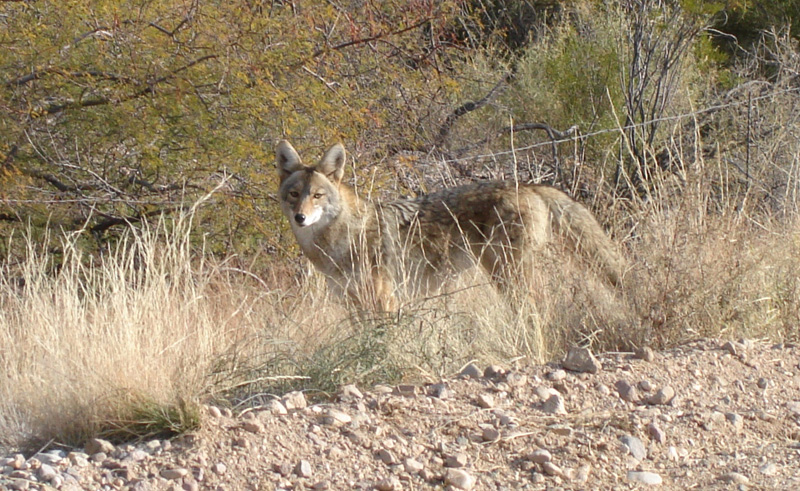
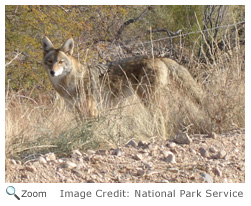 The coyote is found in a variety of habitats including fields, plains, and bushy areas. The coyote makes its den in a rocky crevice, log, cave, or the den of another animal. It usually doesn't dig its own den; it finds an abandoned den of a badger or a fox and enlarges it. The coyote is found in a variety of habitats including fields, plains, and bushy areas. The coyote makes its den in a rocky crevice, log, cave, or the den of another animal. It usually doesn't dig its own den; it finds an abandoned den of a badger or a fox and enlarges it.
Diet
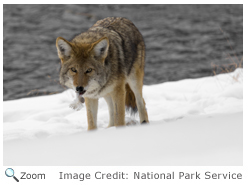 The coyote does most of its hunting alone and at night. It is primarily carnivorous. Most of its diet is made up of mammals, but it also eats birds and snakes. It prefers to eat fresh kill, but it will eat carrion. In the fall and winter, the coyote often eats fruits, vegetables, and berries. The coyote does most of its hunting alone and at night. It is primarily carnivorous. Most of its diet is made up of mammals, but it also eats birds and snakes. It prefers to eat fresh kill, but it will eat carrion. In the fall and winter, the coyote often eats fruits, vegetables, and berries.
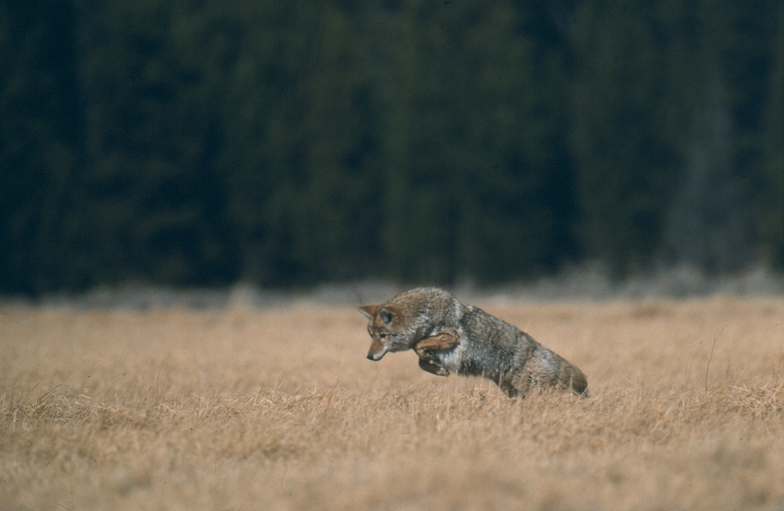
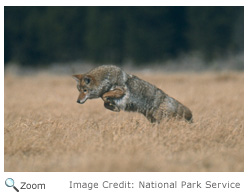 When hunting small prey like mice, the coyote stands still with its legs stiff and then pounces on its prey. When hunting larger prey like deer, coyotes hunt in packs. One or more coyote chases the deer while the others wait; then the next group will pick up the chase. Working in teams like this the coyote can tire the deer out, making it easier to kill. Coyotes also often follow badgers and catch animals that pop out of the burrow the badger is digging. When hunting small prey like mice, the coyote stands still with its legs stiff and then pounces on its prey. When hunting larger prey like deer, coyotes hunt in packs. One or more coyote chases the deer while the others wait; then the next group will pick up the chase. Working in teams like this the coyote can tire the deer out, making it easier to kill. Coyotes also often follow badgers and catch animals that pop out of the burrow the badger is digging. |
|
|
Life Cycle
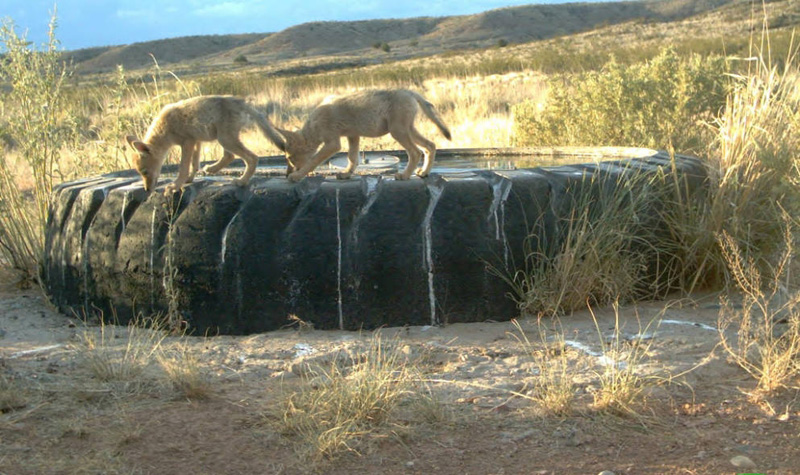
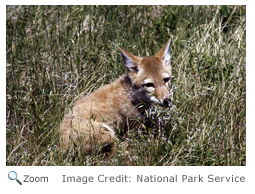 The coyote mates between February and April. The female may mate with more than one male. Two months after mating, the female gives birth to between one and nineteen pups. The average litter size is usually around six. The pups are born blind and with floppy ears. They open their eyes in about ten days. The coyote mates between February and April. The female may mate with more than one male. Two months after mating, the female gives birth to between one and nineteen pups. The average litter size is usually around six. The pups are born blind and with floppy ears. They open their eyes in about ten days.
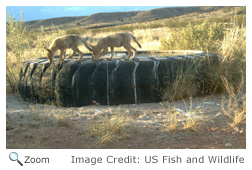 The pups begin to come out of their den when they are about three to four weeks old. They are weaned when they are about a month old. Once they are fully weaned, both parents feed the pups regurgitated food. Male pups will leave their mother when they are between six and nine months old. Female pups will stay with their mother's pack. Male and female coyotes pair off and mate together for several years. The pups begin to come out of their den when they are about three to four weeks old. They are weaned when they are about a month old. Once they are fully weaned, both parents feed the pups regurgitated food. Male pups will leave their mother when they are between six and nine months old. Female pups will stay with their mother's pack. Male and female coyotes pair off and mate together for several years.
Behavior
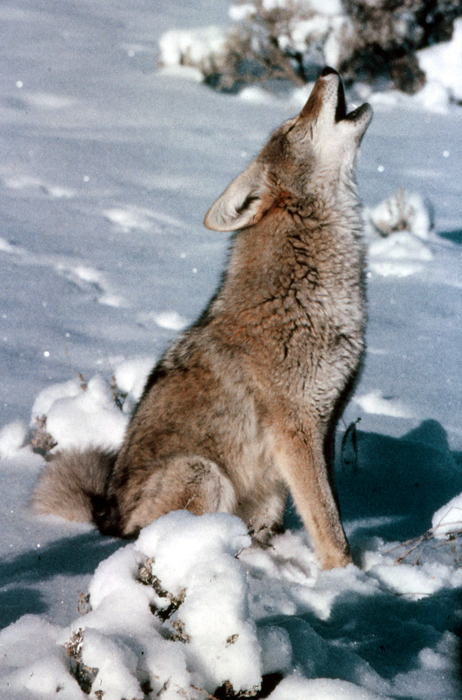
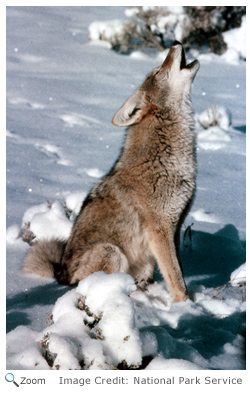 The coyote is a very vocal animal. It has a number of vocalizations including barks, growls, yips, whines and howls. It uses a long howl to let other members of the pack know where it is. It uses short barks to warn of danger. When a pack of coyotes is welcoming a member into the pack the coyotes yip. Other vocalizations include growls when establishing dominance, whining and whimpering when males and females are establishing bonds and high-pitched barks to summon puppies. The coyote is a very vocal animal. It has a number of vocalizations including barks, growls, yips, whines and howls. It uses a long howl to let other members of the pack know where it is. It uses short barks to warn of danger. When a pack of coyotes is welcoming a member into the pack the coyotes yip. Other vocalizations include growls when establishing dominance, whining and whimpering when males and females are establishing bonds and high-pitched barks to summon puppies.
Video Credit: US Fish and Wildlife
|