Description
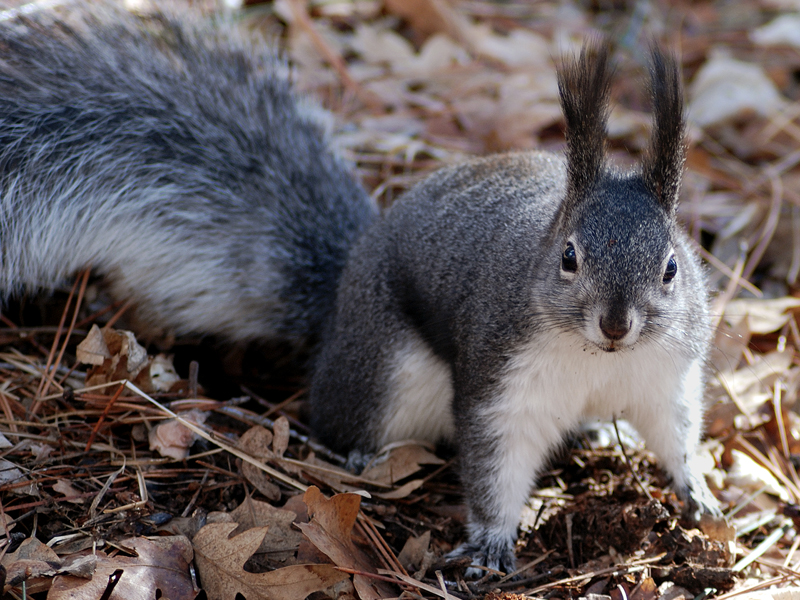
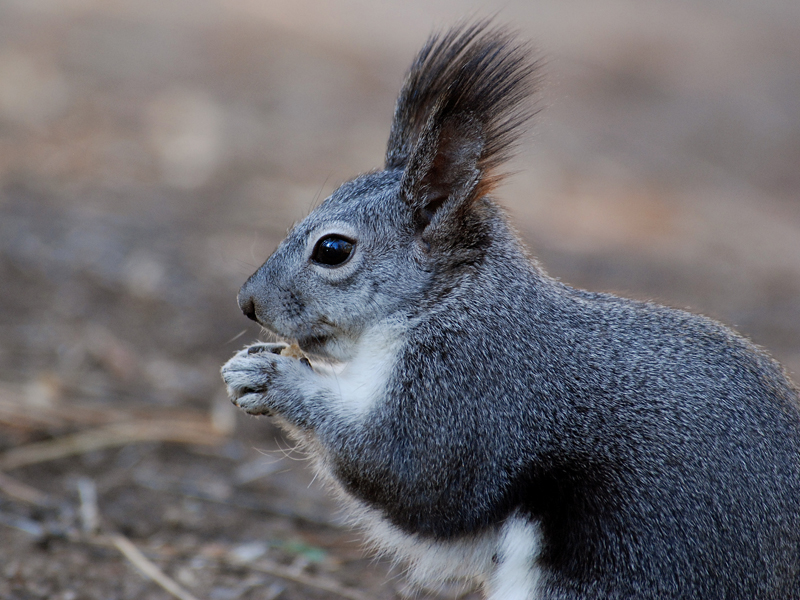
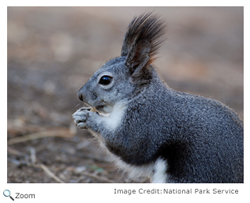
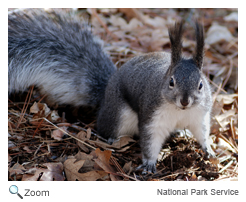 Abert's squirrel is also known as the tassel-eared squirrel. It has long tufts, or tassels, of fur on its ears. Its fur is gray on the sides, reddish on the back, and white on the belly. It has a bushy tail with white fur on the underside. In the summer, its ear tassels may be smaller, or they may disappear. Abert's squirrel has long rear paws and strong hind legs. It spends a lot of time in trees and is well-adapted for climbing and leaping from branch to branch. Abert's squirrel is also known as the tassel-eared squirrel. It has long tufts, or tassels, of fur on its ears. Its fur is gray on the sides, reddish on the back, and white on the belly. It has a bushy tail with white fur on the underside. In the summer, its ear tassels may be smaller, or they may disappear. Abert's squirrel has long rear paws and strong hind legs. It spends a lot of time in trees and is well-adapted for climbing and leaping from branch to branch.
Range
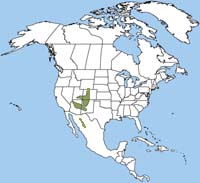 Abert's squirrel is found in the mountainous areas of New Mexico, Colorado, Utah, Arizona, and parts of Wyoming and north central Mexico. It is a non-territorial squirrel and its home range often overlaps with the home range of other squirrels. Abert's squirrel is found in the mountainous areas of New Mexico, Colorado, Utah, Arizona, and parts of Wyoming and north central Mexico. It is a non-territorial squirrel and its home range often overlaps with the home range of other squirrels.
Habitat
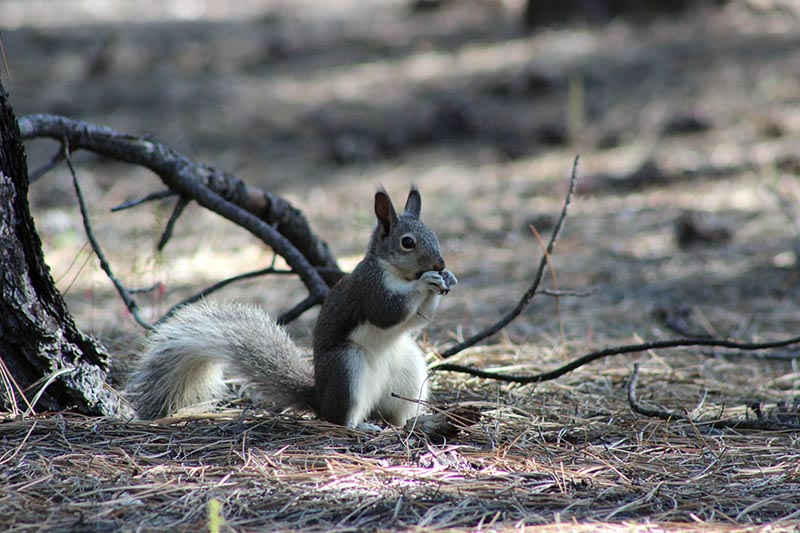
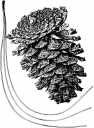 Abert's squirrels live in coniferous forests with ponderosa pine trees. Abert's squirrels live in coniferous forests with ponderosa pine trees.
|
|
Diet
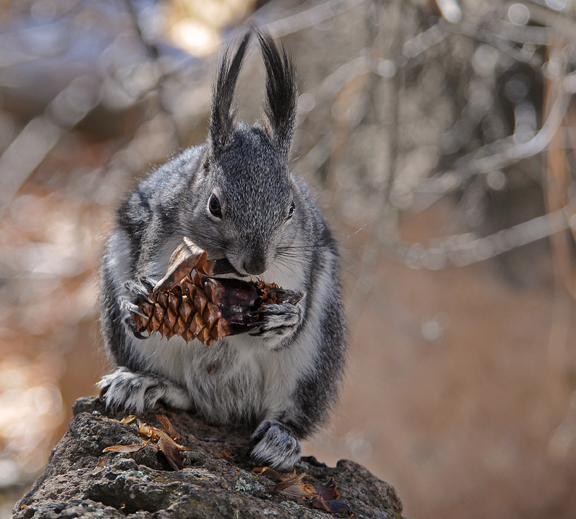
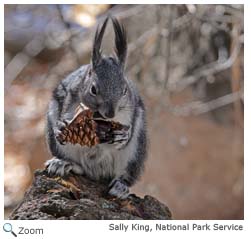 Most of the Abert's squirrel's diet is made up of parts of the ponderosa pine. In warm months, it eats the tree's seeds and buds. Abert's squirrel eats ponderosa pine seeds by holding the pinecone, turning it and eating the seeds - like you would hold and eat an ear of corn! In the winter, it eats the inner bark of the tree. It sometimes also eats mistletoe, fungi, and sap. Most of the Abert's squirrel's diet is made up of parts of the ponderosa pine. In warm months, it eats the tree's seeds and buds. Abert's squirrel eats ponderosa pine seeds by holding the pinecone, turning it and eating the seeds - like you would hold and eat an ear of corn! In the winter, it eats the inner bark of the tree. It sometimes also eats mistletoe, fungi, and sap.
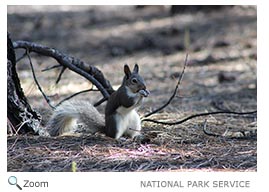 Unlike other North American squirrels, Abert's squirrel doesn't store its food. Its nest is usually built in a ponderosa pine in a group of twigs infected with mistletoe. The nest sits 20-40 feet above the ground and is made with twigs and lined with materials like grass, leaves, feathers, moss, and pieces of bark. Unlike other North American squirrels, Abert's squirrel doesn't store its food. Its nest is usually built in a ponderosa pine in a group of twigs infected with mistletoe. The nest sits 20-40 feet above the ground and is made with twigs and lined with materials like grass, leaves, feathers, moss, and pieces of bark.
Life Cycle
 Mating season can run from late February through early June. During mating season, the female is followed by small groups of males. The males chase the female through the trees for hours at a time. Males and females sometimes fight during mating season. The female usually has only one litter a year with one to five babies in each litter. The babies are born without fur and with their eyes closed. They may start to climb down to the ground when they are about seven weeks old. They are weaned after about 10 weeks. Mating season can run from late February through early June. During mating season, the female is followed by small groups of males. The males chase the female through the trees for hours at a time. Males and females sometimes fight during mating season. The female usually has only one litter a year with one to five babies in each litter. The babies are born without fur and with their eyes closed. They may start to climb down to the ground when they are about seven weeks old. They are weaned after about 10 weeks.
Behavior
Abert's squirrels are active all year long. They may stay in their nest in very cold weather, only leaving to find food. They are active in the day and sleep in their nests at night.
|