Description
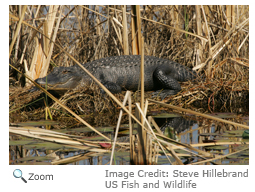 The American alligator is the largest reptile in North America. It has a long, armored body with thick scales or bony plates called osteoderms or scutes. The American alligator is the largest reptile in North America. It has a long, armored body with thick scales or bony plates called osteoderms or scutes.
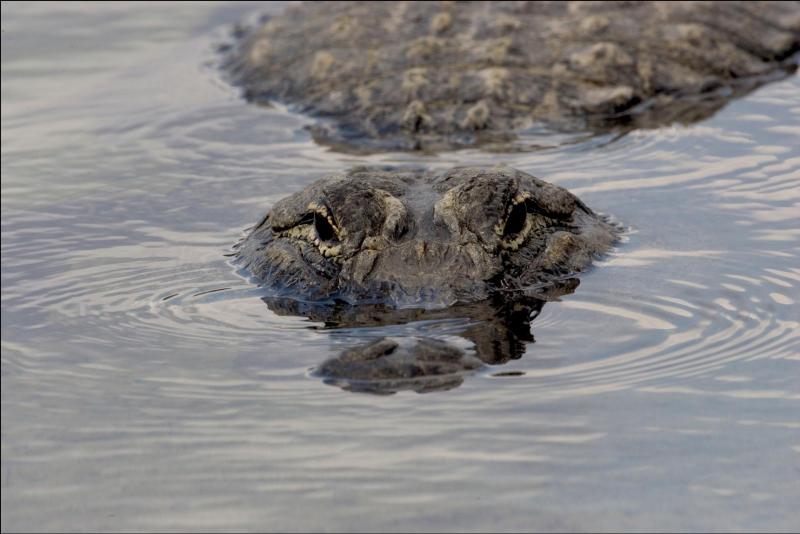
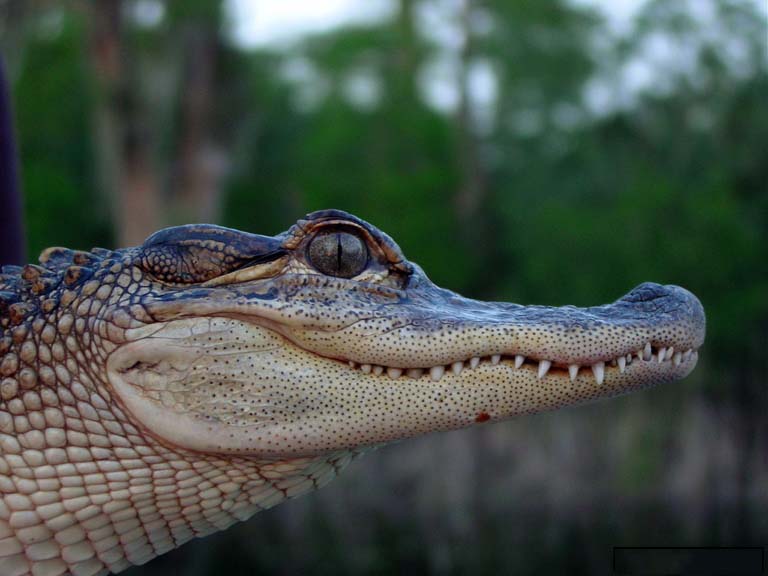
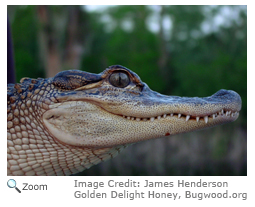
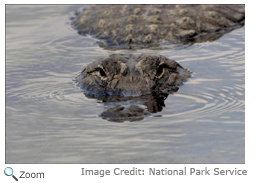 It has short, powerful legs and a long, round snout. (The American crocodile has a long, pointed snout.) Its eyes are on the top of its head. When the alligator is in the water, it can swim with just the top of its head above the water. This helps it sneak up on its prey. When the American alligator slips under the water, its nostrils and ears close up, and a membrane covers its eyes. Its long tail helps it move through the water. It has short, powerful legs and a long, round snout. (The American crocodile has a long, pointed snout.) Its eyes are on the top of its head. When the alligator is in the water, it can swim with just the top of its head above the water. This helps it sneak up on its prey. When the American alligator slips under the water, its nostrils and ears close up, and a membrane covers its eyes. Its long tail helps it move through the water.
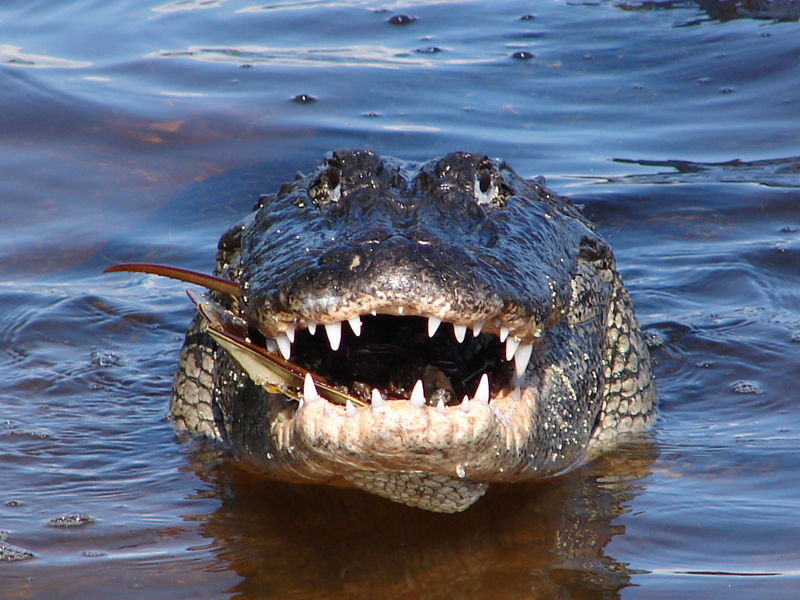
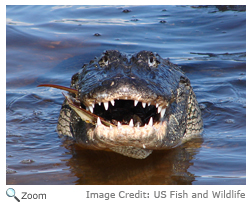 The American alligator has up to 80 teeth in its mouth at a time. When its teeth wear down, new ones grow. Over an alligator's lifetime, it may go through 2,000-3,000 teeth. Females alligators can grow to lengths of about nine feet. Males grow to lengths of 13-14 feet and can weigh up to 500 pounds. The name alligator comes from the Spanish word, el lagarto, which means lizard. The American alligator has up to 80 teeth in its mouth at a time. When its teeth wear down, new ones grow. Over an alligator's lifetime, it may go through 2,000-3,000 teeth. Females alligators can grow to lengths of about nine feet. Males grow to lengths of 13-14 feet and can weigh up to 500 pounds. The name alligator comes from the Spanish word, el lagarto, which means lizard.
Range
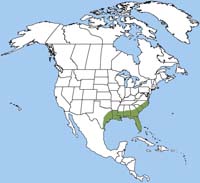 The American alligator is found in the southeastern United States from the southern Virginia border south to Florida and west along the Gulf Coast to the Rio Grande in Texas. The American alligator is found in the southeastern United States from the southern Virginia border south to Florida and west along the Gulf Coast to the Rio Grande in Texas.
Habitat
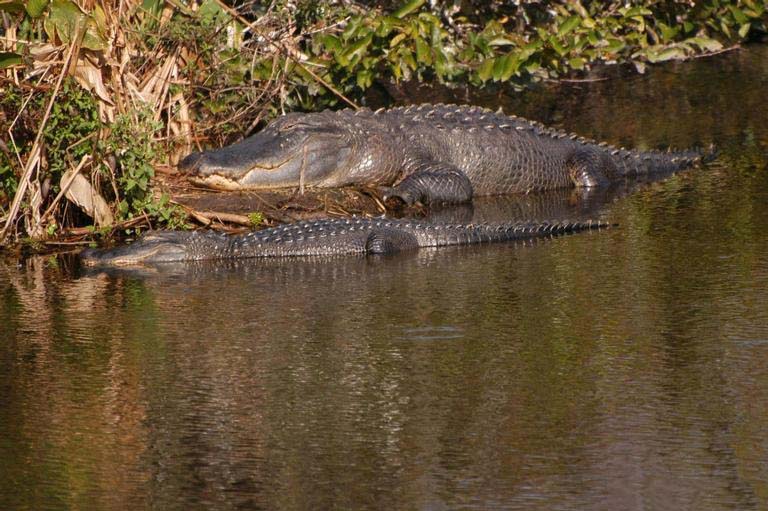
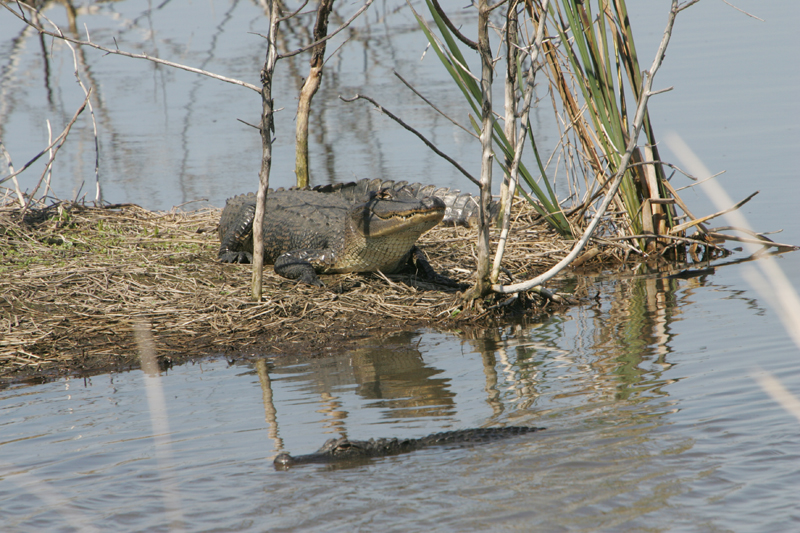
The American alligator is found in a variety of freshwater habitats including rivers, marshes, swamps and lakes
Diet
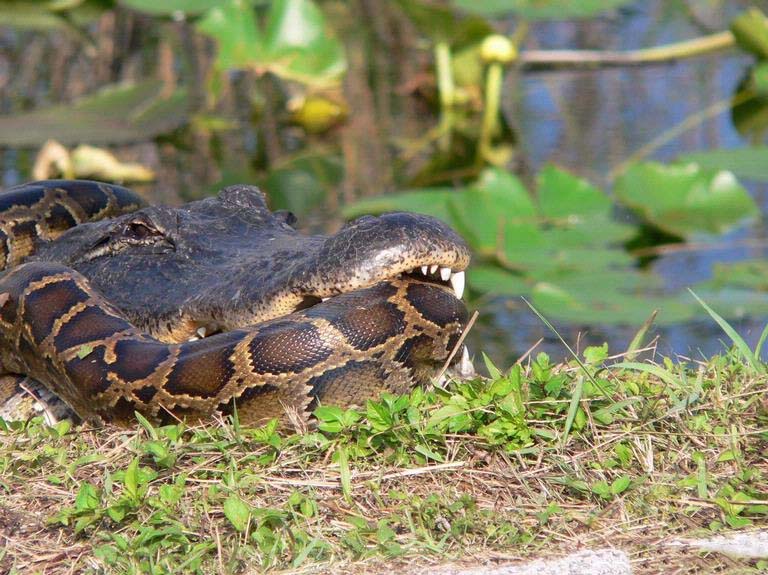
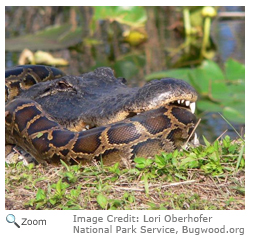 The American alligator is a carnivore. It eats fish, turtles, snakes, small mammals, and carrion. It does most of its hunting in the water. It swallows small prey whole. It drags larger prey underwater and drowns it. The American alligator is a carnivore. It eats fish, turtles, snakes, small mammals, and carrion. It does most of its hunting in the water. It swallows small prey whole. It drags larger prey underwater and drowns it. |
|
Life Cycle
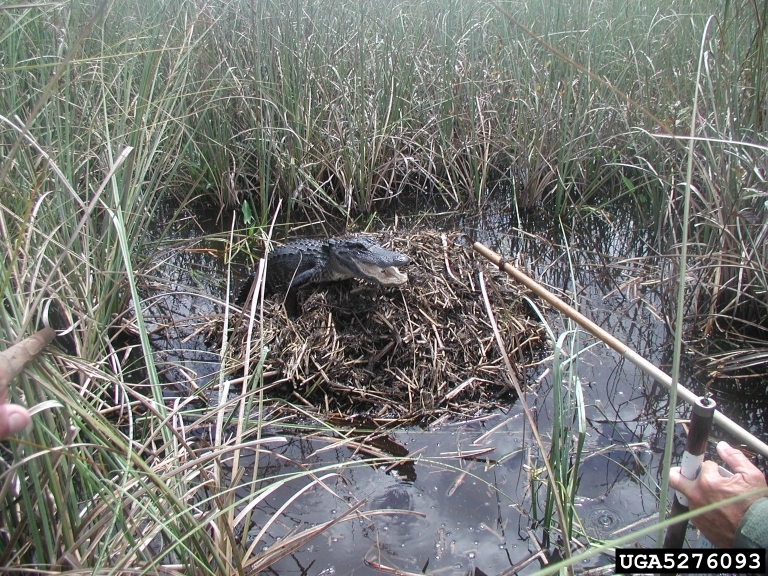
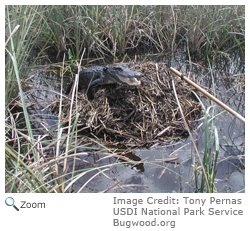 The American alligator reaches breeding age when it is about 10 years old. Mating occurs in the late spring. The male attracts a mate and warns off competition with a loud roar. When courting a female, the male butts up against her and taps her snout with his snout. After mating, the female builds a mound nest of grass and mud. The mound can be as high as three feet. She digs a depression in the top of the mound using her rear legs and lays between 35-50 eggs in the depression. She covers the eggs with vegetation and guards the nest. The American alligator reaches breeding age when it is about 10 years old. Mating occurs in the late spring. The male attracts a mate and warns off competition with a loud roar. When courting a female, the male butts up against her and taps her snout with his snout. After mating, the female builds a mound nest of grass and mud. The mound can be as high as three feet. She digs a depression in the top of the mound using her rear legs and lays between 35-50 eggs in the depression. She covers the eggs with vegetation and guards the nest.
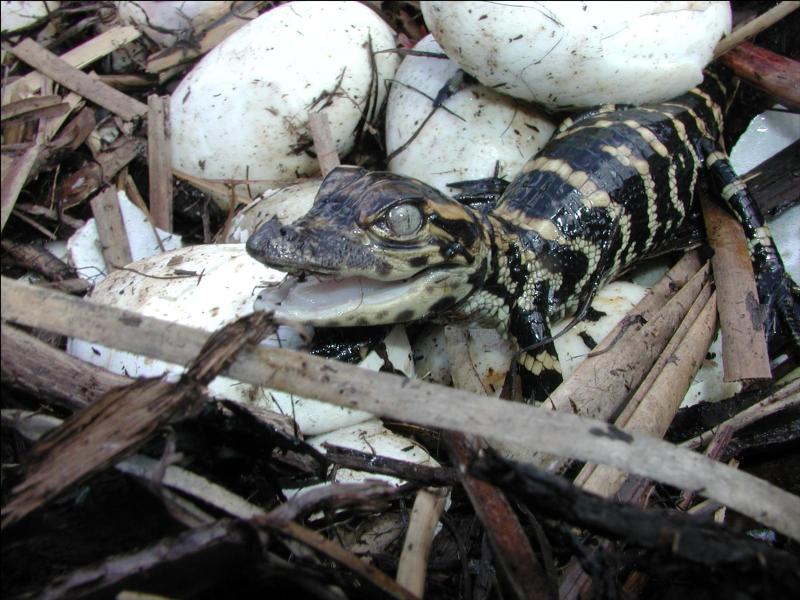
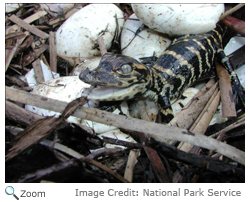 The eggs hatch in a little over a month. Right before the young begin to hatch, they start making a high-pitched squeaking or chucking sound. This lets the female know that it is time to take the vegetation off the eggs. The temperature of the nest can determine the sex of the hatchlings. If the nest is 82-86°F, the hatchlings will likely be females. If the nest is 90- 93°F, all the hatchlings will likely be male! When the nest is between 86°F and 90°F, the hatchlings will probably be both male and female. The eggs hatch in a little over a month. Right before the young begin to hatch, they start making a high-pitched squeaking or chucking sound. This lets the female know that it is time to take the vegetation off the eggs. The temperature of the nest can determine the sex of the hatchlings. If the nest is 82-86°F, the hatchlings will likely be females. If the nest is 90- 93°F, all the hatchlings will likely be male! When the nest is between 86°F and 90°F, the hatchlings will probably be both male and female.
 Once the young alligators hatch, the female carries them in her mouth or on her back down to the water. Once the young alligators are in the water, they form groups or pods. Young alligators eat
insects, shrimp, tadpoles, frogs and small fish.
The female aggressively defends her young during their first year, but young alligators are often eaten by large fish, birds, raccoons, bobcats, and even other alligators. In the wild, the American alligator can live to be
35 years old. In captivity, it can live to be 50 years old. Once the young alligators hatch, the female carries them in her mouth or on her back down to the water. Once the young alligators are in the water, they form groups or pods. Young alligators eat
insects, shrimp, tadpoles, frogs and small fish.
The female aggressively defends her young during their first year, but young alligators are often eaten by large fish, birds, raccoons, bobcats, and even other alligators. In the wild, the American alligator can live to be
35 years old. In captivity, it can live to be 50 years old.
Behavior
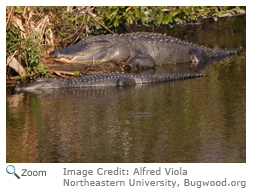 During very cold and very hot weather, the American alligator may dig a den or gator hole in the mud. Gator holes often fill with water and provide habitats for fish and watering holes for birds and other animals. The American alligator doesn't hibernate, but during very cold weather it may become dormant. During very cold and very hot weather, the American alligator may dig a den or gator hole in the mud. Gator holes often fill with water and provide habitats for fish and watering holes for birds and other animals. The American alligator doesn't hibernate, but during very cold weather it may become dormant.
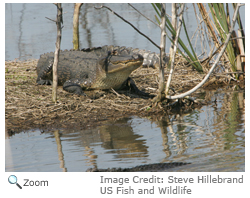 The American alligator was once hunted for its meat and skin. Its population once had decreased so dramatically that it was listed as an endangered species. Today, its population has increased, and it is listed as a threatened species. It is listed as threatened, not because its numbers are dangerously low, but because it looks so much like the American crocodile, which is an endangered species. The American alligator was once hunted for its meat and skin. Its population once had decreased so dramatically that it was listed as an endangered species. Today, its population has increased, and it is listed as a threatened species. It is listed as threatened, not because its numbers are dangerously low, but because it looks so much like the American crocodile, which is an endangered species.
|