
American Avocet - Recurvirostra americana |
|||||||||||
Description
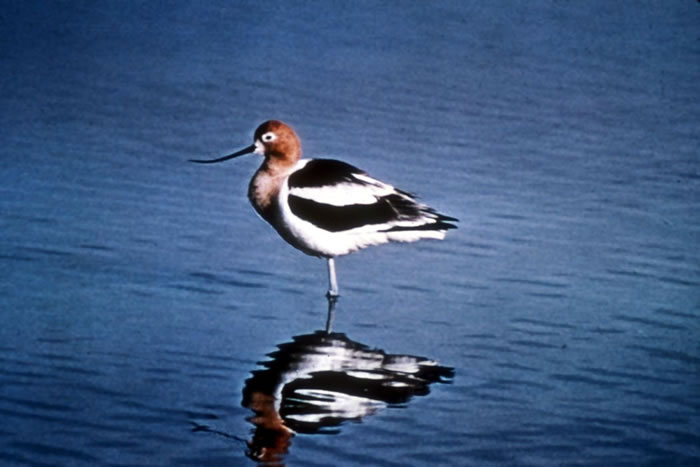
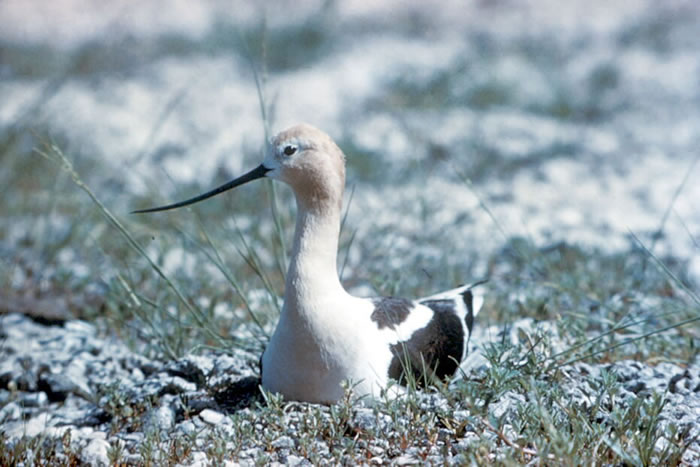
The American avocet is a large shorebird. It is 16-20 inches tall and has very long, grayish-blue legs; a long neck; and a long, turned-up black bill. The female's bill turns up a little more than the male's bill. Its head and neck are rusty-red in the summer and grayish-white in the winter. It has black wings with white stripes and a white body. Range Habitat
|
DietThe avocet moves its bill back and forth on the surface of the water to stir up insects, crustaceans, and other food. It then scoops the food up in its bill. It also eats seeds and aquatic plants that are on the surface of the water. Life Cycle BehaviorAvocets are short-distance migrators. Sometimes when they migrate south every fall, some individuals stray off the migratory path and end up on the Atlantic Coast. |
||||||||||
Audio Credit: xeno-canto.org Andrew Spencer  |
|||||||||||


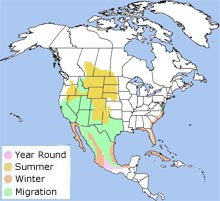 The avocet's breeding range stretches from Washington; Manitoba, Canada; and Minnesota; south to California and Texas. It winters in California, Texas, the Gulf Coast, the Southeast coast of the U.S., and Mexico.