Description
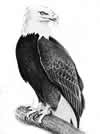
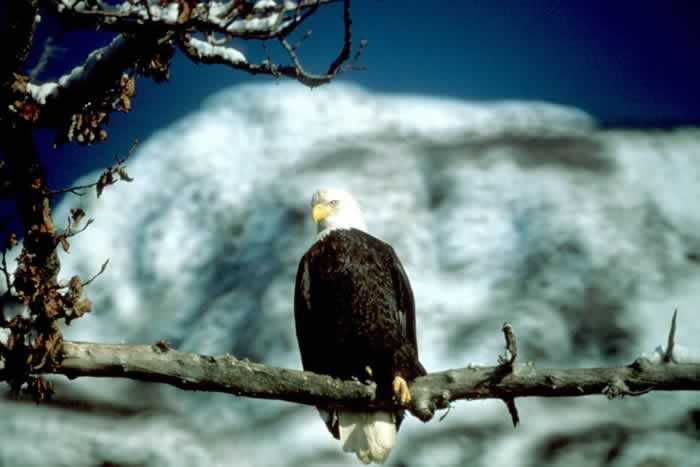
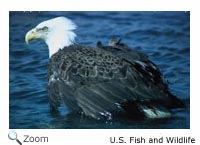
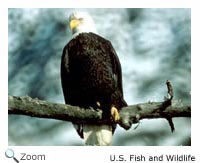
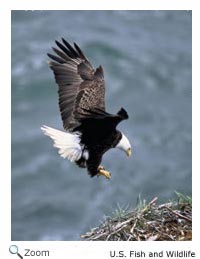 The bald eagle is 30-31 inches in length with a wingspan of 6-7 feet. It has a dark brown body, a white tail, and a white head and shoulders. It has bright yellow eyes; a large, hooked yellow bill; and powerful yellow legs and talons. Young bald eagles don't have a white head and shoulders until they are about five years old. Males and females look alike, although the female is a little larger. The bald eagle is 30-31 inches in length with a wingspan of 6-7 feet. It has a dark brown body, a white tail, and a white head and shoulders. It has bright yellow eyes; a large, hooked yellow bill; and powerful yellow legs and talons. Young bald eagles don't have a white head and shoulders until they are about five years old. Males and females look alike, although the female is a little larger.
Range
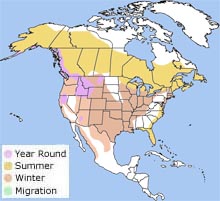 The bald eagle breeds from Alaska east to Newfoundland and in scattered locations throughout the United States. It winters along coasts and large rivers in much of the United States and Canada and parts of Mexico. The bald eagle migrates in areas where its water source freezes in the winter. The bald eagle breeds from Alaska east to Newfoundland and in scattered locations throughout the United States. It winters along coasts and large rivers in much of the United States and Canada and parts of Mexico. The bald eagle migrates in areas where its water source freezes in the winter.
Habitat
The bald eagle is found near lakes, rivers, marshes, and seacoasts where it can find fish.
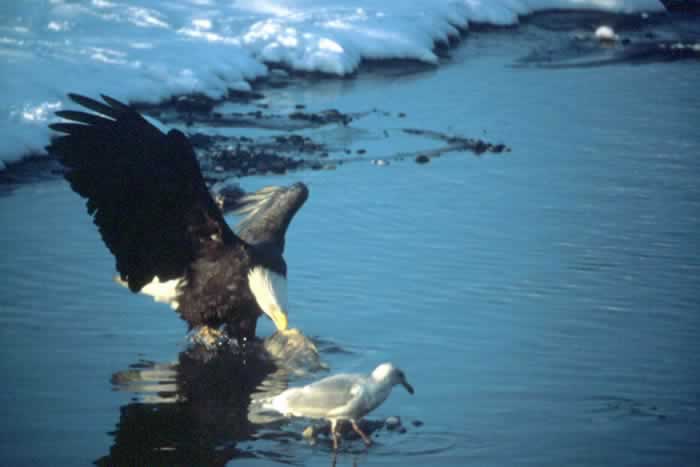
Diet 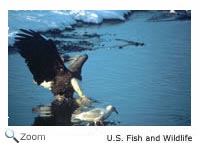 The bald eagle is a fish eater, although it also eats birds, small mammals, and carrion. It has excellent eyesight and spots its prey from a high perch or from the sky. Once it locates its prey, it swoops down and grabs it in its powerful talons. The bald eagle also steals food from other birds! The bald eagle is a fish eater, although it also eats birds, small mammals, and carrion. It has excellent eyesight and spots its prey from a high perch or from the sky. Once it locates its prey, it swoops down and grabs it in its powerful talons. The bald eagle also steals food from other birds!
|
|
Life Cycle
Male and female bald eagles exhibit an unusual courtship ritual. They lock talons together at high altitudes and then tumble and somersault together towards the ground, breaking apart at the last minute!
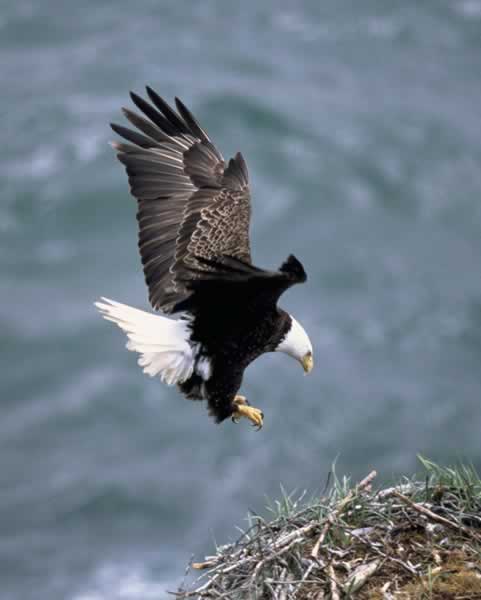
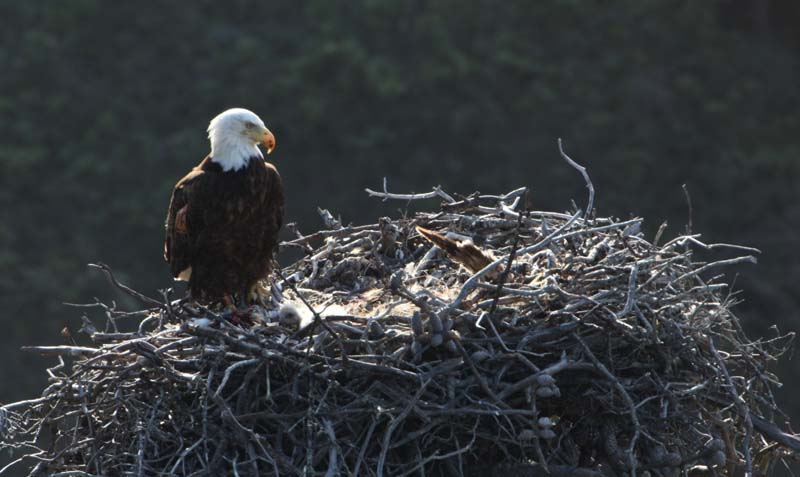
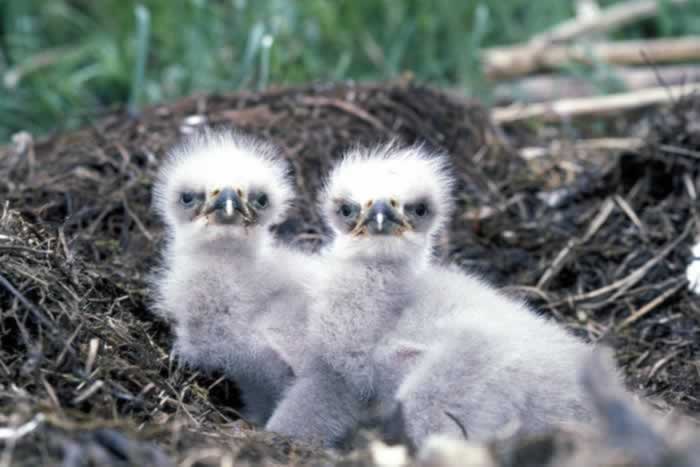
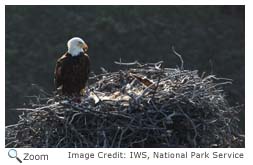 The female bald eagle lays 2 or 3 eggs in a enormous nest made of sticks placed in a tall tree or sometimes on a cliff top. Bald eagle pairs mate for life and use the same nest year-after-year. They add new sticks each season. Eagle nests can be up to six feet across and eight feet deep and weigh hundreds of pounds! The female bald eagle lays 2 or 3 eggs in a enormous nest made of sticks placed in a tall tree or sometimes on a cliff top. Bald eagle pairs mate for life and use the same nest year-after-year. They add new sticks each season. Eagle nests can be up to six feet across and eight feet deep and weigh hundreds of pounds!
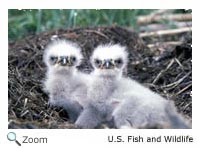 The eggs hatch in 5-6 weeks and the chicks fledge when they are about 12 weeks old. Both parents care for and feed the chicks. The chicks stay with their parents until they are about 20 weeks old. The eggs hatch in 5-6 weeks and the chicks fledge when they are about 12 weeks old. Both parents care for and feed the chicks. The chicks stay with their parents until they are about 20 weeks old.
Threats to the Bald Eagle The bald eagle was once listed as a threatened species in all of the United States, except for Alaska, but it was delisted in 2007. It is still protected under the Migratory Bird Treaty Act and the Bald and Golden Eagle Act.
 Bald eagle populations have seen major declines twice since the first Europeans came to America. The first decline came in the 1800s. As settlers moved west, they cleared land and competed with the bald eagle for fish. They also hunted the eagle. The U.S. Bald Eagle Act of 1940 prohibited the killing of bald eagles in all the states except Alaska. Bald eagle populations have seen major declines twice since the first Europeans came to America. The first decline came in the 1800s. As settlers moved west, they cleared land and competed with the bald eagle for fish. They also hunted the eagle. The U.S. Bald Eagle Act of 1940 prohibited the killing of bald eagles in all the states except Alaska.
 The bald eagle population was just beginning to recover when a new threat emerged. The pesticide DDT was getting into the food that the bald eagle ate. The pesticide made it difficult for the bald eagle to absorb calcium and the lack of calcium made the shells of the bald eagle's eggs thinner. Many eggs broke before they could hatch, and the bald eagle population dropped. DDT use was outlawed in the U.S. in 1972, and the bald eagle population has slowly recovered. The bald eagle population was just beginning to recover when a new threat emerged. The pesticide DDT was getting into the food that the bald eagle ate. The pesticide made it difficult for the bald eagle to absorb calcium and the lack of calcium made the shells of the bald eagle's eggs thinner. Many eggs broke before they could hatch, and the bald eagle population dropped. DDT use was outlawed in the U.S. in 1972, and the bald eagle population has slowly recovered.
|