Description
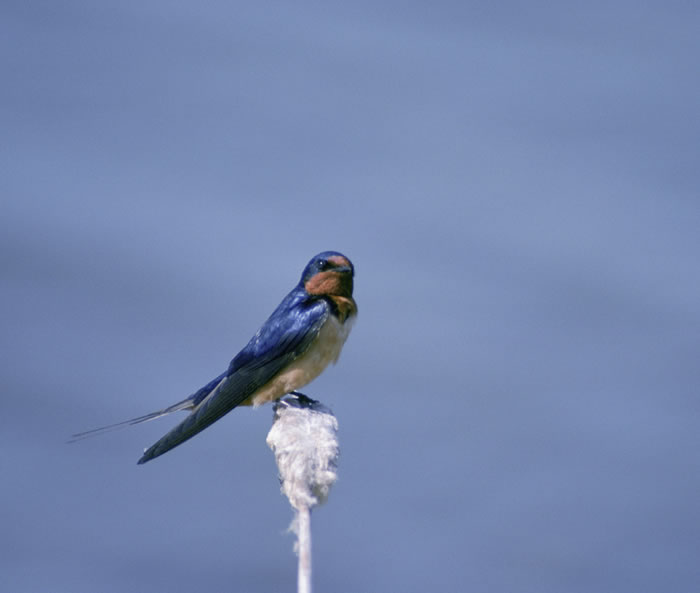
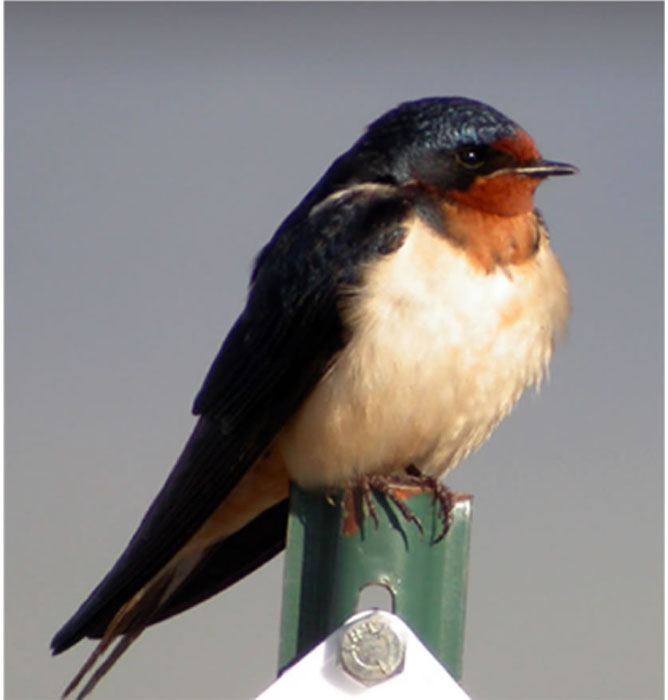
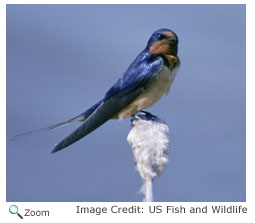 The barn swallow is about six inches in length and has a slate-blue head and wings. It has a rusty-orange throat and forehead and a pale orange chest and underside. It has a deeply forked tail. Males and females are similar, but the female's tail is a little less forked, and her underparts are a little paler. The barn swallow is about six inches in length and has a slate-blue head and wings. It has a rusty-orange throat and forehead and a pale orange chest and underside. It has a deeply forked tail. Males and females are similar, but the female's tail is a little less forked, and her underparts are a little paler.
Range 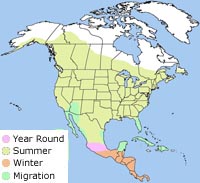 In North America, the barn swallow breeds from Alaska east to Newfoundland, Canada and south to California and northern Florida. The barn swallow is a Neotropical migrant. It leaves its breeding range in the fall and travels south to winter in Mexico, Central America, and South America. It travels by day, eating as it flies. It travels as many as 600 miles a day. Barn swallows migrate in large groups. In North America, the barn swallow breeds from Alaska east to Newfoundland, Canada and south to California and northern Florida. The barn swallow is a Neotropical migrant. It leaves its breeding range in the fall and travels south to winter in Mexico, Central America, and South America. It travels by day, eating as it flies. It travels as many as 600 miles a day. Barn swallows migrate in large groups.
The barn swallow also breeds in northern Europe, northeastern Asia, the Middle East, and Northern Africa. European and Asian barn swallows winter in southern Asia, Indonesia, and Micronesia.
Habitat
The barn swallow is found in farmlands, suburbs, marshes, and lakeshores.
Diet 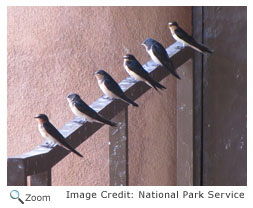 The barn swallow is an insectivore. It only eats insects. Grasshoppers, beetles, moths, and other flying insects make up a large part of its diet. The barn swallow zig-zags through the air in pursuit of its prey. It even gets its water while flying! It skims over the surface of a body of water and scoops up water in its bill. The barn swallow is an insectivore. It only eats insects. Grasshoppers, beetles, moths, and other flying insects make up a large part of its diet. The barn swallow zig-zags through the air in pursuit of its prey. It even gets its water while flying! It skims over the surface of a body of water and scoops up water in its bill.
|
|
Life Cycle 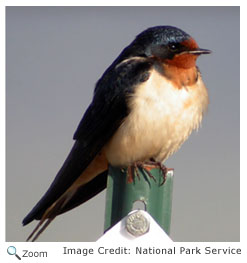 Barn swallows form breeding pairs in the spring, when they return to their breeding grounds. The male tries to attract a female by spreading his wings and singing. Barn swallows often mate in the air. Both parents build the nest. Barn swallows form breeding pairs in the spring, when they return to their breeding grounds. The male tries to attract a female by spreading his wings and singing. Barn swallows often mate in the air. Both parents build the nest.
Nests are made of mud and lined with grass and feathers. The barn swallows gather mud and roll it into pellets and then carry it in their bills back to their nesting site. The cup-shaped nest is built in the rafters or eaves of buildings, on bridges, in mine shafts, or on other manmade structures. Occasionally, the barn swallow builds a nest under a rock ledge or cliff face, but that is rare. As their name suggests, barns are one of the favorite locations for barn swallows to build their nests.
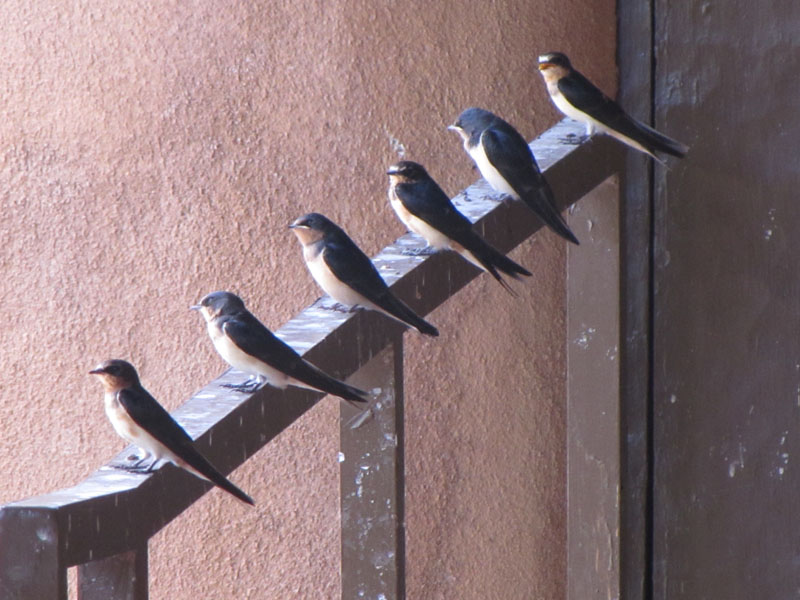
As many as five to eight pairs of barn swallows may use a single barn as a nesting site.
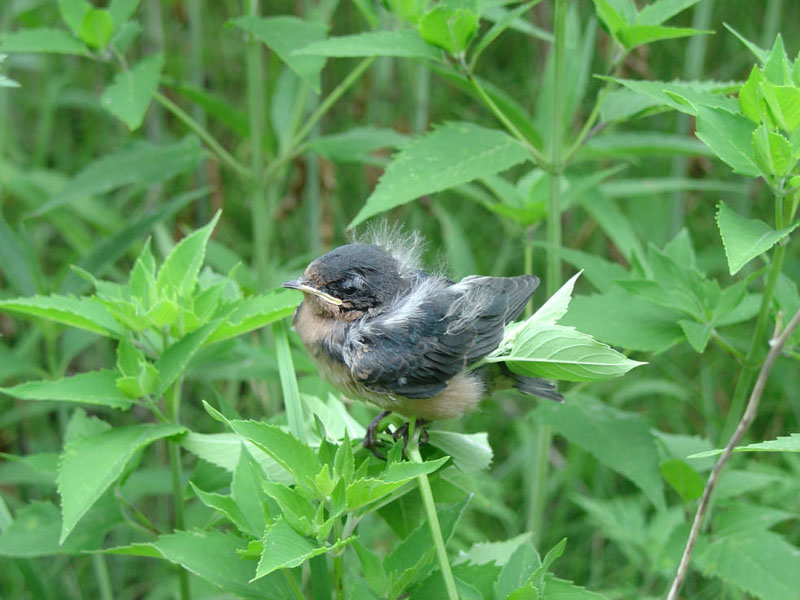
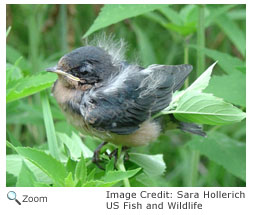 The female lays four to six eggs. Both parents incubate the eggs and care for the chicks. The eggs take around two weeks to hatch and the chicks fledge when they are about three weeks old. The parents continue to feed the chicks for up to a week after they fledge. The female may have two broods a year. The same pair may mate for several years. The female lays four to six eggs. Both parents incubate the eggs and care for the chicks. The eggs take around two weeks to hatch and the chicks fledge when they are about three weeks old. The parents continue to feed the chicks for up to a week after they fledge. The female may have two broods a year. The same pair may mate for several years.
BehaviorThe barn swallow uses a variety of vocalizations to communicate. It has an alarm call to warn of predators and a mating call used to attract a mate.
|