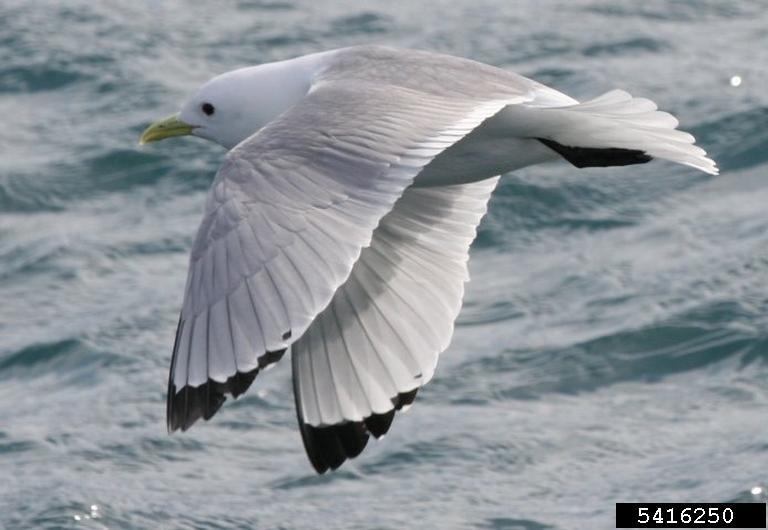
Description 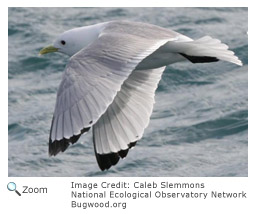 The black-legged kittiwake is a small gull that is 13-18 inches in length with a wingspan of 36 inches. It has white undersides, chest, and head; soft-gray upperwings and back; and black tips on its wings. It has a slightly forked white tail; a bright yellow bill; and black legs and feet with three toes. The name kittiwake comes from its call. Males and females look alike. The black-legged kittiwake is a small gull that is 13-18 inches in length with a wingspan of 36 inches. It has white undersides, chest, and head; soft-gray upperwings and back; and black tips on its wings. It has a slightly forked white tail; a bright yellow bill; and black legs and feet with three toes. The name kittiwake comes from its call. Males and females look alike.
Range 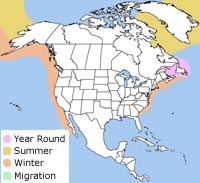 The black-legged kittiwake is found along both the Atlantic and Pacific coasts from Canada south to California and Florida. It is also found in Eurasia. The black-legged kittiwake is found along both the Atlantic and Pacific coasts from Canada south to California and Florida. It is also found in Eurasia.
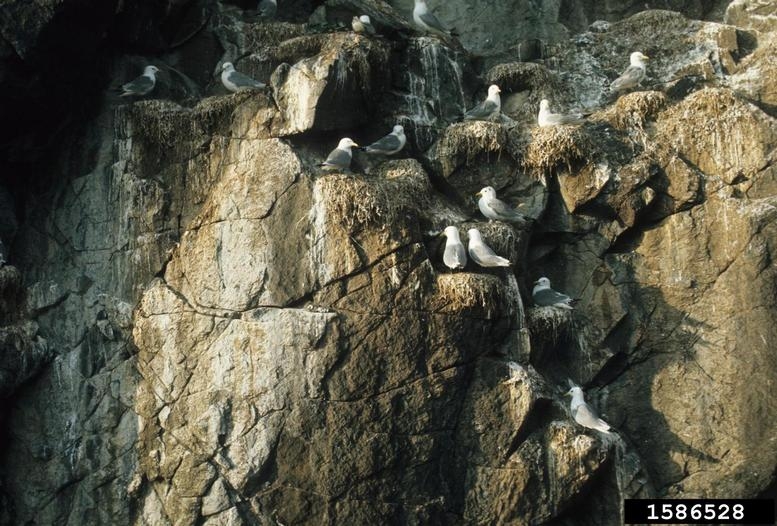
Habitat 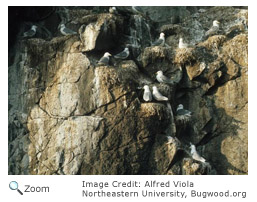 The black-legged kittiwake is found on cliffs and ledges of coastal areas and islands during breeding season. The black-legged kittiwake may also nest on tall buildings, bridges, sea walls, and even offshore oil rigs. It winters on the open ocean. It rarely comes far inland. The black-legged kittiwake is found on cliffs and ledges of coastal areas and islands during breeding season. The black-legged kittiwake may also nest on tall buildings, bridges, sea walls, and even offshore oil rigs. It winters on the open ocean. It rarely comes far inland. | |
Diet
The black-legged kittiwake eats
plankton, fish, and marine invertebrates. It feeds in flocks and catches food at the surface of the water, or it dives just below the surface of the water to catch its prey.
Life Cycle 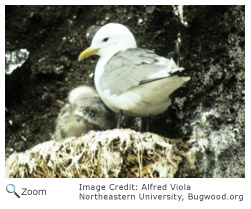 The black-legged kittiwake nests in huge colonies that can include thousands of birds. The black-legged kittiwake male returns to the same nesting site year-after-year. Male and female pairs may mate for more than one season. The black-legged kittiwake nests in huge colonies that can include thousands of birds. The black-legged kittiwake male returns to the same nesting site year-after-year. Male and female pairs may mate for more than one season.
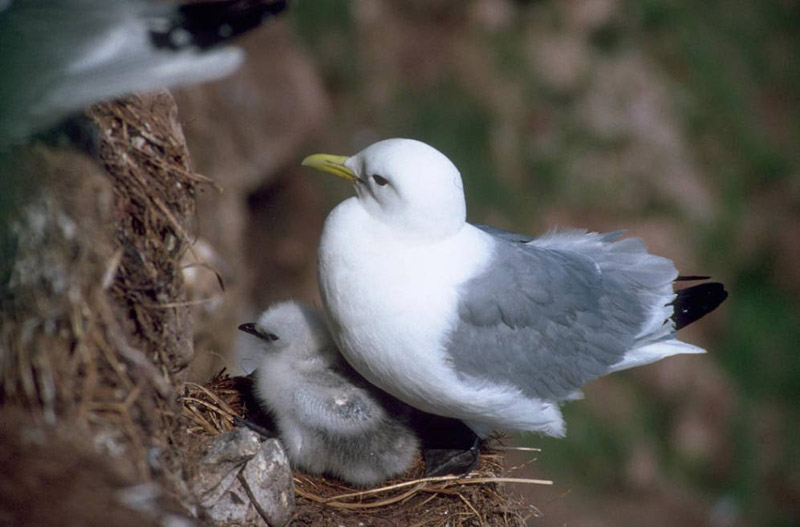
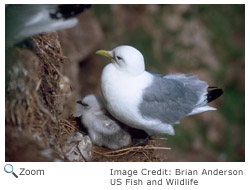 The nest is cup-shaped and made of moss, seaweed, and mud and is placed on the top or side of a cliff or ledge. The female lays 1-3 pinkish-brown eggs. The male and female both incubate the eggs. The chicks hatch in about 27 days. Both parents care for and feed the chicks. The chicks fledge when they are about 40 days old. The nest is cup-shaped and made of moss, seaweed, and mud and is placed on the top or side of a cliff or ledge. The female lays 1-3 pinkish-brown eggs. The male and female both incubate the eggs. The chicks hatch in about 27 days. Both parents care for and feed the chicks. The chicks fledge when they are about 40 days old.
Behavior
The black-legged kittiwake is the only gull that dives and swims underwater to capture food.
|