Sound Waves
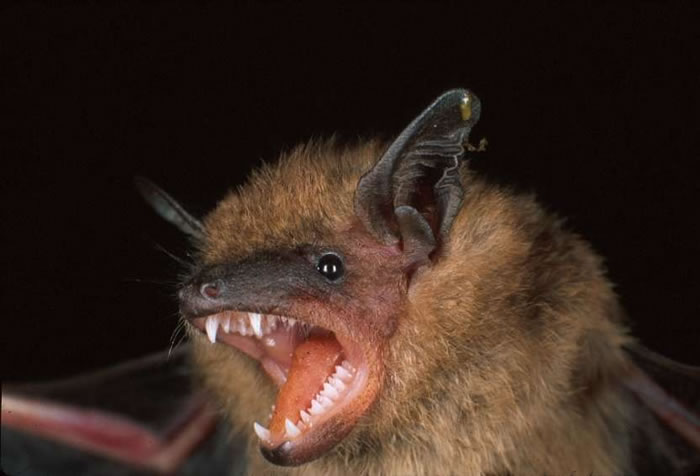
 Bats use echolocation to locate prey. They send out a high-frequency sound. When the sound hits an object, it bounces back to the bat. The bat then can identify what the sound hit and where it is! When it finds its prey, it grabs it with its wings and tucks it into a pouch formed when it brings its wing and tail membranes together. It then grabs the insect with its sharp teeth and eats it! Bats use echolocation to locate prey. They send out a high-frequency sound. When the sound hits an object, it bounces back to the bat. The bat then can identify what the sound hit and where it is! When it finds its prey, it grabs it with its wings and tucks it into a pouch formed when it brings its wing and tail membranes together. It then grabs the insect with its sharp teeth and eats it!
|
|
|
|
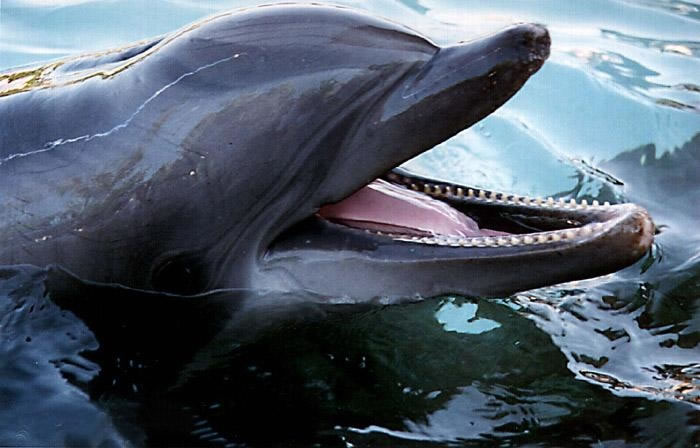
Just a Few Words  Dolphins are very talkative. They don't have vocal chords; they make clicks and whistle sounds by squeezing air back and forth between air sacs that are just under their blowholes. They use the whistles to "talk" to other dolphins. This helps them identify members of their group and locate each other. The clicking sounds are used for echolocation. Dolphins are very talkative. They don't have vocal chords; they make clicks and whistle sounds by squeezing air back and forth between air sacs that are just under their blowholes. They use the whistles to "talk" to other dolphins. This helps them identify members of their group and locate each other. The clicking sounds are used for echolocation.
Echolocation helps dolphins identify objects, predators, and prey. The clicking sounds are magnified and directed by the dolphin's melon. The melon is a fatty bulge between the dolphin's skull and blow hole. The sounds a dolphin makes travel out into the ocean. When the sounds hit an object, they bounce back to the dolphin. The returning sounds travel through fat deposits in the dolphin's jaw. The sound vibrations then travel to the dolphin's inner ear and then the brain! Dolphins can then figure out how far away something is, where it is, how big it is, and sometimes even what it is!
|