

Northern Lobster - Homarus americanus |
||||||||||
Description
|
Range HabitatThe northern lobster is found on the rocky bottoms of cold, shallow waters from the shoreline to the continental shelf. It prefers rocky areas where is can find places to hide from predators! DietMany people think the lobster is a scavenger and eats only dead animals. The lobster is not a picky eater, but it does eat mostly live food! It eats a wide variety of live food including crabs, mussels, starfish, marine worms, shrimp, and even some plants. It may also eat some dead meat or carrion. Life Cycle
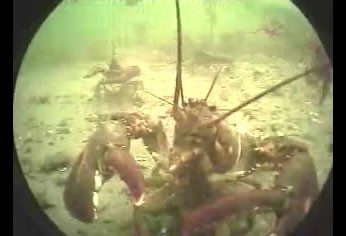
Lobster larvae molts four times in the first 10 to 20 days. In these first days, the larvae are found near the surface of the water. Eventually, the young lobster is large enough to sink to the ocean floor. The young lobster molts 10 more times in its first year. At the end of its first year, it is about an inch in length. It takes a lobster up to six years to grow to a weight of one pound! Lobsters can live as long as 50 years! BehaviorThe lobster is a solitary creature. It can also be very aggressive with other lobsters! Lobsters may threaten and shove at each other with their claws. |
|||||||||

 Least Concern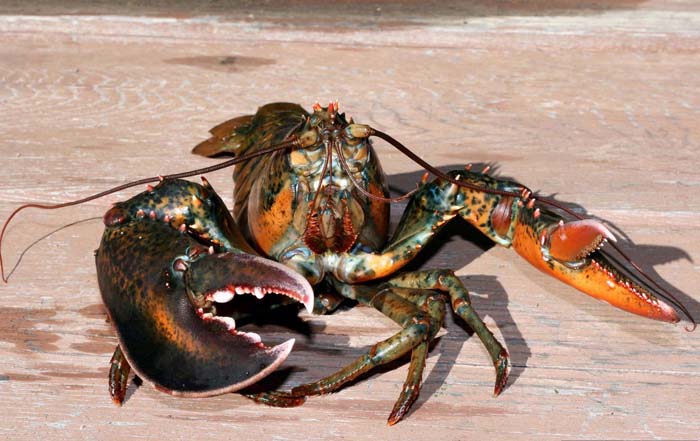

 The northern lobster is found from the coast of Labrador, Canada south to Virginia.