
Pectoral Sandpiper - Calidris melanotos |
|||||||||||
Description
Range Habitat
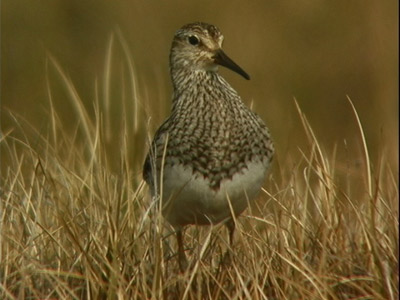
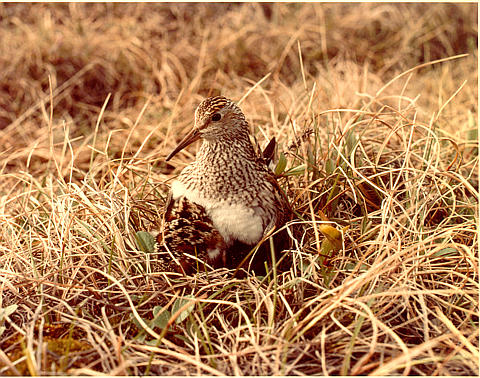
The pectoral sandpiper breeds on the tundra. During migration it is found on freshwater and saltwater marshes, wet meadows, flooded fields, the shores of ponds, and grassy areas like golf courses and airports. It winters on the grasslands of South America. |
Diet
Life Cycle
Once the female has chosen a mate, she builds a scrape in a slightly raised grassy area on the ground and lines it with grass and leaves. The nest is usually hidden by vegetation or is made under a bush. The female lays four eggs and incubates them for 21-23 days. The chicks are precocial and can feed themselves shortly after hatching. The female stays with the chicks for 10-20 days. She usually leaves before they fledge at 21 days. BehaviorThe pectoral sandpiper is a long-distance migrator. It travels as much as 9,000 miles each way to its breeding and wintering grounds. |
||||||||||
Audio Credit: xeno-canto.org Bernabe Lopez-Lanus  |
|||||||||||

 Least Concern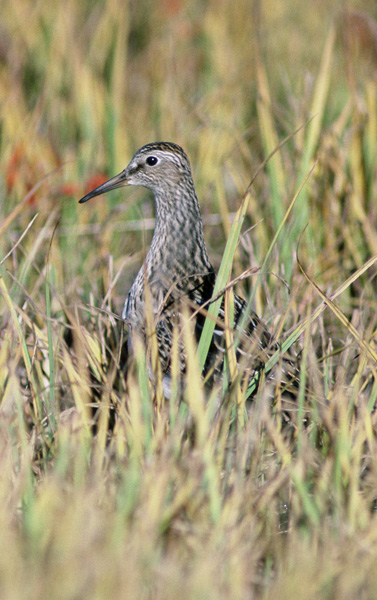
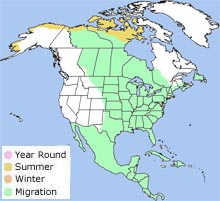 The pectoral sandpiper breeds
in the Arctic regions of North America from Alaska east to the Hudson Bay. It
The pectoral sandpiper breeds
in the Arctic regions of North America from Alaska east to the Hudson Bay. It