Habitat
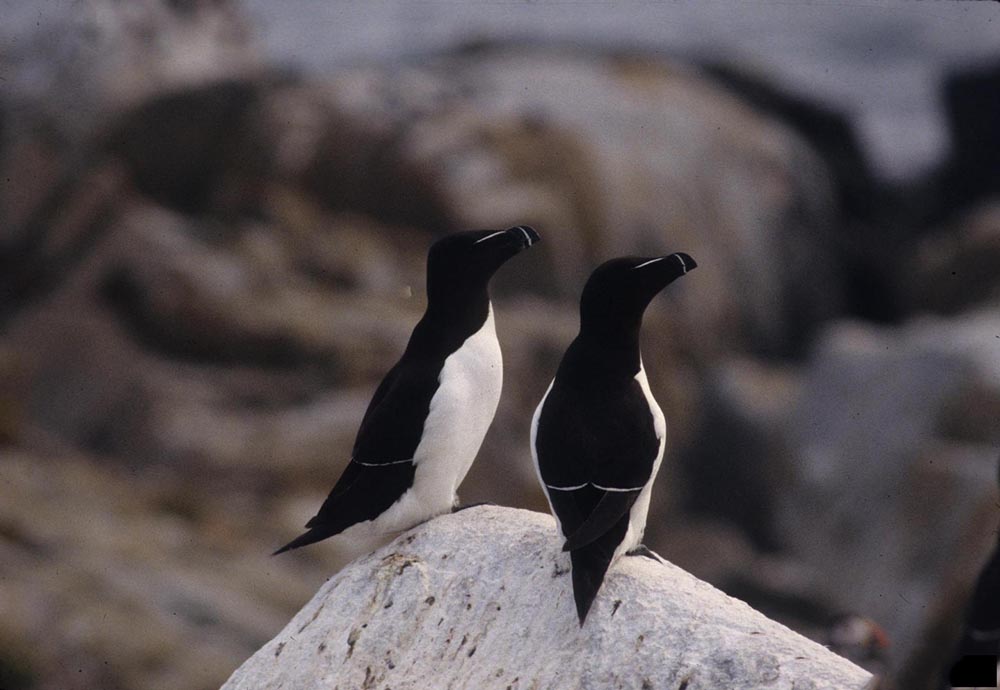
Except for during breeding season, the razorbill lives offshore in open waters.
Diet
The razorbill feeds mostly on fish, shrimp, and squid. It dives from the surface of the water and can reach depths of up to 60 feet to reach its prey.
Life Cycle
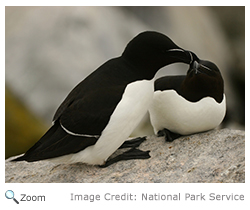 The razorbill nests in colonies on cliffs or islands among the boulders and rocks. The female razorbill lays a single egg on the ground or on rocks. Incubation takes about five weeks. The chick stays in the nest for 16-25 days and then goes out to sea with its parents. It takes another two months before it reaches adult size and has adult plumage.
Behavior
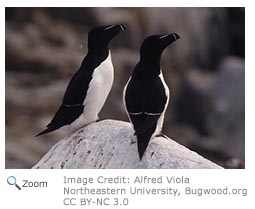 Except for during breeding season, the razorbill spends most of its time on the open water. It even cares for its young while on the open water, bringing them food until they are old enough to hunt for themselves. The razorbill swims in the water with the end of its tail tipped up.



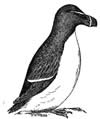


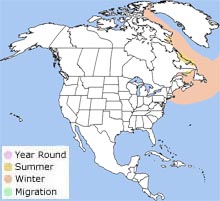 The razorbill breeds from the Arctic south to Maine. It winters in open water south to New Jersey. It is also found in Europe.
In the winter, the razorbill can sometimes be found off the coast of New Hampshire.
The razorbill breeds from the Arctic south to Maine. It winters in open water south to New Jersey. It is also found in Europe.
In the winter, the razorbill can sometimes be found off the coast of New Hampshire.