Description
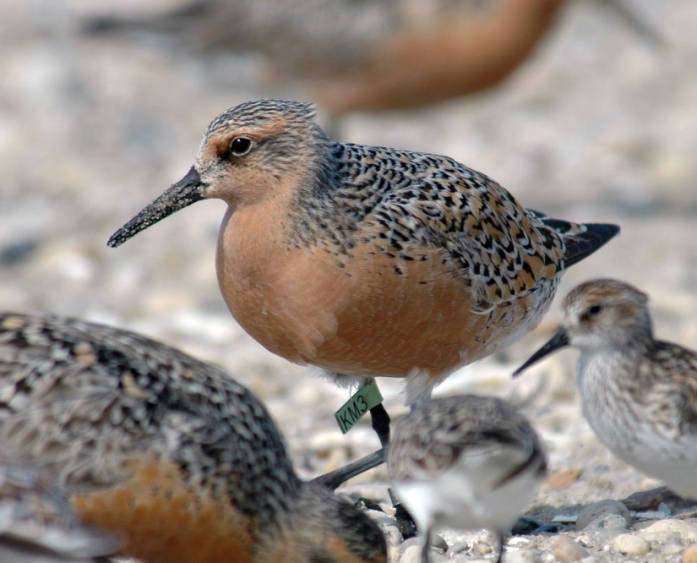
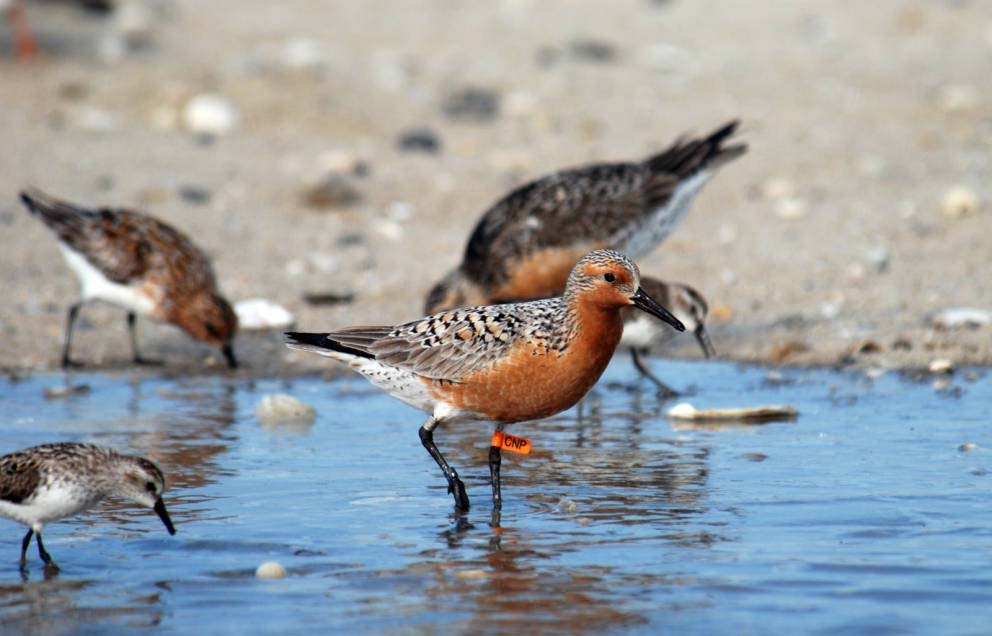
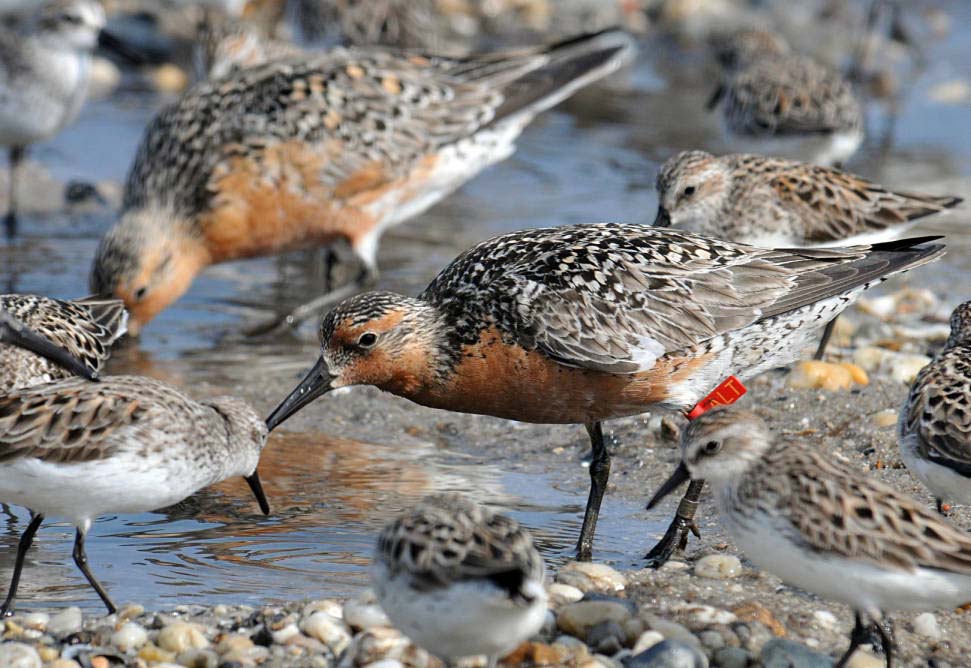
 The red knot is a medium-sized shorebird. During breeding season, it has a rust colored face, chest, and undersides and dark brown wings. It has a long, sharp bill and long legs. The red knot is a medium-sized shorebird. During breeding season, it has a rust colored face, chest, and undersides and dark brown wings. It has a long, sharp bill and long legs.
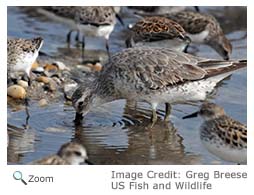 In winter, it has a gray head, chest, and upperparts and a white belly. It has long greenish legs and a pointed black bill. Males and females look similar. In winter, it has a gray head, chest, and upperparts and a white belly. It has long greenish legs and a pointed black bill. Males and females look similar.
Range
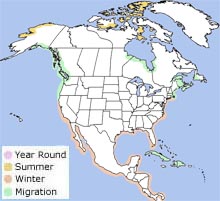 The red knot breeds on islands in northern Canada and Alaska. It winters along both the Pacific and Atlantic coasts from California and Massachusetts south to South America. The red knot is also found in Europe and Asia. The Rufa Red Knot (Calidris canutus rufa), found in the eastern U.S. suffered a major population decline in the 2000s and is now a threatened species in the U.S. The red knot breeds on islands in northern Canada and Alaska. It winters along both the Pacific and Atlantic coasts from California and Massachusetts south to South America. The red knot is also found in Europe and Asia. The Rufa Red Knot (Calidris canutus rufa), found in the eastern U.S. suffered a major population decline in the 2000s and is now a threatened species in the U.S.
Habitat 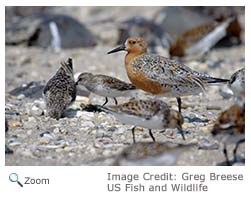 The red knot breeds on the tundra. During migration and in the winter, it can be found on tidal flats, rocky shores, and beaches. The red knot breeds on the tundra. During migration and in the winter, it can be found on tidal flats, rocky shores, and beaches.
| |
Diet 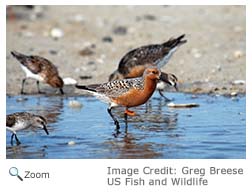 On its breeding grounds, the red knot eats the seeds of sedges, horsetails, and grass shoots. It may also poke around in snow-free areas for invertebrates. It also eats beetles and cutworm larvae. In its winter range, it eats marine worms, grasshoppers, horseshoe crab eggs, and other invertebrates. On its breeding grounds, the red knot eats the seeds of sedges, horsetails, and grass shoots. It may also poke around in snow-free areas for invertebrates. It also eats beetles and cutworm larvae. In its winter range, it eats marine worms, grasshoppers, horseshoe crab eggs, and other invertebrates.
Life Cycle 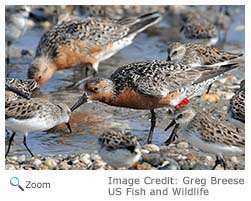 During courtship, the male red knot flies up into the air, starts singing, glides around a bit, and then lands with his wings pointed up. The female red knot lays four eggs in a depression in the ground. The nest is lined with lichen. Both parents incubate the eggs. In fact, the male may do most of the incubation. The chicks hatch in about three weeks, and they fledge in another three weeks. During courtship, the male red knot flies up into the air, starts singing, glides around a bit, and then lands with his wings pointed up. The female red knot lays four eggs in a depression in the ground. The nest is lined with lichen. Both parents incubate the eggs. In fact, the male may do most of the incubation. The chicks hatch in about three weeks, and they fledge in another three weeks.
Behavior
The red knot is a long-distance migrator. Red knots that migrate to South America can make a round trip of close to 20,000 miles.
|