Description
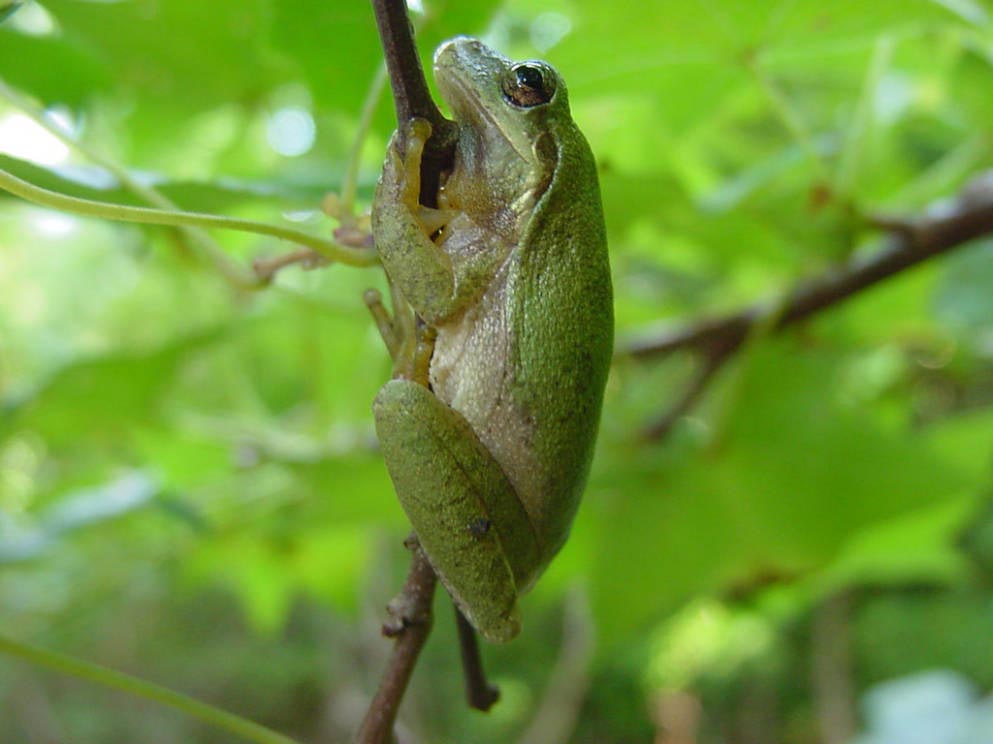
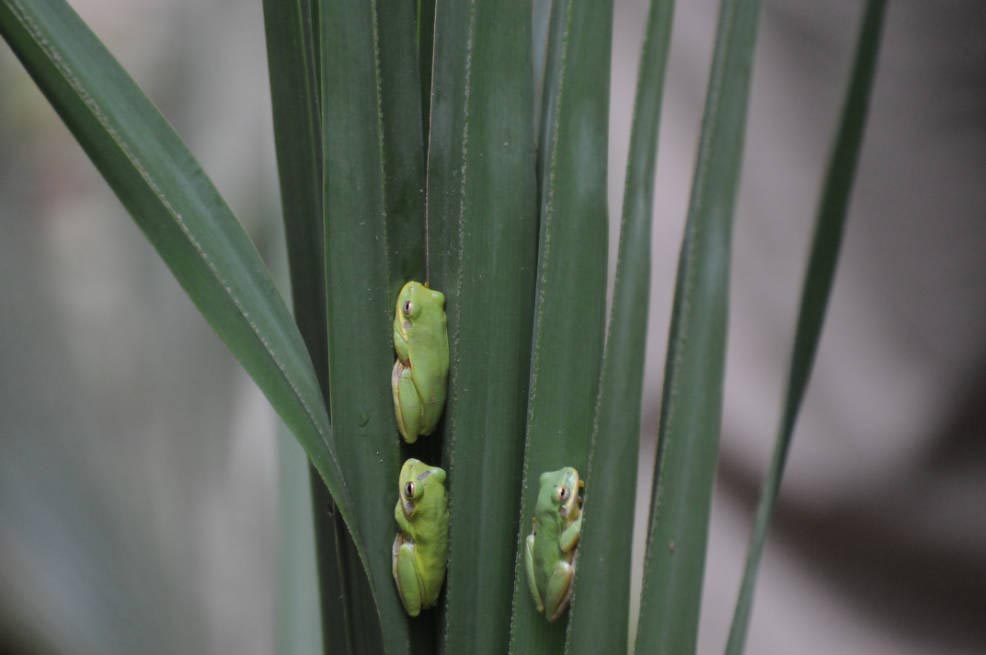
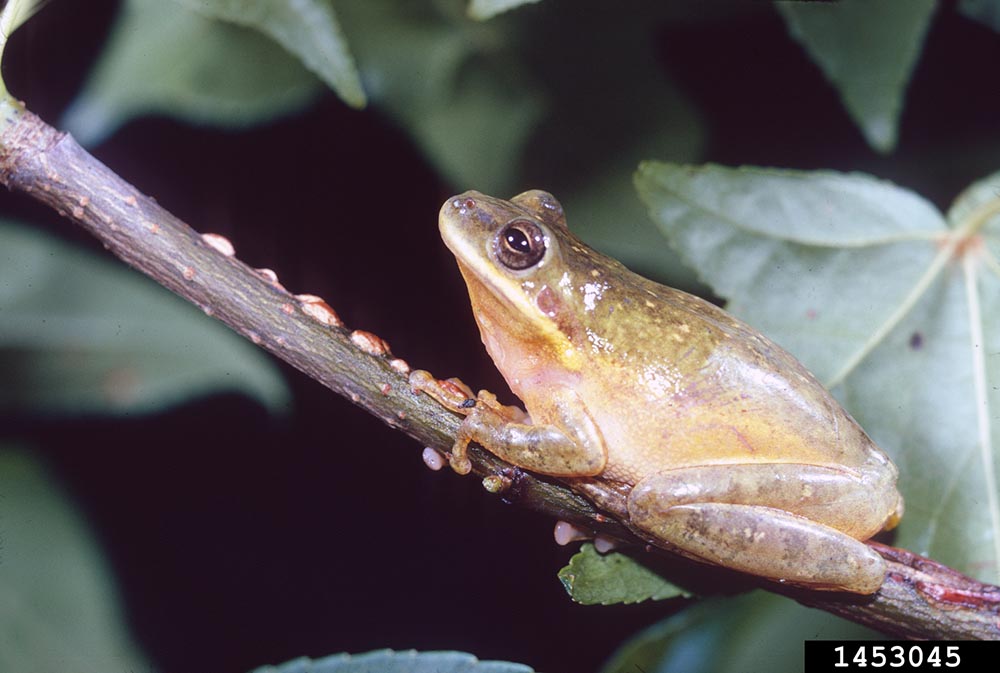
 The squirrel treefrog can vary in color from brown to yellow-green to green. It is 1-1½ inches in length. It may have a light stripe running from under its eye along its jaw. It may also have a dark mark between its eyes, and it may have dark spots on its body. It has large toe pads that help it cling to trees. The squirrel treefrog gets its names from its squirrel-like call. The squirrel treefrog can vary in color from brown to yellow-green to green. It is 1-1½ inches in length. It may have a light stripe running from under its eye along its jaw. It may also have a dark mark between its eyes, and it may have dark spots on its body. It has large toe pads that help it cling to trees. The squirrel treefrog gets its names from its squirrel-like call.
Range
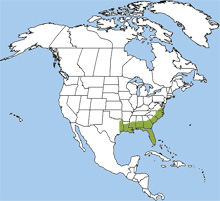 The squirrel treefrog is found in the Atlantic coastal plains from southeastern Virginia south to Florida and along the the Gulf Coast states to eastern Texas. The squirrel treefrog is found in the Atlantic coastal plains from southeastern Virginia south to Florida and along the the Gulf Coast states to eastern Texas.
Habitat
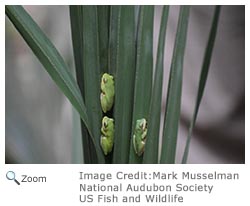 The squirrel treefrog lives in areas with plenty of moisture, shade, and insects. It is found in in gardens, and on trees, shrubs, and vines. The squirrel treefrog lives in areas with plenty of moisture, shade, and insects. It is found in in gardens, and on trees, shrubs, and vines.
| |
Diet
The squirrel treefrog eats insects. It is sometimes seen at night hunting for insects around outdoor light sources.
Life Cycle 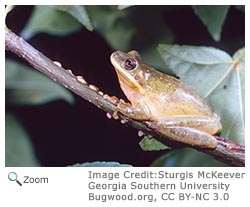 The squirrel treefrog breeds from March to October. Mating usually happens after it rains. The female lays up to 1,000 eggs in a breeding pond of shallow, standing water with lots of vegetation. It takes about six weeks for the tadpoles to transform into froglets. The squirrel treefrog breeds from March to October. Mating usually happens after it rains. The female lays up to 1,000 eggs in a breeding pond of shallow, standing water with lots of vegetation. It takes about six weeks for the tadpoles to transform into froglets.
Behavior
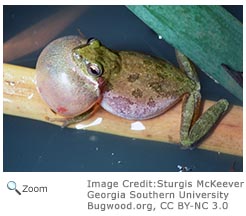 The squirrel treefrog is nocturnal,but it is sometimes seen during the day when it is raining. In fact, it is sometimes called the rain frog! During the day, it is found resting in cool, moist, shady places like under bark, on the underside of palm leaves, and in hollows in trees. The squirrel treefrog is nocturnal,but it is sometimes seen during the day when it is raining. In fact, it is sometimes called the rain frog! During the day, it is found resting in cool, moist, shady places like under bark, on the underside of palm leaves, and in hollows in trees.
|