Description
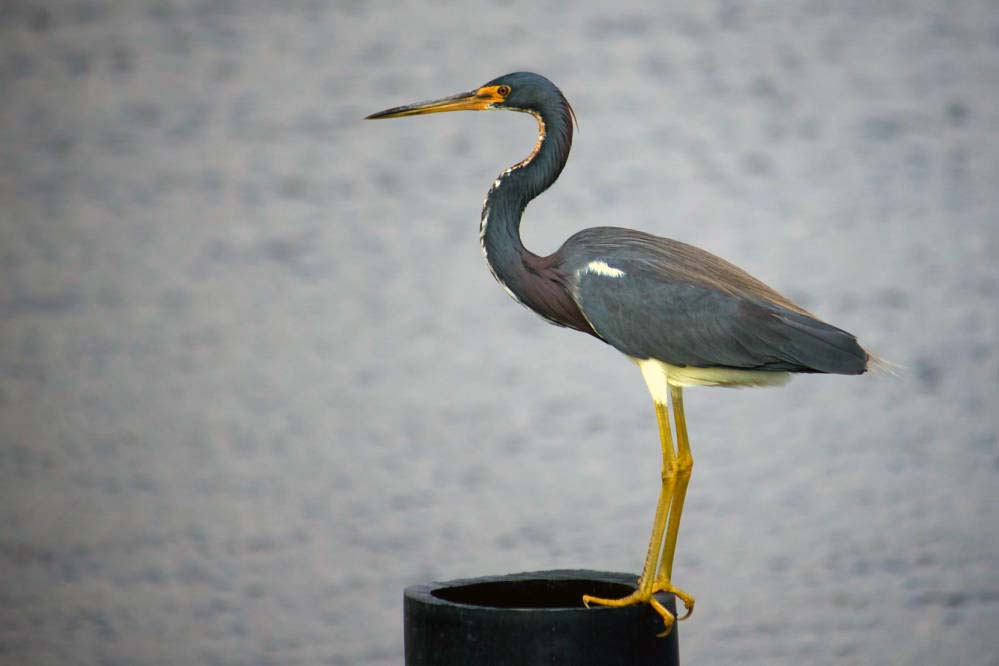
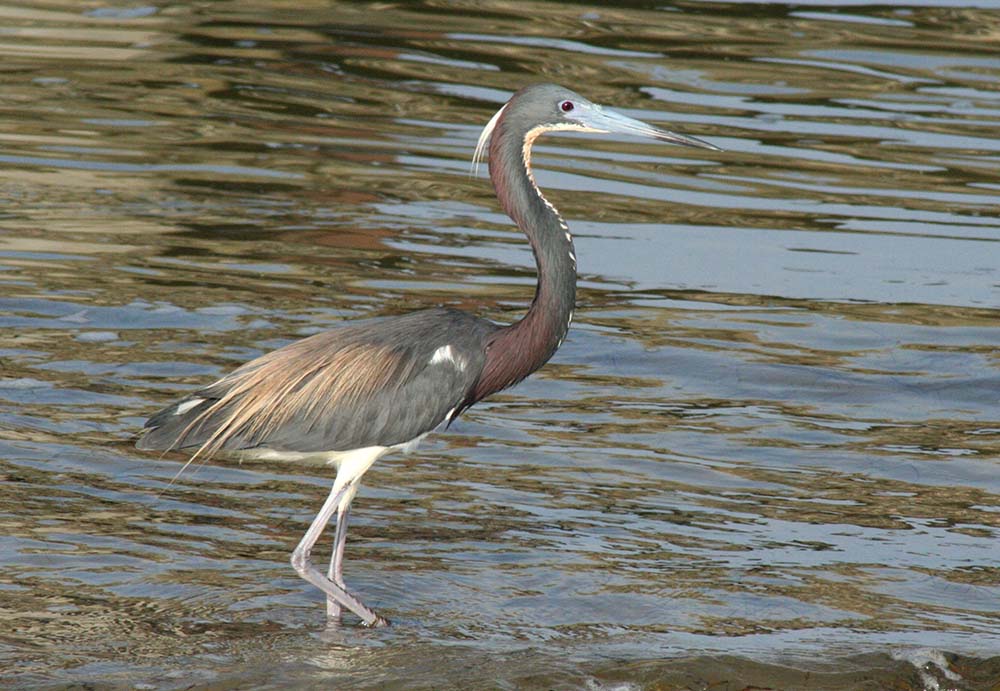
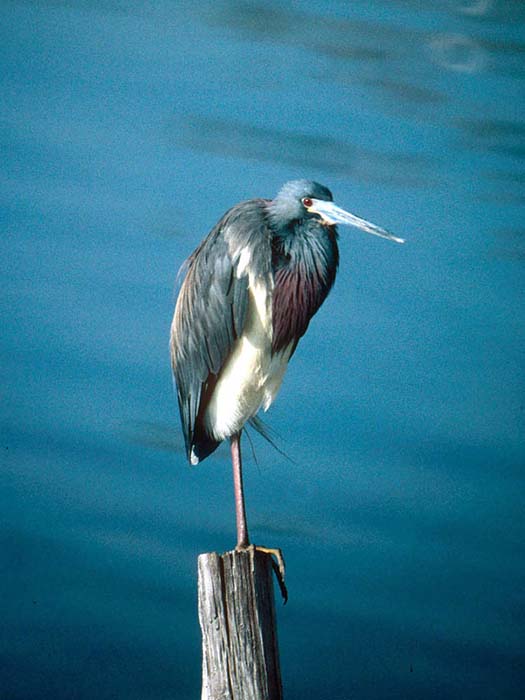
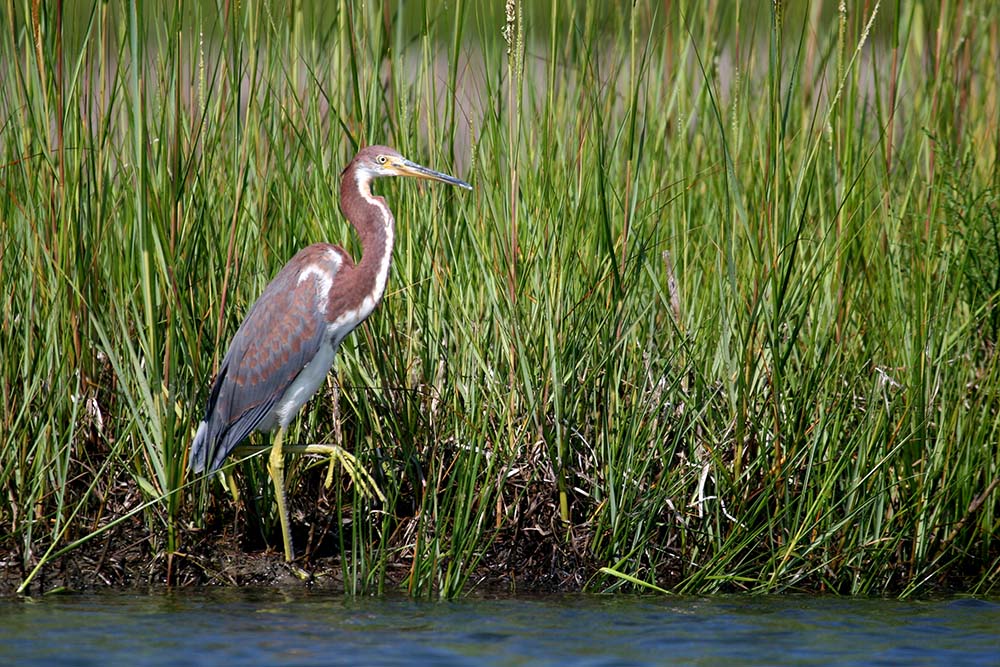
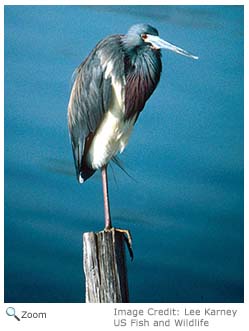
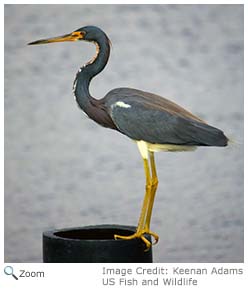 The tricolored heron is about 22 inches in length and has a wingspan of about 3 feet. It has slate blue feathers on most of its body, except for a white chest and belly and a rust-colored neck. It has long yellow legs; a white stripe that runs up its neck; and a long, pointed yellow bill that turns blue during breeding season. Males and females look alike. The tricolored heron is about 22 inches in length and has a wingspan of about 3 feet. It has slate blue feathers on most of its body, except for a white chest and belly and a rust-colored neck. It has long yellow legs; a white stripe that runs up its neck; and a long, pointed yellow bill that turns blue during breeding season. Males and females look alike.
Range 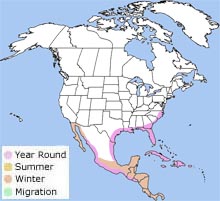 The tricolored heron breeds in southeastern New Mexico and Texas, on the Gulf Coast, and on the Atlantic Coast from Florida to New Jersey. It winters from Texas and New Jersey south to northern South America and the Caribbean. The tricolored heron breeds in southeastern New Mexico and Texas, on the Gulf Coast, and on the Atlantic Coast from Florida to New Jersey. It winters from Texas and New Jersey south to northern South America and the Caribbean.
Habitat
 The tricolored heron is found in marshes, swamps, bayous, mudflats, lagoons, and coastal ponds. The tricolored heron is found in marshes, swamps, bayous, mudflats, lagoons, and coastal ponds.
| |
Diet
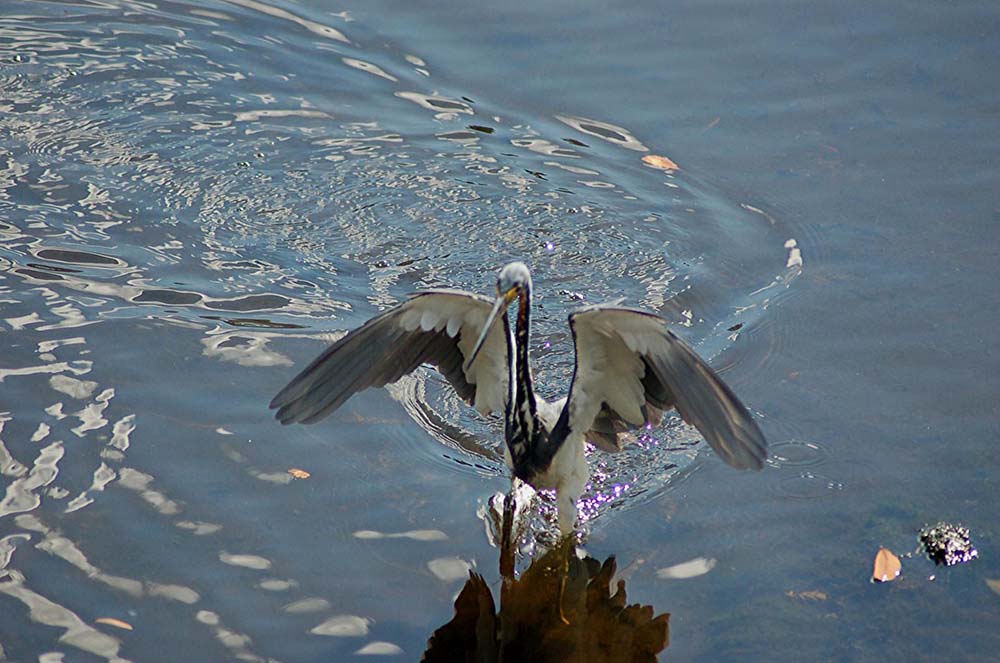
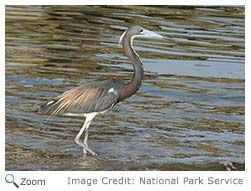
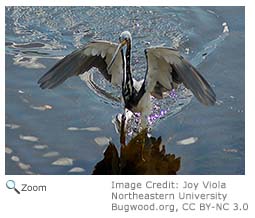 The tricolored heron wades in shallow water in search of prey. Most of its diet is made up of fish, but it also eats amphibians, insects, and crustaceans. Sometimes the tri-colored heron strides or runs through the water with its wings stretched out in an attempt to flush out prey. The tricolored heron wades in shallow water in search of prey. Most of its diet is made up of fish, but it also eats amphibians, insects, and crustaceans. Sometimes the tri-colored heron strides or runs through the water with its wings stretched out in an attempt to flush out prey. Life Cycle
 The nesting territory is selected by the male. The female lays 3-4 eggs on a nest of sticks placed on a bed of reeds or in a tree. Both the male and female build the nest and incubate the eggs. The chicks hatch in about 3 weeks. Both parents care for the chicks and feed them regurgitated food. The chicks fledge in a little over a month. The nesting territory is selected by the male. The female lays 3-4 eggs on a nest of sticks placed on a bed of reeds or in a tree. Both the male and female build the nest and incubate the eggs. The chicks hatch in about 3 weeks. Both parents care for the chicks and feed them regurgitated food. The chicks fledge in a little over a month.
Behavior 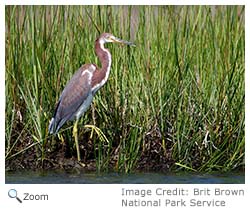 The tricolored heron is also known as the Louisiana heron. It sometimes wades in deep water when looking for food, and all that can be seen of it above the water is its body. The tricolored heron is also known as the Louisiana heron. It sometimes wades in deep water when looking for food, and all that can be seen of it above the water is its body.
|