Description
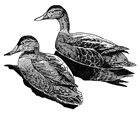
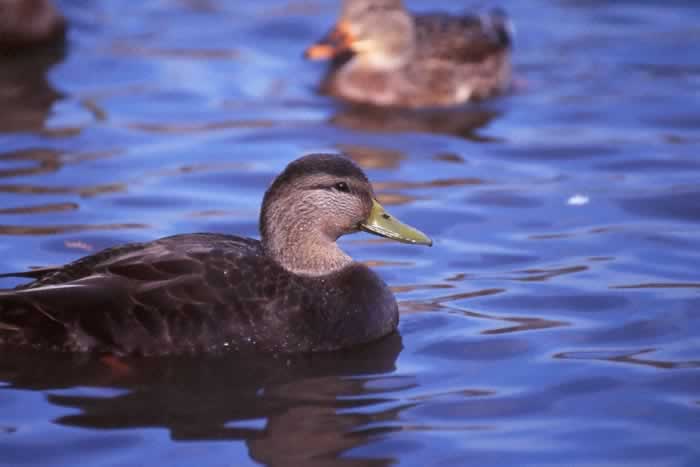
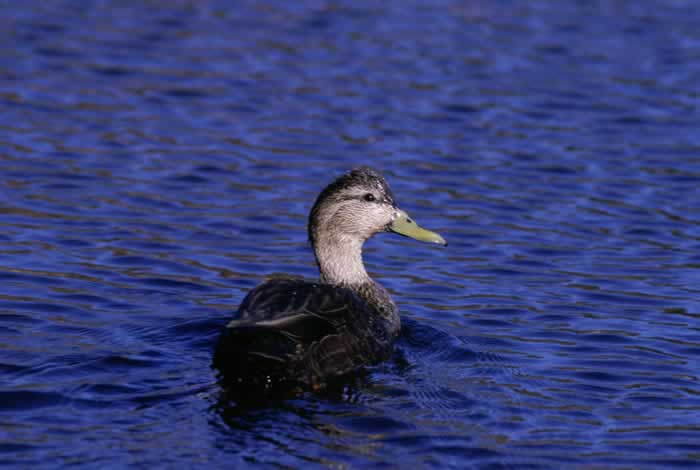
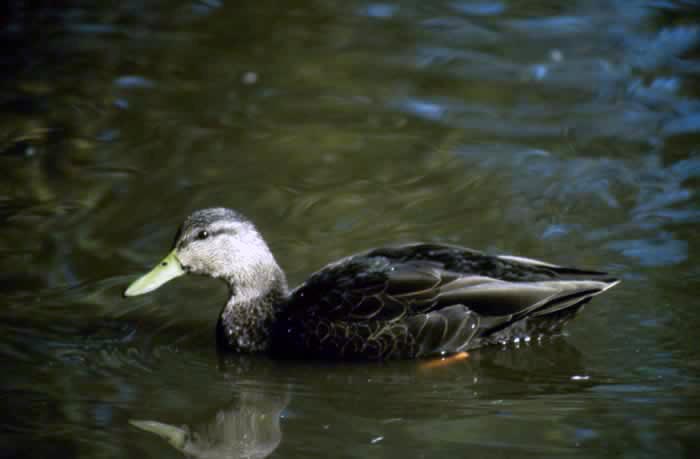
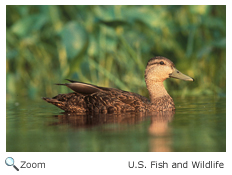 The American black duck is not really black; it is more of a dusky brown. In fact, it is sometimes called the dusky duck. It is 19-22 inches in length. Its neck and head are a lighter color than its body. Its bill is olive-yellow to orange, and its wings are white on the underside and have a purplish-blue patch on the upperside. Males and females look alike, but the female is a little lighter. The American black duck is not really black; it is more of a dusky brown. In fact, it is sometimes called the dusky duck. It is 19-22 inches in length. Its neck and head are a lighter color than its body. Its bill is olive-yellow to orange, and its wings are white on the underside and have a purplish-blue patch on the upperside. Males and females look alike, but the female is a little lighter.
Range
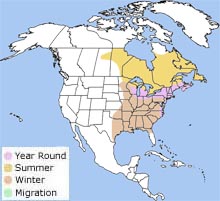 The American black duck breeds across Canada from Manitoba east to Newfoundland and south to Minnesota and eastern Virginia. It winters from southern Minnesota and Nova Scotia, Canada south to southern Texas and central Florida. In the last 40 years, inbreeding between American black ducks and mallards, along with habitat loss and competition with the mallard for resources, has led to a decrease in the number of American black ducks. In areas where there is a lot of hunting and fishing, lead poisoning from shot and fishing tackle has poisoned many American black ducks. The American black duck breeds across Canada from Manitoba east to Newfoundland and south to Minnesota and eastern Virginia. It winters from southern Minnesota and Nova Scotia, Canada south to southern Texas and central Florida. In the last 40 years, inbreeding between American black ducks and mallards, along with habitat loss and competition with the mallard for resources, has led to a decrease in the number of American black ducks. In areas where there is a lot of hunting and fishing, lead poisoning from shot and fishing tackle has poisoned many American black ducks.
Habitat
The American black duck is found in marshes, lakes, ponds, swamps, streams, coastal mudflats, and estuaries.
Diet
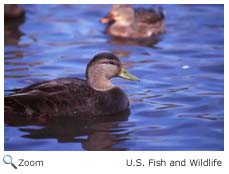 The American black duck is a dabbling duck and feeds in shallow water. It tips its head down and lifts its tail up so it can probe or dabble in the mud and water for submerged plants and seeds. It also eats mollusks, crustaceans, insect larvae, tadpoles, small fish, and frogs. It sometimes skims the surface of the water for seeds and aquatic invertebrates. The American black duck is a dabbling duck and feeds in shallow water. It tips its head down and lifts its tail up so it can probe or dabble in the mud and water for submerged plants and seeds. It also eats mollusks, crustaceans, insect larvae, tadpoles, small fish, and frogs. It sometimes skims the surface of the water for seeds and aquatic invertebrates. |
|
Life Cycle
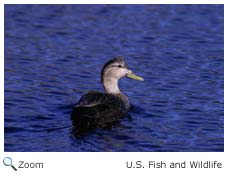 Breeding begins in March and can continue until May, depending on latitude. The female selects a nest site in a clump of grass, under a shrub or tree, or in a fork or hole in a tree. The male defends the territory while the female builds the nest. If she is building a ground nest, she digs a scrape with her bill and feet and lines it with grass, feathers, and other plant materials. She also plucks down from her body and lines the nest with it. She lays 7-17 eggs. When the female has to leave the nest, she covers the eggs with down to keep them warm. Breeding begins in March and can continue until May, depending on latitude. The female selects a nest site in a clump of grass, under a shrub or tree, or in a fork or hole in a tree. The male defends the territory while the female builds the nest. If she is building a ground nest, she digs a scrape with her bill and feet and lines it with grass, feathers, and other plant materials. She also plucks down from her body and lines the nest with it. She lays 7-17 eggs. When the female has to leave the nest, she covers the eggs with down to keep them warm.
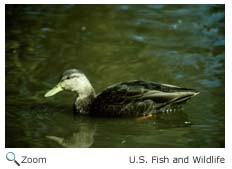 The male stays near the nest but doesn't incubate the eggs. He leaves as the incubation period draws to a close and flies to an isolated area to molt. The male stays near the nest but doesn't incubate the eggs. He leaves as the incubation period draws to a close and flies to an isolated area to molt.
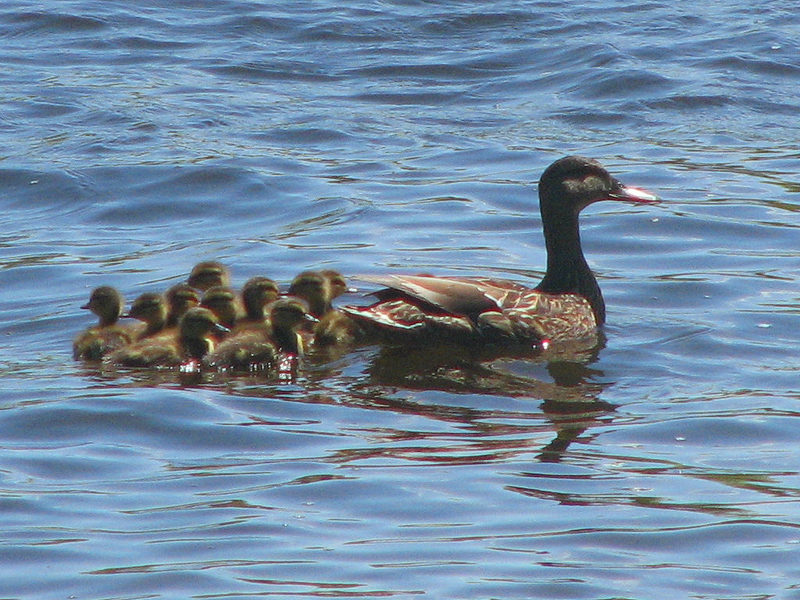
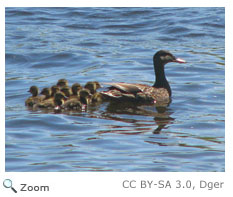 The ducklings hatch in about 29 days. Shortly after hatching, the female leads them to water. For the first couple of weeks, the ducklings eat mosquito larvae and other aquatic invertebrates from the water's surface. As they get older, they begin eating tadpoles and snails. Eventually, they start dabbling under the water for seeds, tubers, and aquatic plants. The female stays with the ducklings for seven to eight weeks until their flight feathers come in. She then leaves the ducklings and begins her molt. The ducklings hatch in about 29 days. Shortly after hatching, the female leads them to water. For the first couple of weeks, the ducklings eat mosquito larvae and other aquatic invertebrates from the water's surface. As they get older, they begin eating tadpoles and snails. Eventually, they start dabbling under the water for seeds, tubers, and aquatic plants. The female stays with the ducklings for seven to eight weeks until their flight feathers come in. She then leaves the ducklings and begins her molt.
Behavior
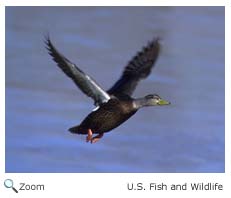 Like other dabbling ducks, the American black duck takes off straight from the water to fly. Diving ducks have to run across the water to get up enough speed to launch themselves into flight. Like other dabbling ducks, the American black duck takes off straight from the water to fly. Diving ducks have to run across the water to get up enough speed to launch themselves into flight.
|