Description
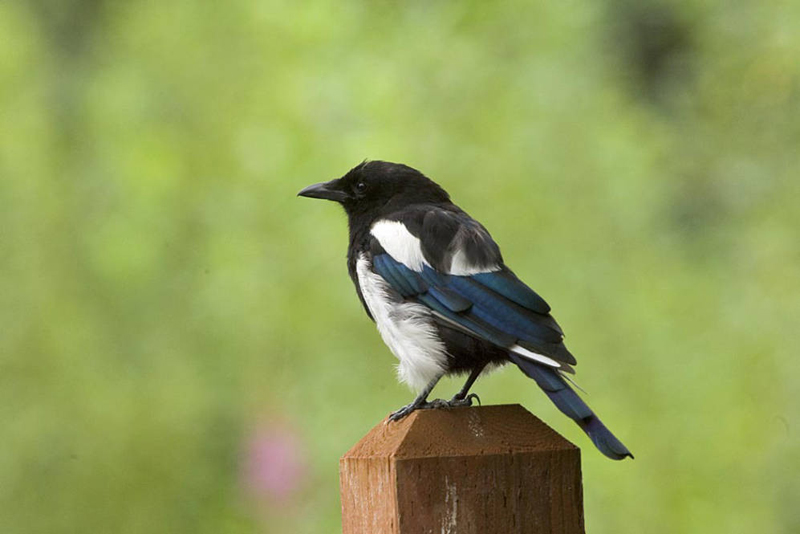
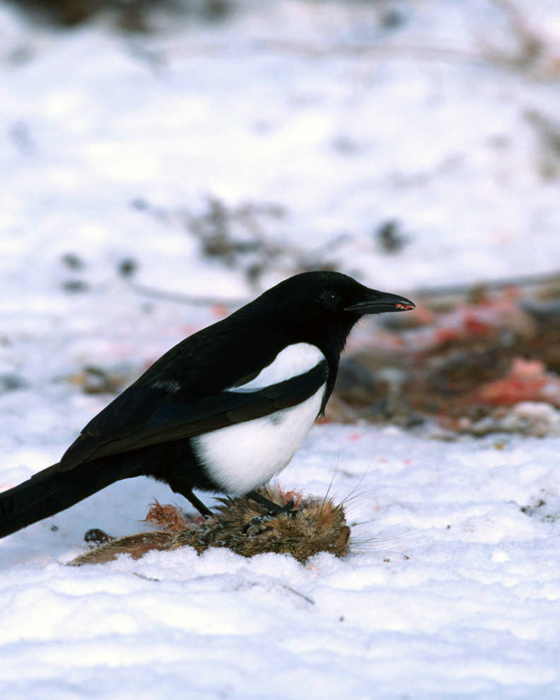
 The black-billed magpie is 17-21 inches in length. It has a black head, chest, back, and tail and a white belly and shoulder patches. It has an extremely long, iridescent green tail and a thick, slightly curved black bill. It has white patches on its wings that can be seen when it is in flight. The magpie gets its name from its "mag, mag, mag" call. Males and females look alike. The black-billed magpie is 17-21 inches in length. It has a black head, chest, back, and tail and a white belly and shoulder patches. It has an extremely long, iridescent green tail and a thick, slightly curved black bill. It has white patches on its wings that can be seen when it is in flight. The magpie gets its name from its "mag, mag, mag" call. Males and females look alike.
Range 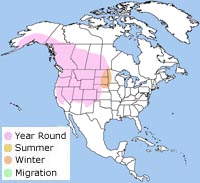 The black-billed magpie is found in the western United States and Canada from southern Alaska to northern Alberta, central Manitoba, and western Ontario south to northeastern and east-central California and south-central Nevada, across to western and northeastern Oklahoma. The black-billed magpie is found in the western United States and Canada from southern Alaska to northern Alberta, central Manitoba, and western Ontario south to northeastern and east-central California and south-central Nevada, across to western and northeastern Oklahoma.
Habitat
The black-billed magpie prefers open areas with short vegetation and patches of trees and bushes. It can be found in pastures, fields, grasslands, prairies, streamside thickets, and forest edges. It can also be found up to timberline in mountainous areas.
| |
Diet
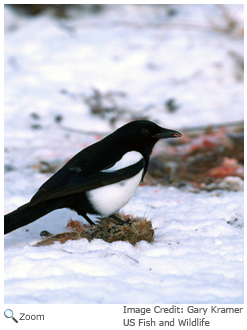 The black-billed magpie is an omnivore. It usually forages on the ground for for insects. It also eats slugs, snails, millipedes, spiders, fish, amphibians, reptiles, small mammals, birds, eggs, carrion, seeds, and fruit. The black-billed magpie even lands on large mammals like deer and moose and pick the ticks off of them. Some of the ticks are eaten, others are stored for later use! The black-billed magpie is an omnivore. It usually forages on the ground for for insects. It also eats slugs, snails, millipedes, spiders, fish, amphibians, reptiles, small mammals, birds, eggs, carrion, seeds, and fruit. The black-billed magpie even lands on large mammals like deer and moose and pick the ticks off of them. Some of the ticks are eaten, others are stored for later use!
Life Cycle
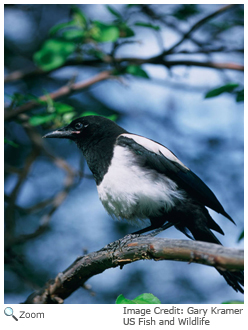 During the fall and winter, males and females form pairs. During courtship, the male brings food to the female. Both the male and female build the nest, which can take as long as six weeks to construct. It is a mud bowl lined with grass and surrounded by a stick dome with two entrances. It is usually located a few feet to 25 feet above the ground in a tree or thorny bush. The female lays four to nine eggs and incubates them. The male brings her food while she is incubating the eggs. The chicks hatch in 16-21 days and fledge when they are 25-29 days old. The male protects the nest and helps feed the chicks. Black-billed magpie pairs may mate for life. During the fall and winter, males and females form pairs. During courtship, the male brings food to the female. Both the male and female build the nest, which can take as long as six weeks to construct. It is a mud bowl lined with grass and surrounded by a stick dome with two entrances. It is usually located a few feet to 25 feet above the ground in a tree or thorny bush. The female lays four to nine eggs and incubates them. The male brings her food while she is incubating the eggs. The chicks hatch in 16-21 days and fledge when they are 25-29 days old. The male protects the nest and helps feed the chicks. Black-billed magpie pairs may mate for life.
Behavior
The black-billed magpie is non-migratory, although it sometimes wanders into other areas during breeding season.
|




 Least Concern