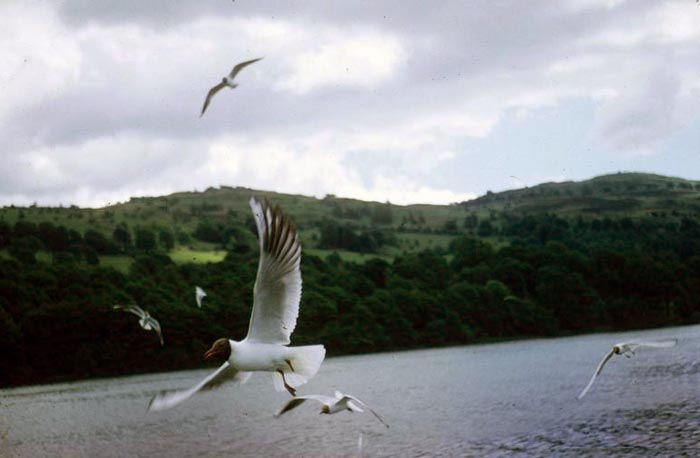

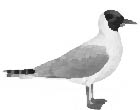
Black-headed gull - Larus ridibundus |
|||||||||||
Description
Range | Habitat
DietThe black-headed gull eats wide variety of food including insects, fish, earthworms, carrion, garbage, seeds, and berries. Life CycleThe black-headed gull nests in colonies. The nest is usually a scrape lined with vegetation and shells. The female lays 1-3 eggs and incubates them for 22-26 days. Both parents care for and feed the chicks. The chicks fledge when they are 35-42 days old. Behavior
The black-headed gull is a common gull in Europe and is found well inland. |
||||||||||
Audio Credit: xeno-canto.org Niels Krabbe  |
|||||||||||

 Least Concern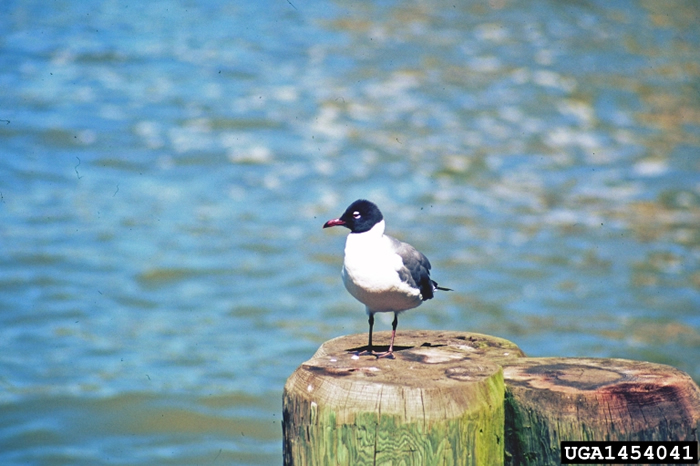
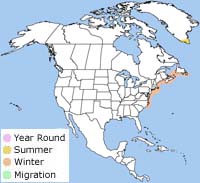 The black-headed gull is found in extreme northeastern Canada and in Greenland, Iceland, and northern Europe and Asia. It winters in the southern regions of its breeding grounds south to Africa and Asia. In the United States, it is sometimes found along the Atlantic Coast in winter.