
Wildlife Journal Junior New Hampshire Public Television Knowledge Network

  Main      Wild Files      N.H. Animals      Animals A-Z      Episodes     KN Home      NHPTV Home

Black Vulture - Coragyps atratus

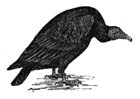
black vulture
series details
 Phylum: Chordata
 Class: Aves
 Order: Falconiformes
 Family: Cathartidae
 Genus: Coragyps

  Description
black vultureThe black vulture is 24-27 inches in length with a wingspan of 54-59 inches. It has a black body, a short, square tail and a featherless and wrinkled dark gray head and neck. It has weak feet and a relatively weak bill. It has broad, round wings that are edged in white on the undersides. Males and females look alike.
  Range
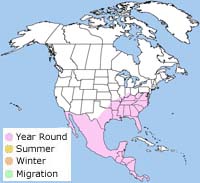
The black vulture is found from southern New York and southern Ohio south to Texas and Central and South America. Birds in the northern part if its range may migrate in the fall. It is occasionally seen as far north as Maine.
  Habitat
The black vulture is found in open areas and breeds in woodlands and thickets. It can often be seen roosting in trees or perched on a fence post. It also glides overhead on thermals searching for food.

  Diet
black vultureThe black vulture is a scavenger. It eats dead animals or carrion. Occasionally, it eats weak, sick, or young birds and mammals. Unlike the turkey vulture, the black vulture uses sight, not smell, to locate food. It hunts for food in groups. It flies high in the air until one of the group spots food. The group then descends to the ground and digs into their find. The black vulture's featherless head prevents dead and rotting meat from collecting in its feathers.
  Life Cycle
The female black vulture lays 2 eggs under a bush, in a hollow log, under large rocks, or in a cave. Both the male and the female incubate the eggs for 32-41 days. The chicks fledge when they are 63-70 days old.
  Behavior
The black vulture is very protective of the carrion it finds and aggressively drives the larger turkey vulture away from a find! It is normally a silent bird, but it hisses, grunts and even barks to drive other scavengers away from its food.

MESY = Math + ENGINEERING + SCIENCE + YOU!
Privacy | Pressroom

New Hampshire Public Television
268 Mast Road, Durham, NH 03824. 603-868-1100 Fax 603-868-7552
Contact NHPTV
©2009 All rights reserved