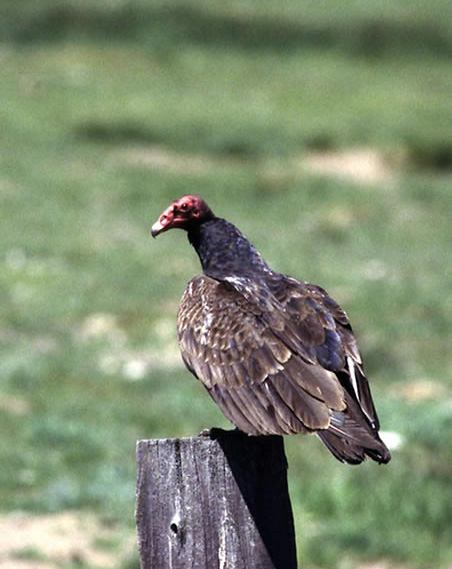
Description 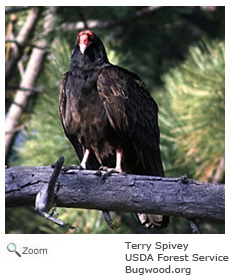 The turkey vulture is 25-32 inches in length with a wingspan of
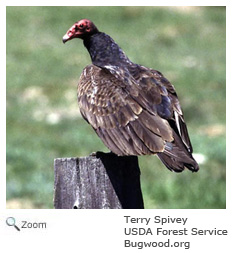
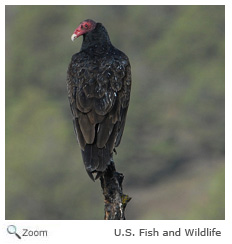
5-6 feet. It has a blackish-brown body; a long, rounded tail; and a featherless, wrinkled, small red head. It has short thick legs; weak feet; and a relatively weak, short hooked bill. Males and females look alike, but the female is slightly larger. The turkey vulture is 25-32 inches in length with a wingspan of
5-6 feet. It has a blackish-brown body; a long, rounded tail; and a featherless, wrinkled, small red head. It has short thick legs; weak feet; and a relatively weak, short hooked bill. Males and females look alike, but the female is slightly larger. Range 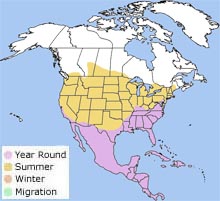 The turkey vulture breeds from southern Canada south though most of the United States. It winters in the Southwest and from southern New England south to Florida.
It is also found in Central and South America. Only the northern most populations migrate in the fall. The turkey vulture breeds from southern Canada south though most of the United States. It winters in the Southwest and from southern New England south to Florida.
It is also found in Central and South America. Only the northern most populations migrate in the fall.
Habitat
 The turkey vulture is found in
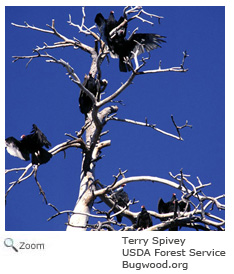
deciduous forests and woodlands. It is often seen flying over open fields, farmland, and clearings looking for carrion. At night, turkey vultures gather in groups and roost in trees. The turkey vulture is found in
deciduous forests and woodlands. It is often seen flying over open fields, farmland, and clearings looking for carrion. At night, turkey vultures gather in groups and roost in trees.
| |
Diet
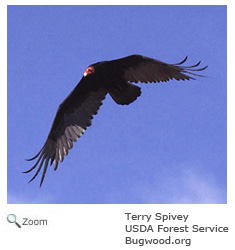 The turkey vulture is a scavenger. It only eats carrion. It soars over the land looking for dead animals. It flies at low altitudes with its wings in a V-shaped angle called a dihedral. As it flies, it rocks from side-to-side instead of flapping its wings. This saves energy and allows the turkey vulture to stay in the air longer. It also glides on thermals or updrafts of air. The turkey vulture is a scavenger. It only eats carrion. It soars over the land looking for dead animals. It flies at low altitudes with its wings in a V-shaped angle called a dihedral. As it flies, it rocks from side-to-side instead of flapping its wings. This saves energy and allows the turkey vulture to stay in the air longer. It also glides on thermals or updrafts of air.
The turkey vulture has excellent eyesight and a keen sense of smell that helps it locate rotting meat. Its sense of smell is a unique adaptation for a bird. Because the turkey vulture doesn't hunt and kill its food, its legs and claws are weaker than those of most birds. The turkey vulture's bald head helps keep dead meat, along with the bacteria it carries, from collecting in the vulture's feathers while it is digging into an animal carcass. The turkey vulture, unlike the black vulture, usually hunts for food alone.
Life Cycle
 The female turkey vulture lays
1-2 eggs under a bush, in a hollow log, under large rocks, or in a cave.
Both the male and the female incubate the eggs for 28 days. Both parents feed the chicks regurgitated food. The chicks fledge when they are 9-10 weeks old. The female turkey vulture lays
1-2 eggs under a bush, in a hollow log, under large rocks, or in a cave.
Both the male and the female incubate the eggs for 28 days. Both parents feed the chicks regurgitated food. The chicks fledge when they are 9-10 weeks old.
Behavior
 The turkey vulture urinates on its legs. The urine cools the vulture and the acids in the urine kill any bacteria that ended up on the vulture's legs when it was stepping in carcasses. The turkey vulture plays an important role in its ecosystem by removing dead animals that could be carrying diseases. The turkey vulture urinates on its legs. The urine cools the vulture and the acids in the urine kill any bacteria that ended up on the vulture's legs when it was stepping in carcasses. The turkey vulture plays an important role in its ecosystem by removing dead animals that could be carrying diseases.
|




 Least Concern