Delphinidae - dolphins, killer whales, pilot whales
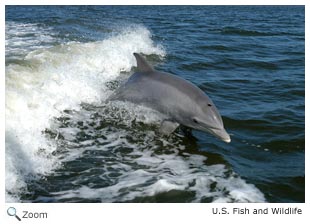 There are 36 species in this family.
Delphinids
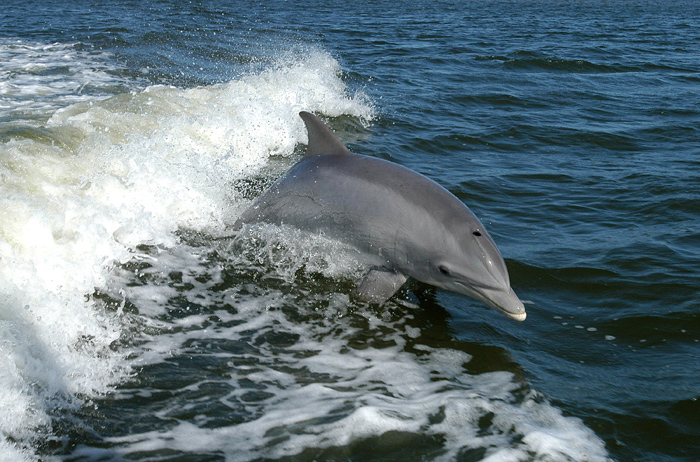
have a torpedo-shaped body; a long beak-like snout; cone-shaped teeth; a blow hole; and a bulging forehead. The bulge in their forehead is cause by the melon. The melon is a fatty bulge between the dolphin's skull and blow hole that is used for echolocation. Most species also have a curved dorsal fin. There are 36 species in this family.
Delphinids
have a torpedo-shaped body; a long beak-like snout; cone-shaped teeth; a blow hole; and a bulging forehead. The bulge in their forehead is cause by the melon. The melon is a fatty bulge between the dolphin's skull and blow hole that is used for echolocation. Most species also have a curved dorsal fin.
Delphinids
are found in all of the world's oceans and some species are found in rivers. They are usually found in shallow water. Most species live in large groups called pods. Delphinids are fast and agile swimmers. Delphinids use echolocation to locate prey like fish and squid. Killer whales also eat seals and penguins.
World Status Key
 Least Concern Least Concern  Near Threatened Near Threatened  Vulnerable Vulnerable  Endangered Endangered
 Critically Endangered Critically Endangered  Extinct in the Wild Extinct in the Wild  Extinct Extinct
Status taken from ICUN Redlist. If no status is listed, there is not enough data to establish status, or there is no status data for the species.
US Status Key
 Threatened in US Threatened in US  Threatened in NH Threatened in NH  Endangered in US Endangered in US  Endangered in NH Endangered in NH  Breeds in NH Breeds in NH  Introduced Introduced
Status taken from US Fish and Wildlife and NH Fish and Game
|


 Africa
  Antarctic Region
  Asia
Asia  Australia/Oceania
  Europe
  North America
  South America
  NH
NH  Arctic Ocean
  Atlantic Ocean
  Indian Ocean
  Mediterranean/Black Sea
  Pacific Ocean
 )