Description
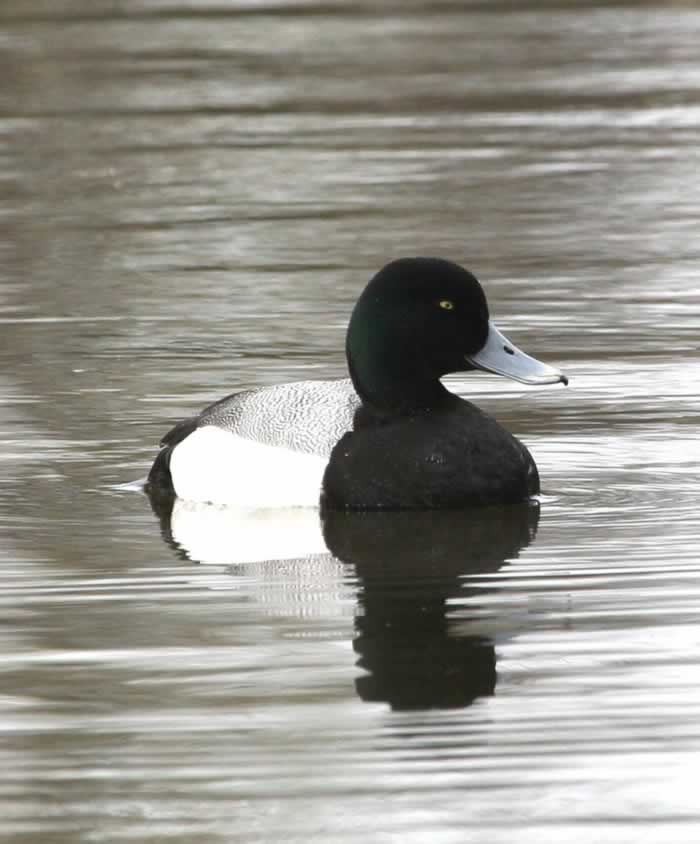
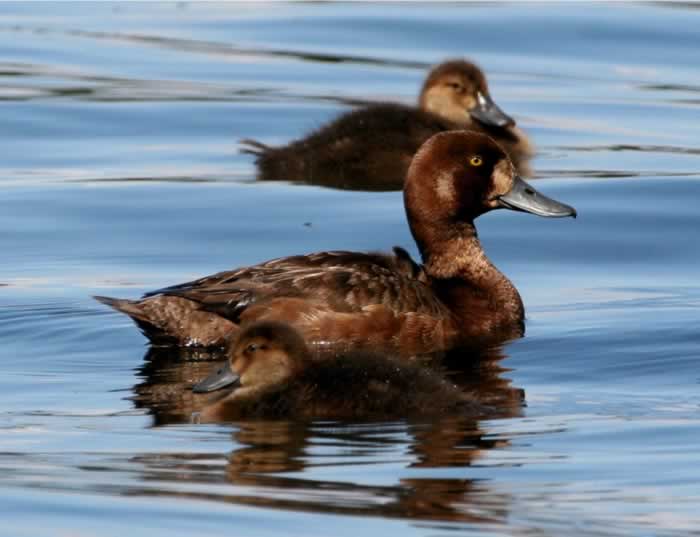
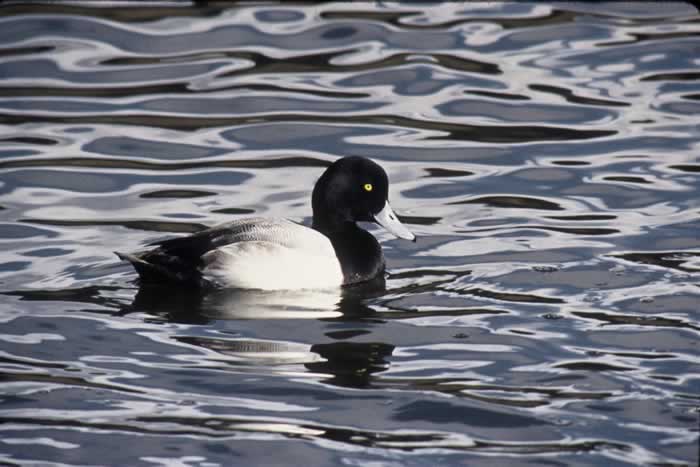
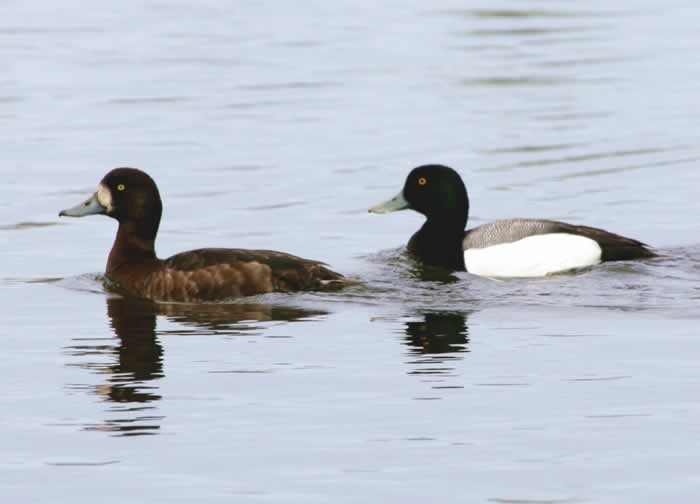
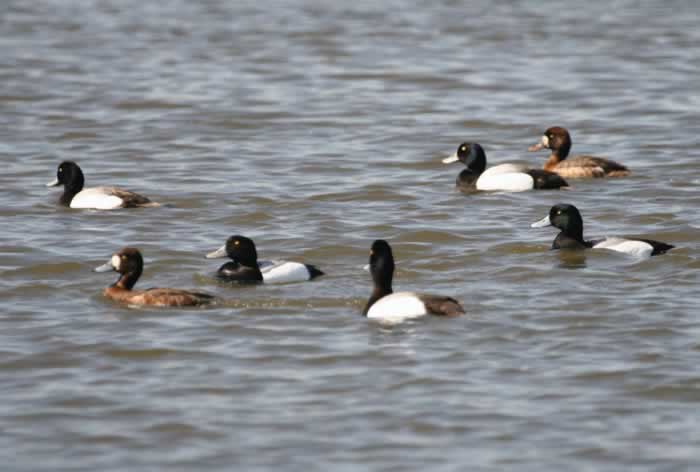
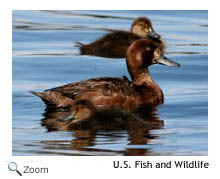
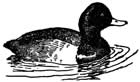
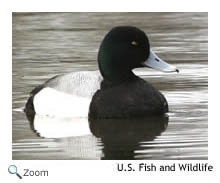 The greater scaup is a medium-sized diving duck. It is 15-22 inches in length with a wingspan of about 28-30 inches. It has a rounded head, bright yellow eyes, and a grayish-blue bill with a black tip. The male has a black chest and tail, white sides, and a barred gray back. His head and neck look black, but they are actually a greenish-black. The female is brown and has a white patch at the base of her bill. Both the male and the female have a white wing stripe and a white belly. The greater scaup looks very similar to the lesser scaup. The greater scaup is a medium-sized diving duck. It is 15-22 inches in length with a wingspan of about 28-30 inches. It has a rounded head, bright yellow eyes, and a grayish-blue bill with a black tip. The male has a black chest and tail, white sides, and a barred gray back. His head and neck look black, but they are actually a greenish-black. The female is brown and has a white patch at the base of her bill. Both the male and the female have a white wing stripe and a white belly. The greater scaup looks very similar to the lesser scaup.
Range 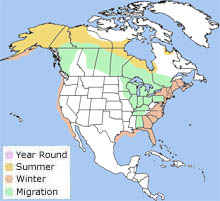 The greater scaup breeds from Alaska east to Labrador, Canada. It winters along the Atlantic and Pacific coasts of southern Canada and the United States. It is also found in the Gulf Coast, the Great Lakes, and in Europe and Asia. The greater scaup breeds from Alaska east to Labrador, Canada. It winters along the Atlantic and Pacific coasts of southern Canada and the United States. It is also found in the Gulf Coast, the Great Lakes, and in Europe and Asia.
Habitat
 The greater scaup
is found on
lakes, ponds, and bays during breeding season. In the winter, it is found in coastal bays, lagoons, and estuaries. The greater scaup
is found on
lakes, ponds, and bays during breeding season. In the winter, it is found in coastal bays, lagoons, and estuaries.
|
|
Diet
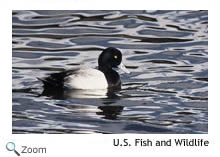 The greater scaup dives for mollusks and for the seeds, leaves, stems, roots, and tubers of aquatic plants. It returns to the surface of the water to eat its food. The greater scaup dives for mollusks and for the seeds, leaves, stems, roots, and tubers of aquatic plants. It returns to the surface of the water to eat its food.
Life Cycle
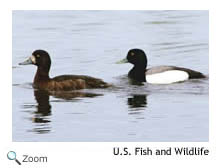 Male and female pairs form in
late winter or early spring. The female lays 5-13 eggs in a depression in the ground lined with grass and down. Nests are usually located close to the water or on an island and are usually well-hidden by vegetation. The male leaves when the female begins to incubate the eggs. The female incubates the eggs for 23-28 days. The chicks are precocial. Shortly after hatching the female leads them to water where they feed themselves. The ducklings fledge when they are 40-45 days old. Male and female pairs form in
late winter or early spring. The female lays 5-13 eggs in a depression in the ground lined with grass and down. Nests are usually located close to the water or on an island and are usually well-hidden by vegetation. The male leaves when the female begins to incubate the eggs. The female incubates the eggs for 23-28 days. The chicks are precocial. Shortly after hatching the female leads them to water where they feed themselves. The ducklings fledge when they are 40-45 days old.
Behavior
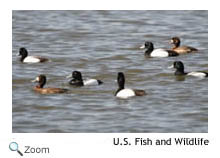 The greater scaup usually gathers in
large rafts, sometimes containing thousands of birds.
The greater scaup gets its name from the
"scaup scaup" call it makes. It is also sometimes called the "blue-bill." The greater scaup usually gathers in
large rafts, sometimes containing thousands of birds.
The greater scaup gets its name from the
"scaup scaup" call it makes. It is also sometimes called the "blue-bill."
|




 Least Concern