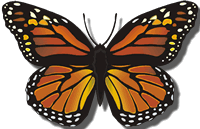
 While you won't be able to attract Karner Blue butterflies to a butterfly garden, you can attract many other species! When planning a butterfly garden you need to plant plants that will provide food for caterpillars and for butterflies! While you won't be able to attract Karner Blue butterflies to a butterfly garden, you can attract many other species! When planning a butterfly garden you need to plant plants that will provide food for caterpillars and for butterflies!
Plant to Attract ButterfliesDill, parsley, fennel, and foxglove are all plants that can attract caterpillars.
Conefower, bee balm, butterfly weed, red valerian, heliotrope, nasturtium, and butterfly bush are all plants that can provide nectar for butterflies.
How to Build a Butterfly Garden  When planting a butterfly garden, don't mix different plants together, instead plant them in groups. You will attract more butterflies that way! Select plants that bloom at different times during the growing season, so you always have plants to attract butterflies. You also want to provide your butterflies with water and places to sun themselves! Bury bowls in the garden, fill them with water, and place some sticks and stones in the water so the butterflies have a place to perch! You can also place some flat stones around your garden so the butterflies have a place to perch and sun themselves. When planting a butterfly garden, don't mix different plants together, instead plant them in groups. You will attract more butterflies that way! Select plants that bloom at different times during the growing season, so you always have plants to attract butterflies. You also want to provide your butterflies with water and places to sun themselves! Bury bowls in the garden, fill them with water, and place some sticks and stones in the water so the butterflies have a place to perch! You can also place some flat stones around your garden so the butterflies have a place to perch and sun themselves.
|
|
|
|
What a Butterfly Wants
Different species of butterflies are attracted to different plants. Here is a list of some butterflies that are found in New Hampshire and the plants they like!
Black Swallowtail
- Caterpillar: Queen Anne's Lace, carrot, celery, and dill
- Butterfly: red clover, milkweed, and thistles
Eastern Tiger Swallowtail
- Caterpillar: Leaves of various plants including wild cherry, sweetbay, basswood, tulip tree, birch, ash, cottonwood, mountain ash, and willow
- Butterfly: wild cherry and lilac
Great Spangled Fritillary
- Caterpillar: violet
- Butterfly: milkweeds, thistles, ironweed, dogbane, mountain laurel, verbena, vetch, bergamot, red clover, joe-pye weed, and purple coneflower.
Monarch
- Caterpillar: milkweed
- Butterfly: dogbane, lilac, red clover, lantana, goldenrod, and thistle
Mourning Cloak
- Caterpillar: willow, elm, poplar, aspen, birch, hackberry
- Butterfly: rotting fruit, sap, butterfly bush, milkweed, shasta daisy
Painted Lady
- Caterpillar: daisy, hollyhock
- Butterfly: goldenrod, aster, zinnia, butterfly bush, milkweed
Red Admiral
- Caterpillar: nettle
- Butterfly: rotting fruit and sap, daisy, aster, goldenrod, butterfly bush, milkweed
|