Habitat
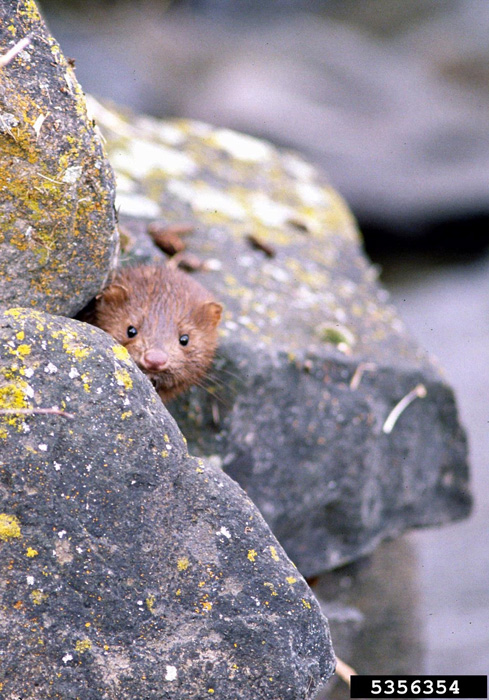
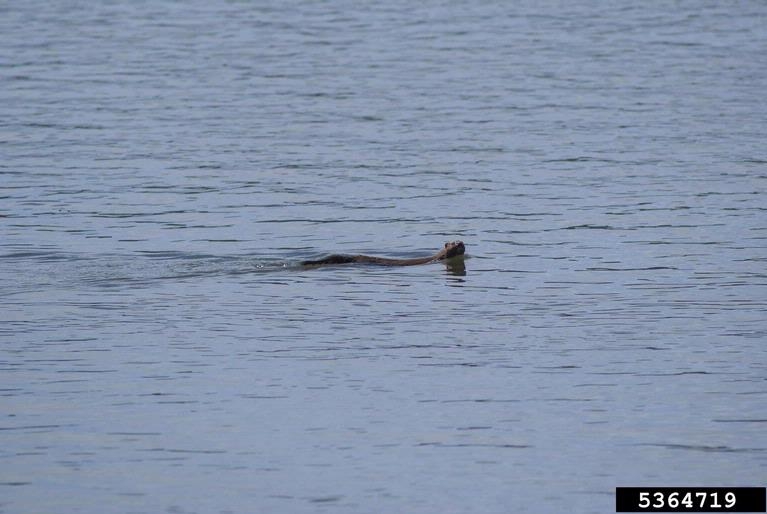
The mink lives in forested areas that are near rivers, streams, lakes, ponds and marshes.
Diet
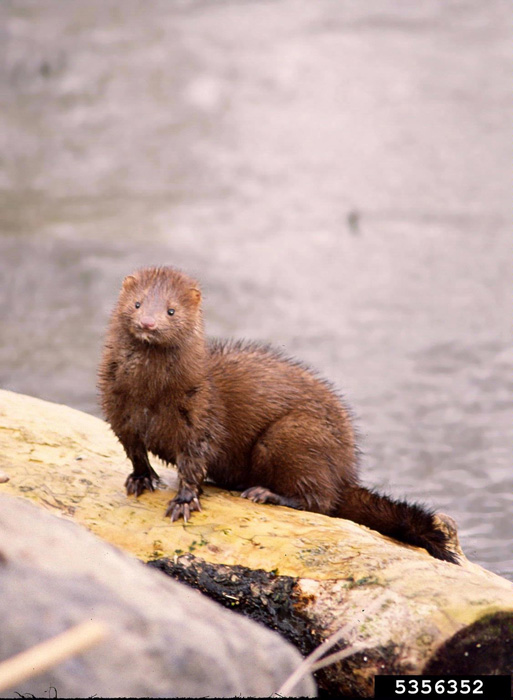
 The mink is a carnivore. It eats muskrats, rabbits, mice, chipmunks, fish, snakes, frogs, and birds. It kills its prey by biting it on the neck. It sometimes stores extra food in its den. The mink digs its den in river banks, or it finds a hollow log or an abandoned beaver or muskrat den. It never uses the same den for long.
Life Cycle
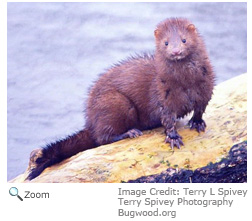 Mating season runs January through April. The female has a litter of three to six young in a fur-lined nest. The babies are weaned when they are five to six weeks old. The babies stay with their mother until the fall.
Behavior
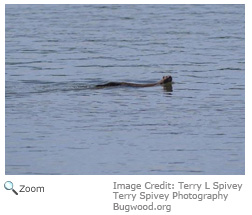 The mink spends a lot of its time in the water hunting for food. It is a good swimmer and can dive as deep as 16 feet. Like the skunk, the mink sprays intruders with a foul-smelling liquid. Unlike the skunk, the mink can't aim its spray! When the mink is happy, it makes a purring sound like a cat. The mink is very territorial, and males fight other minks that invade their territory. The mink marks its territory with scent.




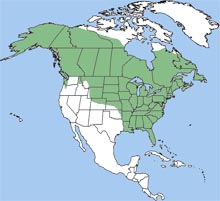 The mink can be found in most of the United States and Canada.
The American mink is found throughout New Hampshire.
The mink can be found in most of the United States and Canada.
The American mink is found throughout New Hampshire.