
Wildlife Journal Junior New Hampshire Public Television Knowledge Network

  Main      Wild Files      N.H. Animals      Animals A-Z      Episodes     KN Home      NHPTV Home

Striped Skunk - Mephitis mephitis

Striped Skunk
series details
 Phylum: Chordata
 Class: Mammalia
 Order: Carnivora
 Family: Mephitidae
 Genus: Mephitis

  Description
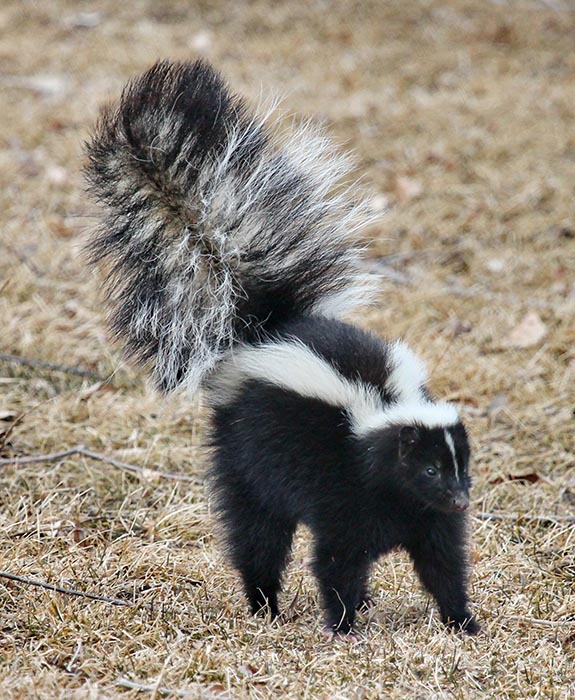
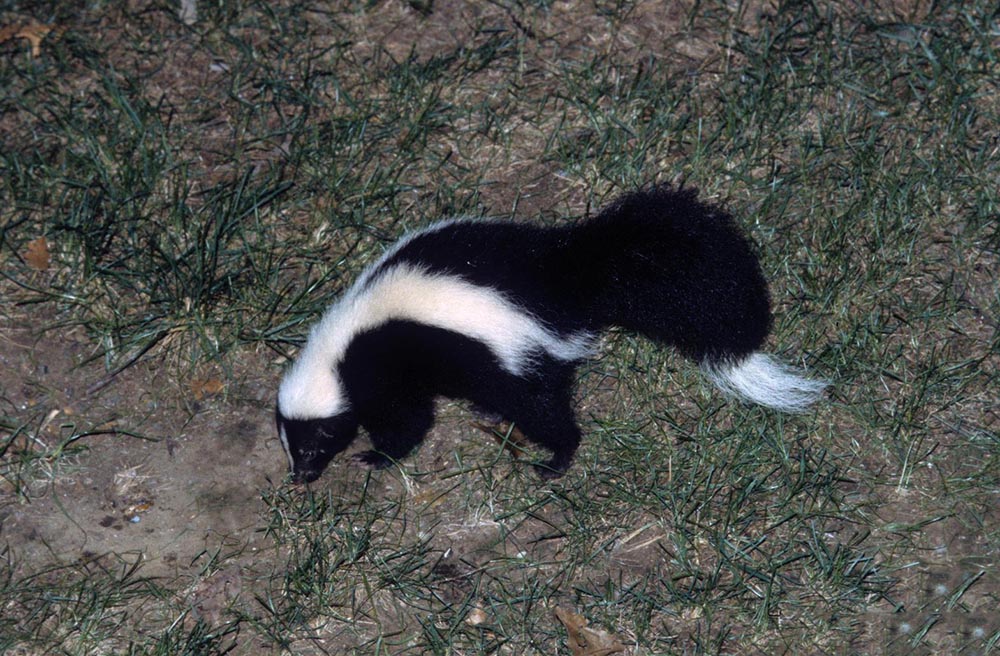
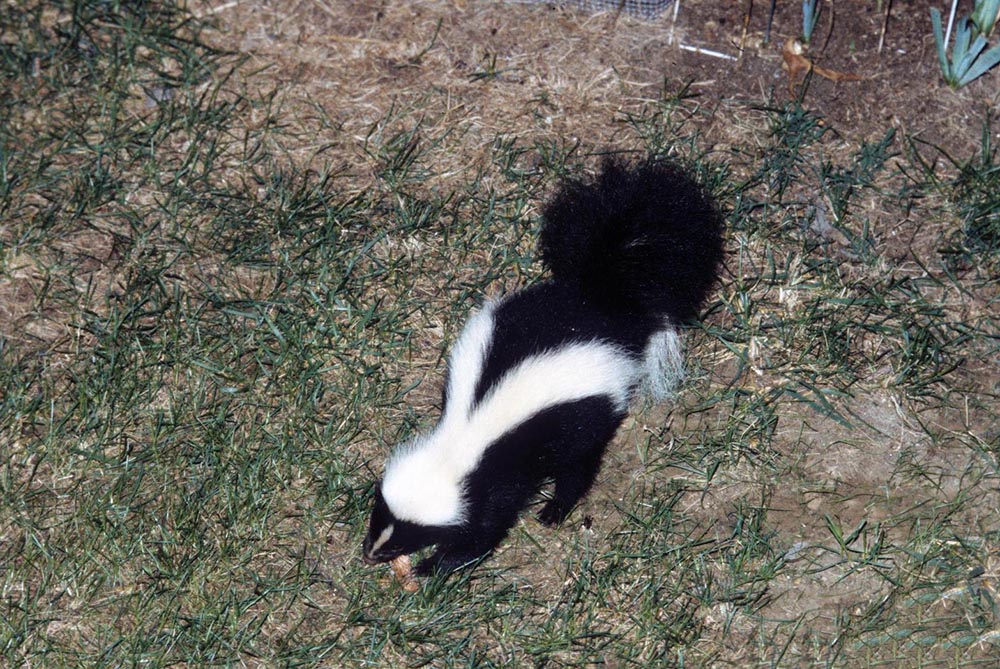
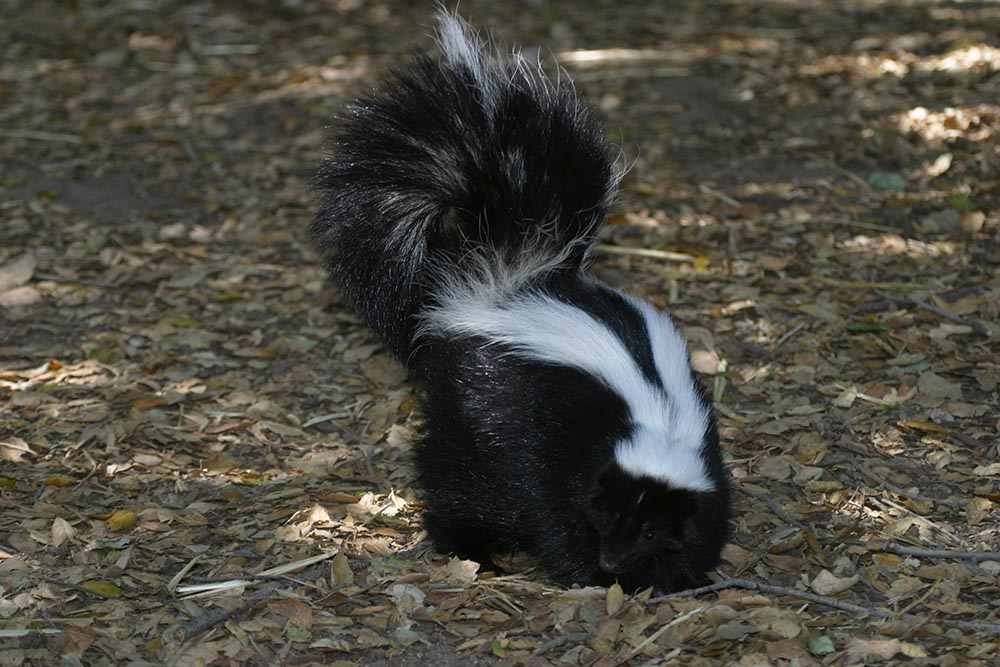
Striped SkunkThe striped skunk is easily identified by the white stripes that run from its head to its tail. The stripes start with a triangle at the head and break into two stripes down the skunk's back. The stripes usually meet again and form one stripe at the base of the skunk's tail. The tail is usually a mixture of white and black fur. Each striped skunk has a unique stripe pattern!

The striped skunk is about the size of a house cat. It has a small triangular head and little ears. Its legs are short with webbed toes and claws that the striped skunk uses for digging and looking for food.

  Range
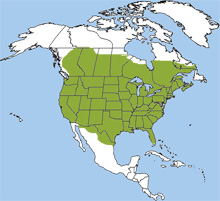
The striped skunk is only found in North America. Its range runs from central Canada to northern Mexico. The striped skunk is found throughout New Hampshire.
  Habitat
Striped SkunkThe striped skunk tends to live in open areas with a mix of habitats like woods and grasslands or meadows. It is also found in city and suburban areas. It is usually never further than two miles from water.
  Diet
The striped skunk is omnivorous, it eats both meat and plants. Its diet includes insects, small mammals, fish, crustaceans, fruits, nuts, leaves, grasses and carrion (dead animals). What a skunk eats often depends on what it can find and the time of year.

  Lifecycle
Striped SkunkStriped skunks mate from mid-February to mid-March. The babies are born about two months later. An average skunk litter has five to six babies. Skunk babies are blind and deaf when they are born. They nurse in the den for about a month and a half. After they leave the den, they may stay with their mother for up to a year.
  Behavior
Striped Skunk

With their short, stubby legs, it isn't easy for a skunk to outrun a predator. The striped skunk has developed a unique defense system. When a skunk is  threatened, it first tries to run away from the predator. If that doesn't work, it tries to frighten the predator by arching its back, raising its tail, and turning its back on the predator. It may also stomp its feet. If this doesn't work, as a last resort, the skunk sprays the animal with a strong-smelling fluid. The fluid really stinks and it can also sting the eyes of the predator. This gives the skunk time to get away! A skunk can spray as far as twelve feet!

The skunk is primarily nocturnal. It sleeps in its burrow during the day and hunts at night. It usually doesn't dig its own burrow. It looks for an abandoned burrow or finds a natural hollow under a tree or building.


MESY = Math + ENGINEERING + SCIENCE + YOU!
Privacy | Pressroom

New Hampshire Public Television
268 Mast Road, Durham, NH 03824. 603-868-1100 Fax 603-868-7552
Contact NHPTV
©2009 All rights reserved