
Moose Roundup |
|||||||||||||||||
| Using helicopters and net-guns, the wranglers capture and radio-collar cow and calf moose, while Wildlife Journal's cameras follow the action. Using GPS technology, a team of researchers from the University of New Hampshire will track the lives of these moose for four years, in a scientific attempt to finally solve some mysteries about New Hampshire's moose herd. If the scientists are successful, their findings will help them manage for critical moose habitat -- which will, in turn, increase the potential for winter survival of moose and their calving success. Key Concepts
Other Concepts
NH Social Studies Connection
Taking Action
|
Did You Know?... that the moose is the largest member of the deer family and the largest mammal in North America! ... that you can't outrun a moose! They can run faster than humans What Do You Think?
Wild Files
Teacher's Guide
|
||||||||||||||||
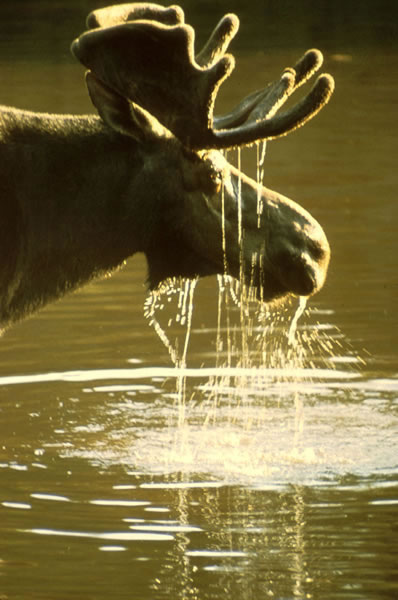




 Learn more about these animals.