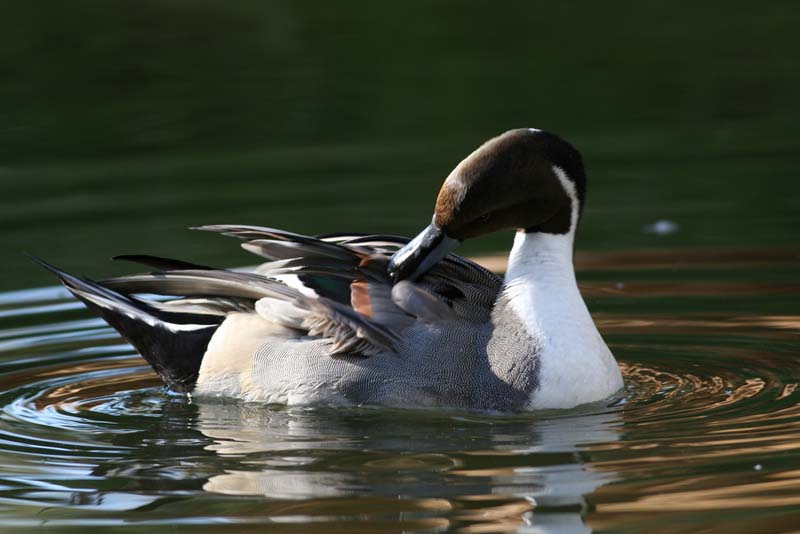
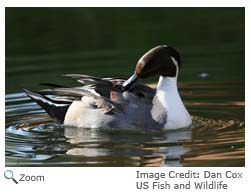
Description 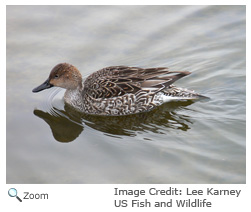 The northern pintail is 20 to 30 inches in length with a wingspan of about three feet. It has a very long, thin neck; a grayish black bill; a small head; and long, pointed tail feathers. In fact, the pintail gets its name from its pointed tail feathers. The northern pintail is 20 to 30 inches in length with a wingspan of about three feet. It has a very long, thin neck; a grayish black bill; a small head; and long, pointed tail feathers. In fact, the pintail gets its name from its pointed tail feathers.
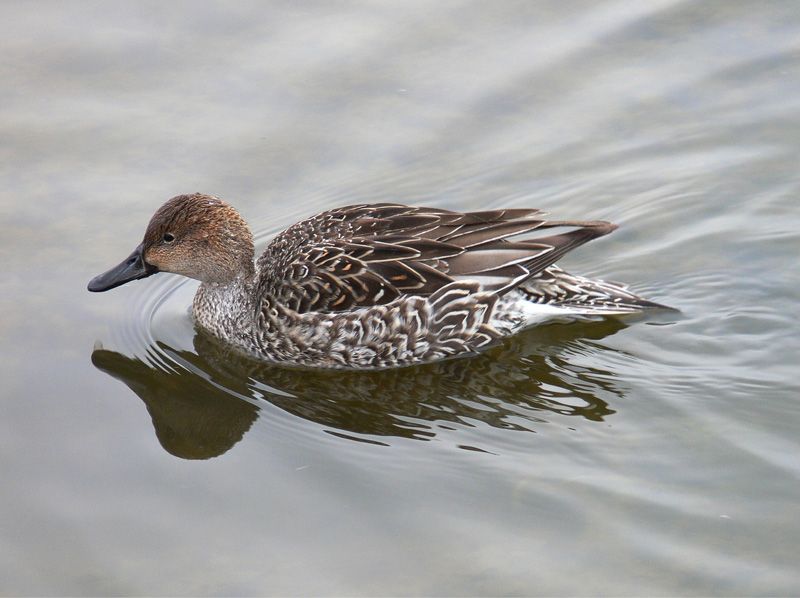
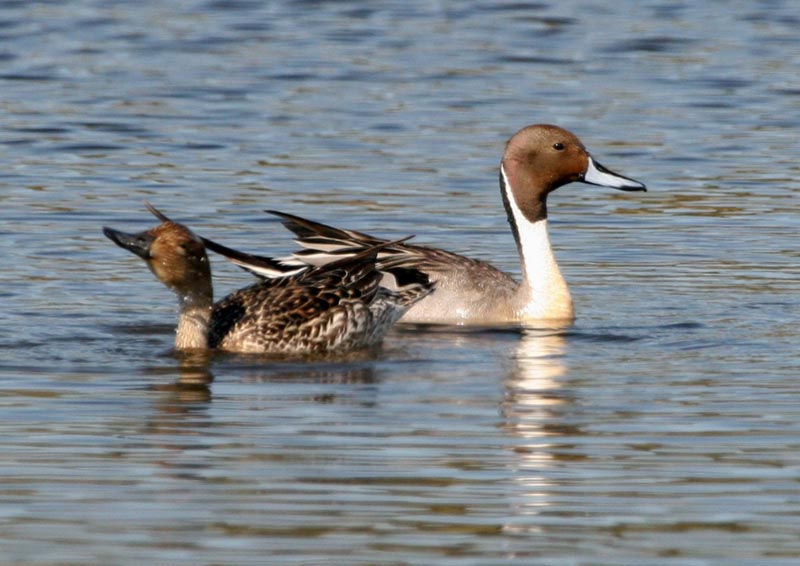
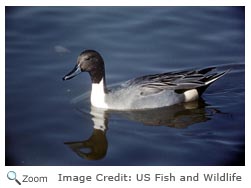 The male has a brown head and a white neck, chest, and belly. It has gray sides and a greenish patch with a tan and a white border on its wings. The female has a tan head and neck and mottled tan and brown feathers on her back and body. She has a brown patch with a white line on the edge of her wings. The male has a brown head and a white neck, chest, and belly. It has gray sides and a greenish patch with a tan and a white border on its wings. The female has a tan head and neck and mottled tan and brown feathers on her back and body. She has a brown patch with a white line on the edge of her wings.
Range
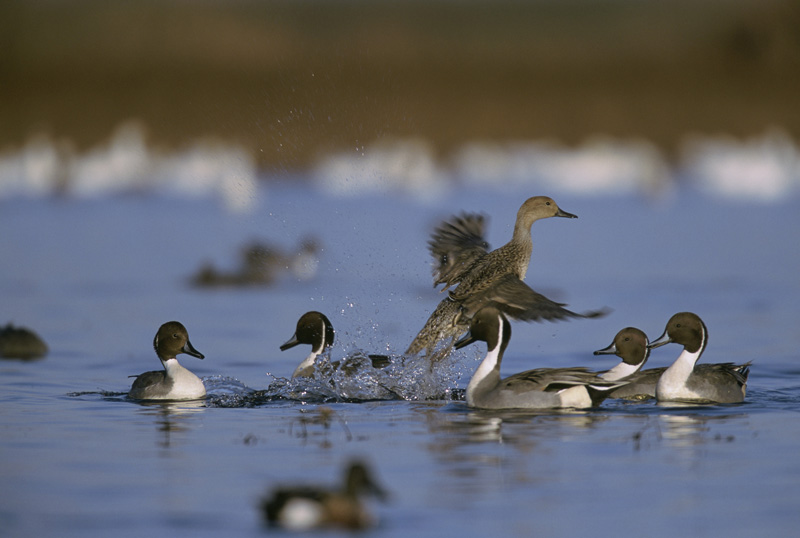
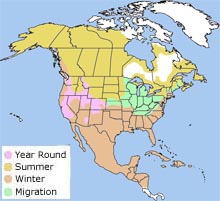 The northern pintail breeds from Alaska east to Quebec and south to the central Great Plains, the Great Lakes, and northern New England. It winters from the central United States southward to northern South America. The pintail is also found in southern Europe, northern Africa, and southern Asia. Northern pintails are gregarious ducks and often gather in flocks of hundreds of birds. The northern pintail breeds from Alaska east to Quebec and south to the central Great Plains, the Great Lakes, and northern New England. It winters from the central United States southward to northern South America. The pintail is also found in southern Europe, northern Africa, and southern Asia. Northern pintails are gregarious ducks and often gather in flocks of hundreds of birds. |
|
Habitat
 The northern pintail duck nests in open country with shallow, seasonal wetlands and low vegetation. It winters in wide variety of freshwater habitats including marshes, ponds, lakes, rivers, and canals. The northern pintail duck nests in open country with shallow, seasonal wetlands and low vegetation. It winters in wide variety of freshwater habitats including marshes, ponds, lakes, rivers, and canals.
Diet
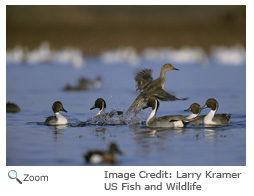 The northern pintail duck dabbles for food in the water. It usually feeds during the evening and at night. Most of the pintail's diet is made up of the seeds of aquatic plants like pondweeds, sedges, grasses, and smartweeds. It also eats small aquatic animals and feeds on seeds in fields. The northern pintail duck dabbles for food in the water. It usually feeds during the evening and at night. Most of the pintail's diet is made up of the seeds of aquatic plants like pondweeds, sedges, grasses, and smartweeds. It also eats small aquatic animals and feeds on seeds in fields.
Life Cycle
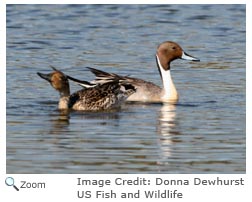 The male pintail courts a female by swimming close to her with his bill down and his tail up in the air. He calls to her with a whistling sound. The female pintail lays 6-12 eggs in a nest on the ground. The nest is built in cattails, rushes, or high grass some distance from the water. It is made with grass and rushes and is lined with grass and down. The eggs take about three weeks to hatch. The female incubates the eggs. Sometimes the male stays to help care for the ducklings, but more often the female raises the ducklings alone. The ducklings fledge when they are a little more than a month old. The male pintail courts a female by swimming close to her with his bill down and his tail up in the air. He calls to her with a whistling sound. The female pintail lays 6-12 eggs in a nest on the ground. The nest is built in cattails, rushes, or high grass some distance from the water. It is made with grass and rushes and is lined with grass and down. The eggs take about three weeks to hatch. The female incubates the eggs. Sometimes the male stays to help care for the ducklings, but more often the female raises the ducklings alone. The ducklings fledge when they are a little more than a month old.
BehaviorThe female pintail duck protects her brood by flying at an intruder or by pretending to be injured and leading the predator away from her brood.
|