Description
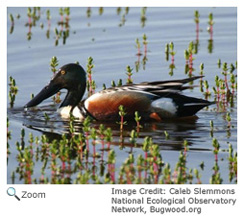 The northern shoveler is a medium-sized dabbling duck. Its
most unique feature is its large shovel-shaped
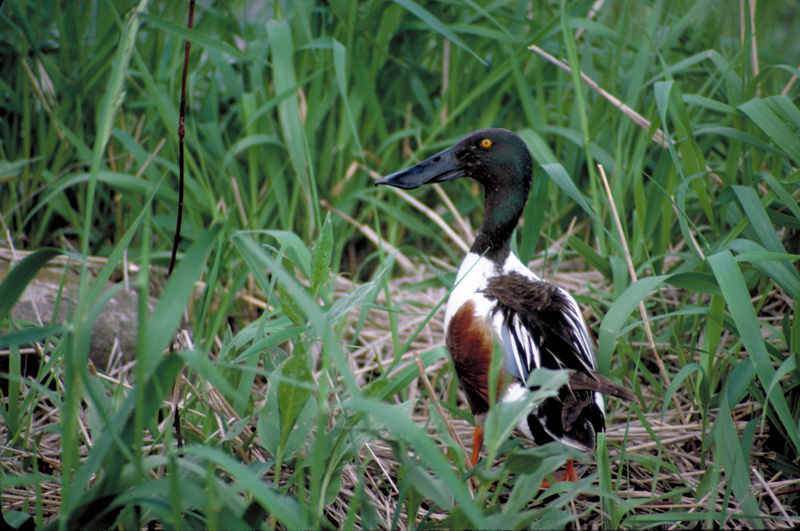
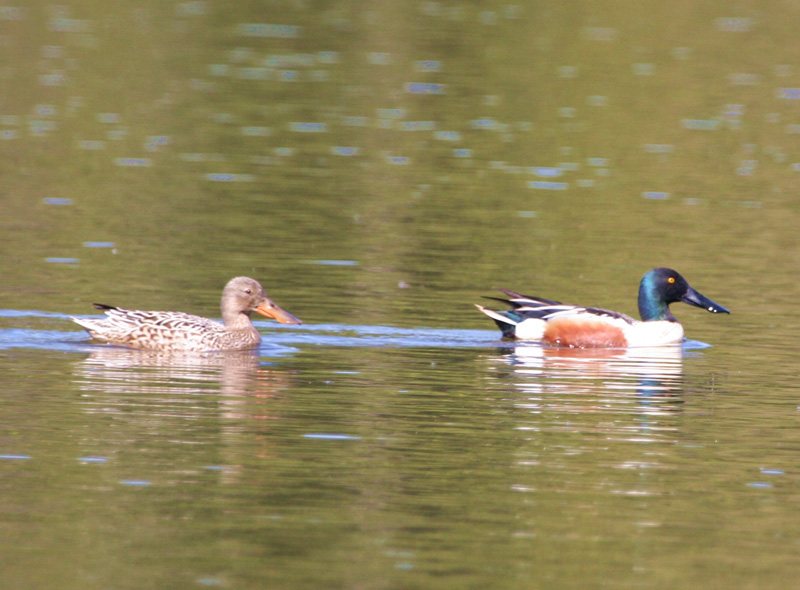
bill. During the breeding season, male shovelers have shiny green heads, a white body, rusty-red undersides,
and black wings. In non-breeding season their color is a little duller and their head and breast are brown. Male shovelers have yellow eyes and a black bill. The northern shoveler is a medium-sized dabbling duck. Its
most unique feature is its large shovel-shaped
bill. During the breeding season, male shovelers have shiny green heads, a white body, rusty-red undersides,
and black wings. In non-breeding season their color is a little duller and their head and breast are brown. Male shovelers have yellow eyes and a black bill.
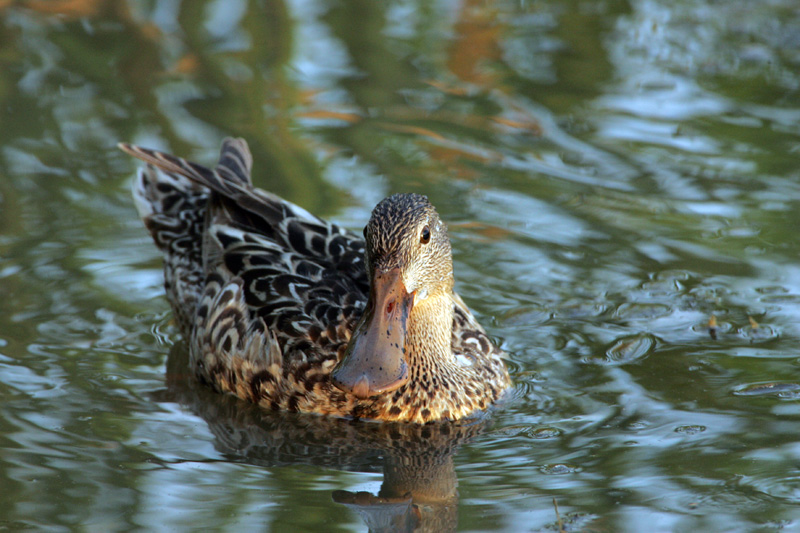
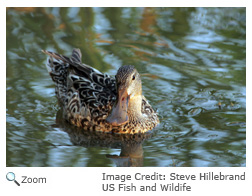 Female northern shovelers have mottled brown, black and white feathers and
a blue patch on their wings. Their eyes are brown and their bill is a brownish green. Female northern shovelers have mottled brown, black and white feathers and
a blue patch on their wings. Their eyes are brown and their bill is a brownish green.
Range
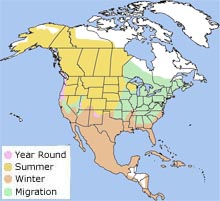 The northern shoveler breeds from Alaska east to northern Manitoba and south to California and the Great Lakes region. It winters from Oregon south to California and east across the southern United States and up the east coast to New Jersey. It also winters in Mexico, Central America, northern South America, and the Caribbean. The northern shoveler breeds from Alaska east to northern Manitoba and south to California and the Great Lakes region. It winters from Oregon south to California and east across the southern United States and up the east coast to New Jersey. It also winters in Mexico, Central America, northern South America, and the Caribbean.
Habitat 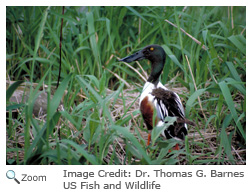 The northern shoveler is found in marshes and prairie potholes. It needs habitats with shallow water with muddy bottoms. The northern shoveler is found in marshes and prairie potholes. It needs habitats with shallow water with muddy bottoms. |
|
Diet
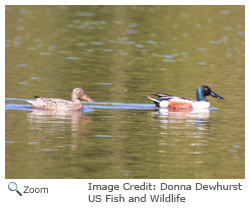 The northern shoveler is a filter feeder. It skims its bill just above the bottom of a pond or lake and sucks water into the front of its bill. It then uses the comb-like teeth on its bill to strain out plants and aquatic animals. It squirts the excess water out of the sides of its bill. The northern shoveler is a filter feeder. It skims its bill just above the bottom of a pond or lake and sucks water into the front of its bill. It then uses the comb-like teeth on its bill to strain out plants and aquatic animals. It squirts the excess water out of the sides of its bill.
Life Cycle
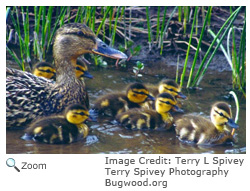 The female lays eight to twelve eggs in a nest made of grass and leaves and lined with down and feathers. The nest is built on the ground under a bush or in tall vegetation. The female incubates the eggs. The female lays eight to twelve eggs in a nest made of grass and leaves and lined with down and feathers. The nest is built on the ground under a bush or in tall vegetation. The female incubates the eggs.
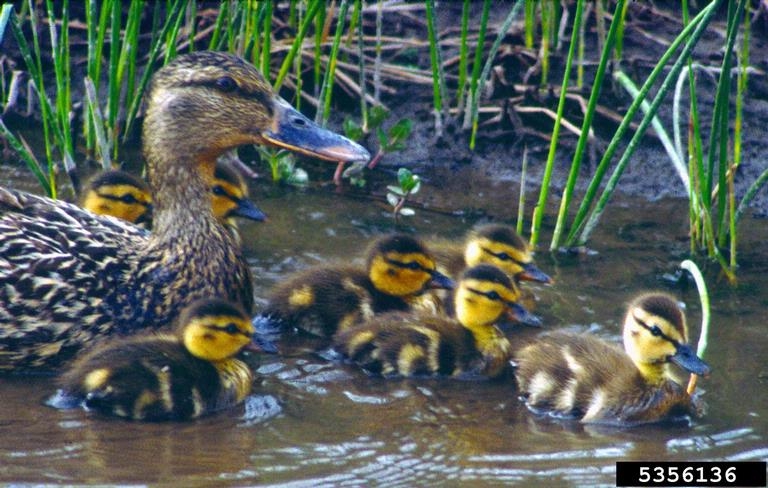
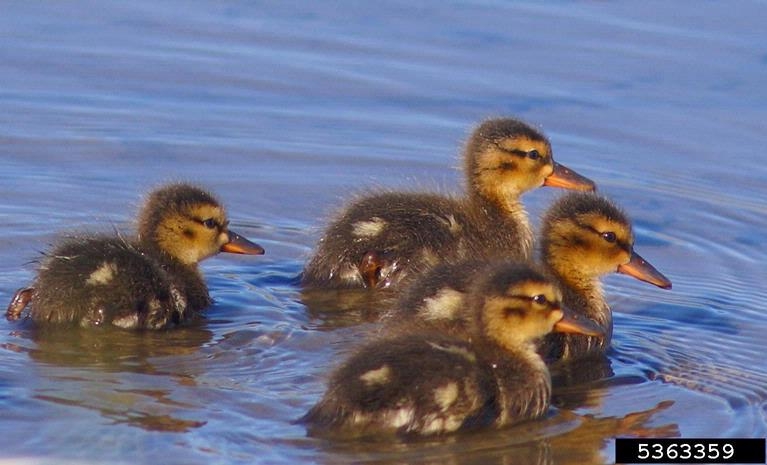
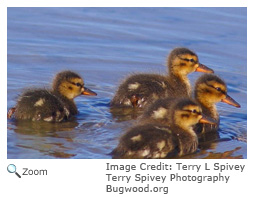 They hatch in about three weeks. Soon after hatching, the female leads her ducklings to the the water and teaches them how to catch insects and find plants to eat. The ducklings fledge in 40 to 70 days. They hatch in about three weeks. Soon after hatching, the female leads her ducklings to the the water and teaches them how to catch insects and find plants to eat. The ducklings fledge in 40 to 70 days.
BehaviorDuring the heat of the day, the shoveler often rests on the mud next to the water.
|