Picidae - Woodpeckers, Flickers, Sapsuckers, Wrynecks, Piculets |
|
|
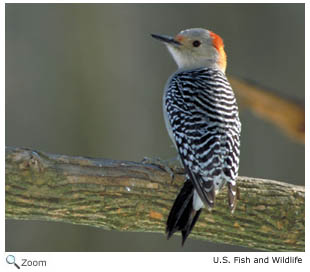 There are around 218 species in this family of birds. They are found in all parts of the world, except for Australia,
Madagascar, and the polar regions.Most species are found in forests or woodlands, although some species, like The gila woodpecker, are found in deserts. There are around 218 species in this family of birds. They are found in all parts of the world, except for Australia,
Madagascar, and the polar regions.Most species are found in forests or woodlands, although some species, like The gila woodpecker, are found in deserts.
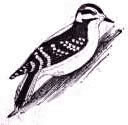
They range in size from 3-23 inches in length. Many species in this family have some combination of red, white, and black feathers. They have strong, straight bills; long, sticky tongues; long, stiff tail feathers; and zygodactyl feet. That means they have two toes facing frontwards and two toes facing backwards. This helps them climb tree trunks. Their stiff tails help them keep their balance as they cling to the sides of trees!
The birds in this family nest in tree cavities. Most species dig out their own cavity, although wrynecks use the abandoned cavities of other birds or a tree crotch or natural crevice. Males and females work together to build the nest. In some species, the male does most of the excavation and the female arranges the inside of the nest. Females lay 2-5 eggs and both the male and female incubate the eggs and feed and care for the chicks. Most species eat ants, beetles, spiders, moths, grasshoppers, crickets, and insect larvae. Some species may also eat
nuts, berries, seeds, and sap.
 The imperial woodpecker is thought to be extinct. The imperial woodpecker was once found in the
Sierra Madre Occidental mountains
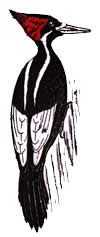
in northwestern Mexico. The last confirmed sighting of the imperial woodpecker was in the 1950s. The imperial woodpecker was the largest woodpecker species. It was 23 inches in length. The imperial woodpecker was black and white and had a long, pointed yellowish-orange bill. The male had a large red crest and the female had a black crest. The imperial woodpecker is thought to be extinct. The imperial woodpecker was once found in the
Sierra Madre Occidental mountains
in northwestern Mexico. The last confirmed sighting of the imperial woodpecker was in the 1950s. The imperial woodpecker was the largest woodpecker species. It was 23 inches in length. The imperial woodpecker was black and white and had a long, pointed yellowish-orange bill. The male had a large red crest and the female had a black crest.
The ivory-billed woodpecker was listed as an extinct species in 2021 by U.S. Fish and Wildlife. It had white wing patches and a white stripe that ran from its cheek down its neck and back. The male had a red crest and the female had a black crest. Ivory-billed woodpeckers had an ivory-colored bill. The ivory-billed woodpecker was once found in the southeastern United States and in Cuba.
 Picidae Photo Gallery Picidae Photo Gallery
World Status Key
 Least Concern Least Concern  Near Threatened Near Threatened  Vulnerable Vulnerable  Endangered Endangered  Critically Endangered Critically Endangered  Extinct in Wild Extinct in Wild  Extinct Extinct
Status and range is taken from ICUN Redlist. If no status is listed, there is not enough data to establish status.
US Status Key
 Threatened in US Threatened in US  Threatened in NH Threatened in NH  Endangered in US Endangered in US  Extinct in US Extinct in US  Endangered in NH Endangered in NH  Introduced Introduced
Status taken from US Fish and Wildlife and NH Fish and Game
 Africa Africa  Asia Asia  Australia/Oceania Australia/Oceania  Europe Europe  North America North America  South America South America  NH NH
New Hampshire Species
Black-backed Woodpecker - Picoides arcticus 
Downy Woodpecker - Picoides pubescens
Hairy Woodpecker - Picoides villosus
Northern Flicker - Colaptes auratus
Pileated Woodpecker - Dryocopus pileatus
Red-bellied Woodpecker - Melanerpes carolinus
Red-headed Woodpecker - Melanerpes erythrocephalus
American Three-toed Woodpecker - Picoides dorsalis
Yellow-bellied Sapsucker - Sphyrapicus varius
North/Central American Species
Pale-billed Woodpecker - Campephilus guatemalensis
Crimson-bellied Woodpecker - Campephilus haematogaster
Imperial Woodpecker - Campephilus imperialis
Crimson-crested Woodpecker - Campephilus melanoleucos
Ivory-billed Woodpecker - Campephilus principalis
Chestnut-colored Woodpecker - Celeus castaneus
Chestnut Woodpecker - Celeus elegans
Cinnamon Woodpecker - Celeus loricatus
Gray-crowned Woodpecker - Colaptes auricularis
Gilded Flicker - Colaptes chrysoides
Fernandina's Flicker - Colaptes fernandinae
Spot-breasted Woodpecker - Colaptes punctigula
Golden-olive Woodpecker - Colaptes rubiginosus
Lineated Woodpecker - Dryocopus lineatus
Eurasian Wryneck - Jynx torquilla
Golden-fronted Woodpecker - Melanerpes aurifrons
Golden-naped Woodpecker - Melanerpes chrysauchen
Golden-cheeked Woodpecker - Melanerpes chrysogenys
Acorn Woodpecker - Melanerpes formicivorus
Guadeloupe Woodpecker - Melanerpes herminieri
Hoffmann's Woodpecker - Melanerpes hoffmannii
Gray-breasted Woodpecker - Melanerpes hypopolius
Lewis's Woodpecker - Melanerpes lewis
Puerto Rican Woodpecker - Melanerpes portoricensis
Black-cheeked Woodpecker - Melanerpes pucherani
Yucatan Woodpecker - Melanerpes pygmaeus
Jamaican Woodpecker - Melanerpes radiolatus
Red-crowned Woodpecker - Melanerpes rubricapillus
Hispaniolan Woodpecker - Melanerpes striatus
West Indian Woodpecker - Melanerpes superciliaris
Gila Woodpecker - Melanerpes uropygialis
Antillean Piculet - Nesoctites micromegas
White-headed Woodpecker - Picoides albolarvatus
Arizona Woodpecker - Picoides arizonae
Red-cockaded Woodpecker - Picoides borealis
Smoky-brown Woodpecker - Picoides fumigatus
Nuttall's Woodpecker - Picoides nuttallii
Ladder-backed Woodpecker - Picoides scalaris
Strickland's Woodpecker - Picoides stricklandi
Stripe-cheeked Woodpecker - Piculus callopterus
Golden-green Woodpecker - Piculus chrysochloros
White-throated Woodpecker - Piculus leucolaemus
Rufous-winged Woodpecker - Piculus simplex
Olivaceous Piculet - Picumnus olivaceus
Red-naped Sapsucker - Sphyrapicus nuchalis
Red-breasted Sapsucker - Sphyrapicus ruber
Williamson's Sapsucker - Sphyrapicus thyroideus
Red-rumped Woodpecker - Veniliornis kirkii
Cuban Green Woodpecker - Xiphidiopicus percussus
Other Species Around the World
Bay Woodpecker - Blythipicus pyrrhotis
Maroon Woodpecker - Blythipicus rubiginosus
Guayaquil Woodpecker - Campephilus gayaquilensis
Pale-billed Woodpecker - Campephilus guatemalensis
Crimson-bellied Woodpecker - Campephilus haematogaster[lc
Imperial Woodpecker - Campephilus imperialis
Cream-backed Woodpecker - Campephilus leucopogon
Magellanic Woodpecker - Campephilus magellanicus
Crimson-crested Woodpecker - Campephilus melanoleucos
Powerful Woodpecker - Campephilus pollens
Ivory-billed Woodpecker - Campephilus principalis
Robust Woodpecker - Campephilus robustus
Red-necked Woodpecker - Campephilus rubricollis
Golden-tailed Woodpecker - Campethera abingoni
Bennett's Woodpecker - Campethera bennettii
Green-backed Woodpecker - Campethera cailliautii
Brown-eared Woodpecker - Campethera caroli
Little Green Woodpecker - Campethera maculosa
Mombasa Woodpecker - Campethera mombassica
Buff-spotted Woodpecker - Campethera nivosa
Knysna Woodpecker - Campethera notata
Nubian Woodpecker - Campethera nubica
Fine-spotted Woodpecker - Campethera punctuligera
Tullberg's Woodpecker - Campethera tullbergi
Rufous Woodpecker - Celeus brachyurus
Chestnut-colored Woodpecker - Celeus castaneus
Chestnut Woodpecker - Celeus elegans
Blond-crested Woodpecker - Celeus flavescens
Cream-colored Woodpecker - Celeus flavus
Scaly-breasted Woodpecker - Celeus grammicus
Cinnamon Woodpecker - Celeus loricatus
Pale-crested Woodpecker - Celeus lugubris
Kaempfer's Woodpecker - Celeus obrieni
Rufous-headed Woodpecker - Celeus spectabilis
Ringed Woodpecker - Celeus torquatus
Waved Woodpecker - Celeus undatus
White-naped Woodpecker - Chrysocolaptes festivus
Greater Flameback - Chrysocolaptes lucidus
Black-necked Woodpecker - Colaptes atricollis
Northern Flicker - Colaptes auratus
Gray-crowned Woodpecker - Colaptes auricularis
Campo Flicker - Colaptes campestris
Gilded Flicker - Colaptes chrysoides
Fernandina's Flicker - Colaptes fernandinae
Green-barred Woodpecker - Colaptes melanochloros
Chilean Flicker - Colaptes pitius
Spot-breasted Woodpecker - Colaptes punctigula
Crimson-mantled Woodpecker - Colaptes rivolii
Golden-olive Woodpecker - Colaptes rubiginosus
Andean Flicker - Colaptes rupicola
Sind Woodpecker - Dendrocopos assimilis
Stripe-breasted Woodpecker - Dendrocopos atratus
Brown-fronted Woodpecker - Dendrocopos auriceps
Gray-capped Woodpecker - Dendrocopos canicapillus
Crimson-breasted Woodpecker - Dendrocopos cathpharius
Darjeeling Woodpecker - Dendrocopos darjellensis
Arabian Woodpecker - Dendrocopos dorae
Himalayan Woodpecker - Dendrocopos himalayensis
Rufous-bellied Woodpecker - Dendrocopos hyperythrus
Pygmy Woodpecker - Dendrocopos kizuki
White-winged Woodpecker - Dendrocopos leucopterus
White-backed Woodpecker - Dendrocopos leucotos
Fulvous-breasted Woodpecker - Dendrocopos macei
Philippine Woodpecker - Dendrocopos maculatus
Yellow-crowned Woodpecker - Dendrocopos mahrattensis
Great Spotted Woodpecker-Dendrocopos major
Middle Spotted Woodpecker - Dendrocopos medius
Lesser Spotted Woodpecker - Dendrocopos minor
Sunda Woodpecker - Dendrocopos moluccensis
Brown-capped Woodpecker - Dendrocopos nanus
Okinawa Woodpecker - Dendrocopos noguchii
Brown-backed Woodpecker - Dendrocopos obsoletus
Sulu Woodpecker - Dendrocopos ramsayi
Syrian Woodpecker - Dendrocopos syriacus
Sulawesi Woodpecker - Dendrocopos temminckii
Abyssinian Woodpecker - Dendropicos abyssinicus
Sahelian Woodpecker - Dendropicos elachus
Cardinal Woodpecker - Dendropicos fuscescens
Gabon Woodpecker - Dendropicos gabonensis
Speckle-breasted Woodpecker - Dendropicos poecilolaemus
Stierling's Woodpecker - Dendropicos stierlingi
Black-rumped Flameback - Dinopium benghalense
Common Flameback - Dinopium javanense
Olive-backed Woodpecker - Dinopium rafflesii
Himalayan Flameback - Dinopium shorii
Helmeted Woodpecker - Dryocopus galeatus
Andaman Woodpecker - Dryocopus hodgei
White-bellied Woodpecker - Dryocopus javensis
Lineated Woodpecker - Dryocopus lineatus
Black Woodpecker - Dryocopus martius
Pileated Woodpecker - Dryocopus pileatus
Black-bodied Woodpecker - Dryocopus schulzi
Pale-headed Woodpecker - Gecinulus grantia
Bamboo Woodpecker - Gecinulus viridis
Ground Woodpecker - Geocolaptes olivaceus
Heart-spotted Woodpecker - Hemicircus canente
Gray-and-buff Woodpecker - Hemicircus concretus
Rufous-necked Wryneck - Jynx ruficollis
Eurasian Wryneck - Jynx torquilla
Black-and-buff Woodpecker - Meiglyptes jugularis
Buff-rumped Woodpecker - Meiglyptes tristis
Buff-necked Woodpecker - Meiglyptes tukki
Golden-fronted Woodpecker - Melanerpes aurifrons
White-fronted Woodpecker - Melanerpes cactorum
White Woodpecker - Melanerpes candidus
Red-bellied Woodpecker - Melanerpes carolinus
Golden-naped Woodpecker - Melanerpes chrysauchen
Golden-cheeked Woodpecker - Melanerpes chrysogenys
Yellow-tufted Woodpecker - Melanerpes cruentatus
Red-headed Woodpecker - Melanerpes erythrocephalus
Yellow-fronted Woodpecker - Melanerpes flavifrons
Acorn Woodpecker - Melanerpes formicivorus
Guadeloupe Woodpecker - Melanerpes herminieri
Hoffmann's Woodpecker - Melanerpes hoffmannii
Gray-breasted Woodpecker - Melanerpes hypopolius
Lewis's Woodpecker - Melanerpes lewis
Puerto Rican Woodpecker - Melanerpes portoricensis
Black-cheeked Woodpecker - Melanerpes pucherani
Beautiful Woodpecker - Melanerpes pulcher
Yucatan Woodpecker - Melanerpes pygmaeus
Jamaican Woodpecker - Melanerpes radiolatus
Red-crowned Woodpecker - Melanerpes rubricapillus
Hispaniolan Woodpecker - Melanerpes striatus
West Indian Woodpecker - Melanerpes superciliaris
Gila Woodpecker - Melanerpes uropygialis
Elliot's Woodpecker - Mesopicos elliotii
Gray Woodpecker - Mesopicos goertae
Olive Woodpecker - Mesopicos griseocephalus
Ashy Woodpecker - Mulleripicus fulvus
Sooty Woodpecker - Mulleripicus funebris
Great Slaty Woodpecker - Mulleripicus pulverulentus
Antillean Piculet - Nesoctites micromegas
White-headed Woodpecker - Picoides albolarvatus
Black-backed Woodpecker - Picoides arcticus
Arizona Woodpecker - Picoides arizonae
Red-cockaded Woodpecker - Picoides borealis
American Three-toed Woodpecker-Picoides dorsalis
Smoky-brown Woodpecker - Picoides fumigatus
Nuttall's Woodpecker - Picoides nuttallii
Downy Woodpecker - Picoides pubescens
Ladder-backed Woodpecker - Picoides scalaris
Strickland's Woodpecker - Picoides stricklandi
Three-toed Woodpecker - Picoides tridactylus
Hairy Woodpecker - Picoides villosus
White-browed Woodpecker - Piculus aurulentus
Stripe-cheeked Woodpecker - Piculus callopterus
Golden-green Woodpecker - Piculus chrysochloros
Yellow-throated Woodpecker - Piculus flavigula
White-throated Woodpecker - Piculus leucolaemus
Lita Woodpecker - Piculus litae
Rufous-winged Woodpecker - Piculus simplex
White-wedged Piculet - Picumnus albosquamatus
Bar-breasted Piculet - Picumnus aurifrons
Plain-breasted Piculet - Picumnus castelnau
Chestnut Piculet - Picumnus cinnamomeus
White-barred Piculet - Picumnus cirratus
Ocellated Piculet - Picumnus dorbignyanus
Golden-spangled Piculet - Picumnus exilis
Tawny Piculet - Picumnus fulvescens
Rusty-necked Piculet - Picumnus fuscus
Grayish Piculet - Picumnus granadensis
Speckled Piculet - Picumnus innominatus
Lafresnaye's Piculet - Picumnus lafresnayi
Ochraceous Piculet - Picumnus limae
Guianan Piculet - Picumnus minutissimus
Mottled Piculet - Picumnus nebulosus
Olivaceous Piculet - Picumnus olivaceus
Orinoco Piculet - Picumnus pumilus
Spotted Piculet - Picumnus pygmaeus
Rufous-breasted Piculet - Picumnus rufiventris
Ecuadorian Piculet - Picumnus sclateri
White-bellied Piculet - Picumnus spilogaster
Scaled Piculet - Picumnus squamulatus
Speckle-chested Piculet - Picumnus steindachneri
Fine-barred Piculet - Picumnus subtilis
Ochre-collared Piculet - Picumnus temminckii
Varzea Piculet - Picumnus varzeae
Japanese Woodpecker - Picus awokera
Gray-faced Woodpecker - Picus canus
Lesser Yellownape - Picus chlorolophus
Black-headed Woodpecker - Picus erythropygius
Greater Yellownape - Picus flavinucha
Checker-throated Woodpecker - Picus mentalis
Banded Woodpecker - Picus mineaceus
Crimson-winged Woodpecker - Picus puniceus
Red-collared Woodpecker - Picus rabieri
Scaly-bellied Woodpecker - Picus squamatus
Levaillant's Woodpecker - Picus vaillantii
Streak-breasted Woodpecker - Picus viridanus
Eurasian Green Woodpecker - Picus viridis
Laced Woodpecker - Picus vittatus
Streak-throated Woodpecker - Picus xanthopygaeus
Orange-backed Woodpecker - Reinwardtipicus validus
Rufous Piculet - Sasia abnormis
African Piculet - Sasia africana
White-browed Piculet - Sasia ochracea
Red-naped Sapsucker - Sphyrapicus nuchalis
Red-breasted Sapsucker - Sphyrapicus ruber
Williamson's Sapsucker - Sphyrapicus thyroideus
Yellow-bellied Sapsucker - Sphyrapicus varius
Bearded Woodpecker - Thripias namaquus
Fire-bellied Woodpecker - Thripias pyrrhogaster
Golden-crowned Woodpecker - Thripias xantholophus
Red-stained Woodpecker - Veniliornis affinis
Scarlet-backed Woodpecker - Veniliornis callonotus
Golden-collared Woodpecker - Veniliornis cassini
Choco Woodpecker - Veniliornis chocoensis
Yellow-vented Woodpecker - Veniliornis dignus
Dot-fronted Woodpecker - Veniliornis frontalis
Red-rumped Woodpecker - Veniliornis kirkii
Striped Woodpecker - Veniliornis lignarius
Yellow-eared Woodpecker - Veniliornis maculifrons
Checkered Woodpecker - Veniliornis mixtus
Bar-bellied Woodpecker - Veniliornis nigriceps
Little Woodpecker - Veniliornis passerinus
Blood-colored Woodpecker - Veniliornis sanguineus
White-spotted Woodpecker - Veniliornis spilogaster
Cuban Green Woodpecker - Xiphidiopicus percussus Additional Information Resource Key
 Profile Profile  Photos Photos  Video Video  Audio Audio
Abyssinian Woodpecker - Dendropicos abyssinicus
The Abyssinian woodpecker is found in Eritrea and Ethiopia.
Source: Internet Bird Collection Intended Audience: General Reading Level: Middle School
Acorn Woodpecker - Melanerpes formicivorus
The acorn woodpecker is found in Belize, Colombia, Costa Rica, El Salvador, Guatemala, Honduras, Mexico, Nicaragua, Panama, and the United States.
Source: Animal Diversity Web Intended Audience: General Reading Level: Middle School
Acorn Woodpecker - Melanerpes formicivorus
In the United States, the acorn woodpecker is found in Washington, Oregon, California, Arizona, New Mexico, and Texas.
Source: USDA Forest Service Intended Audience: General Reading Level: High School
Acorn Woodpecker - Melanerpes formicivorus
Groups of acorn woodpeckers spend hours and hours storing of acorns in holes in trees and telephone poles.
Source: Cornell Lab of Ornithology Intended Audience: General Reading Level: Middle School
Acorn Woodpecker - Melanerpes formicivorus
The acorn woodpecker is black with a red cap and white
forehead.
Source: Internet Bird Collection Intended Audience: General Reading Level: Middle School
American Three-toed Woodpecker - Picoides dorsalis
The American three-toed woodpecker is found throughout much of Canada and in the northern United States.
Source: Seattle Audubon BirdWeb Intended Audience: General Reading Level: Middle School
American Three-toed Woodpecker - Picoides dorsalis
The American three-toed woodpecker is a medium-sized black-and-white woodpecker.
Source: Cornell Lab of Ornithology Intended Audience: General Reading Level: Middle School
American Three-toed Woodpecker - Picoides dorsalis
The male American three-toed woodpecker has a yellow cap.
Source: Internet Bird Collection Intended Audience: General Reading Level: Middle School
Andaman Woodpecker - Dryocopus hodgei
The Andaman woodpecker is found in the Andaman Islands in India.
Source: Internet Bird Collection Intended Audience: General Reading Level: Middle School
Andean Flicker - Colaptes rupicola
The Andean flicker is found in Argentina, Bolivia, Chile, Ecuador, and Peru.
Source: Internet Bird Collection Intended Audience: General Reading Level: Middle School
Antillean Piculet - Nesoctites micromegas
The Antillean piculet is found in the Dominican Republic and Haiti.
Source: Internet Bird Collection Intended Audience: General Reading Level: Middle School
Arabian Woodpecker - Dendrocopos dorae
The Arabian woodpecker is found in Saudi Arabia and Yemen.
Source: Arkive Intended Audience: General Reading Level: Middle School
Arabian Woodpecker - Dendrocopos dorae
The Arabian woodpecker is threatened because trees in it habitat are being cut down for charcoal, firewood and fodder.
Source:BirdLife International Intended Audience: General Reading Level: High School
Arabian Woodpecker - Dendrocopos dorae
The Arabian woodpecker is grayish-brown with a reddish patch on its belly. The male has a red patch on the back of its head.
Source: Internet Bird Collection Intended Audience: General Reading Level: Middle School
Arizona Woodpecker - Picoides arizonae
The Arizona woodpecker is found in Mexico and extreme southern Arizona and New Mexico. .
Source: Cornell Lab of Ornithology Intended Audience: General Reading Level: Middle School
Arizona Woodpecker - Picoides arizonae
Unlike most woodpeckers in the United States, the Arizona woodpecker is brown and white, not black and white.
Source: National Audubon Society Intended Audience: General Reading Level: Middle School
Ashy Woodpecker - Mulleripicus fulvus
The ashy woodpecker is found in Indonesia.
Source: Internet Bird Collection Intended Audience: General Reading Level: Middle School
Bar-bellied Woodpecker - Veniliornis nigriceps
The bar-bellied woodpecker is found in Bolivia, Colombia, Ecuador, and Peru.
Source: Internet Bird Collection Intended Audience: General Reading Level: Middle School
Bar-breasted Piculet - Picumnus aurifrons
The bar-breasted piculet is found in Bolivia, Brazil, Colombia, and Peru.
Source: Internet Bird Collection Intended Audience: General Reading Level: Middle School
Bay Woodpecker - Blythipicus pyrrhotis
The bay woodpecker is found in Bangladesh, Bhutan, Cambodia, China, India, Laos, Malaysia, Myanmar, Nepal, Thailand, and Vietnam.
Source: Internet Bird Collection Intended Audience: General Reading Level: Middle School
Bennett's Woodpecker - Campethera bennettii
Bennett's woodpecker is found in Angola, Botswana, Burundi,The Democratic Republic of the Congo, Malawi, Mozambique, Namibia, Rwanda, South Africa, Swaziland, Tanzania, Zambia, and Zimbabwe.
Source: Internet Bird Collection Intended Audience: General Reading Level: Middle School
Black Woodpecker - Dryocopus martius
The black woodpecker is found across much of Europe and Asia.
Source: Arkive Intended Audience: General Reading Level: Middle School
Black Woodpecker - Dryocopus martius
The black woodpecker a very large black woodpecker. The male has a red cap.
Source: Internet Bird Collection Intended Audience: General Reading Level: Middle School
Black Woodpecker - Dryocopus martius
The black woodpecker is the largest woodpecker in Europe.
Source: Woodpeckers of Europe Intended Audience: General Reading Level: Middle School
Black-and-buff Woodpecker - Meiglyptes jugularis
The black-and-buff woodpecker is found in Cambodia, Laos, Myanmar, Thailand, and Vietnam.
Source: Internet Bird Collection Intended Audience: General Reading Level: Middle School
Black-backed Woodpecker - Picoides arcticus
The black-backed woodpecker is found in Canada and the United States.
Source: Arkive Intended Audience: General Reading Level: Middle School
Black-backed Woodpecker - Picoides arcticus
The black-backed woodpecker is found in coniferous forests, especially in areas with burned trees.
Source: Cornell Lab of Ornithology Intended Audience: General Reading Level: Middle School
Black-backed Woodpecker - Picoides arcticus
The black-backed woodpecker has a glossy black back and white underparts. They have three toes instead of four toes like most woodpeckers.
Source: Animal Diversity Web Intended Audience: General Reading Level: Middle School
Black-bodied Woodpecker - Dryocopus schulzi
The black-bodied woodpecker is found in Argentina, Bolivia, and Paraguay.
Source: Internet Bird Collection Intended Audience: General Reading Level: Middle School
Black-cheeked Woodpecker - Melanerpes pucherani
The black-cheeked woodpecker is found in Belize, Colombia, Costa Rica, Ecuador, Guatemala, Honduras, Mexico, Nicaragua, and Panama.
Source: Internet Bird Collection Intended Audience: General Reading Level: Middle School
Black-headed Woodpecker - Picus erythropygius
The black-headed woodpecker is found in Cambodia, Laos, Myanmar, Thailand, and Vietnam.
Source: Internet Bird Collection Intended Audience: General Reading Level: Middle School
Black-necked Woodpecker - Colaptes atricollis
The black-necked woodpecker is found in Peru.
Source: Internet Bird Collection Intended Audience: General Reading Level: Middle School
Black-rumped Flameback - Dinopium benghalense
The black-rumped Flameback is found in Bangladesh, Bhutan, India, Myanmar, Nepal, Pakistan,and Sri Lanka.
Source: Internet Bird Collection Intended Audience: General Reading Level: Middle School
Blond-crested Woodpecker - Celeus flavescens
The blond-crested woodpecker is found in Argentina, Brazil, and Paraguay.
Source: Internet Bird Collection Intended Audience: General Reading Level: Middle School
Blood-colored Woodpecker - Veniliornis sanguineus
The blood-colored woodpecker is found in French Guiana, Guyana, and Suriname.
Source: Internet Bird Collection Intended Audience: General Reading Level: Middle School
Brown-backed Woodpecker - Dendrocopos obsoletus
The brown-backed woodpecker is found in Benin, Burkina Faso, Cameroon, Central African Republic, Chad, The Democratic Republic of the Congo, Côte d'Ivoire, Eritrea, Ethiopia, Gambia, Ghana, Guinea, Guinea-Bissau, Kenya, Mali, Mauritania, Niger, Nigeria, Senegal, Sierra Leone, Sudan, Tanzania, Togo, and Uganda.
Source: Internet Bird Collection Intended Audience: General Reading Level: Middle School
Brown-capped Woodpecker - Dendrocopos nanus
The brown-capped woodpecker is found in Bangladesh, India, Nepal, Pakistan, and Sri Lanka.
Source: Internet Bird Collection Intended Audience: General Reading Level: Middle School
Brown-eared Woodpecker - Campethera caroli
The brown-eared woodpecker is found in Angola, Cameroon, Central African Republic, Congo, The Democratic Republic of the Congo, Côte d'Ivoire, Equatorial Guinea, Gabon, Ghana, Guinea, Kenya, Liberia, Nigeria, Sierra Leone, Sudan, Tanzania, Uganda, and Zambia.
Source: Internet Bird Collection Intended Audience: General Reading Level: Middle School
Brown-fronted Woodpecker - Dendrocopos auriceps
The brown-fronted woodpecker is found in Afghanistan, India, Nepal, and Pakistan.
Source: Internet Bird Collection Intended Audience: General Reading Level: Middle School
Buff-necked Woodpecker - Meiglyptes tukki
The buff-necked woodpecker is found in Brunei Darussalam, Indonesia, Malaysia, Myanmar, and Thailand.
Source: Arkive Intended Audience: General Reading Level: Middle School
Buff-necked Woodpecker - Meiglyptes tukki
The buff-necked woodpecker is found in lowland forests and swamps.
Source: Internet Bird Collection Intended Audience: General Reading Level: Middle School
Buff-rumped Woodpecker - Meiglyptes tristis
The buff-rumped woodpecker is found in Brunei Darussalam, Indonesia, Malaysia, Myanmar, and Thailand.
Source: Internet Bird Collection Intended Audience: General Reading Level: Middle School
Buff-spotted Woodpecker - Campethera nivosa
The buff-spotted woodpecker is found in Angola, Cameroon, Central African Republic, Congo, The Democratic Republic of the Congo, Côte d'Ivoire, Equatorial Guinea, Gabon, Gambia, Ghana, Guinea, Guinea-Bissau, Kenya, Liberia, Mali, Mauritania, Nigeria, Rwanda, Senegal, Sierra Leone, Sudan, Tanzania, Togo, and Uganda.
Source: Internet Bird Collection Intended Audience: General Reading Level: Middle School
Campo Flicker - Colaptes campestris
The campo flicker is found in Argentina, Bolivia, Brazil, Paraguay, Suriname, and Uruguay.
Source: Arkive Intended Audience: General Reading Level: Middle School
Campo Flicker - Colaptes campestris
The campo flicker has a black crown and throat. The sides of its head and its breast are a bright golden-yellow.
Source: Internet Bird Collection Intended Audience: General Reading Level: Middle School
Cardinal Woodpecker - Dendropicos fuscescens
The cardinal woodpecker is found in Angola, Benin, Botswana, Burkina Faso, Burundi, Cameroon, Central African Republic, Congo, The Democratic Republic of the Congo, Côte d'Ivoire, Djibouti, Eritrea, Ethiopia, Gabon, Gambia, Ghana, Guinea, Guinea-Bissau, Kenya, Lesotho, Malawi, Mali, Mauritania, Mozambique, Namibia, Nigeria, Rwanda, Senegal, Sierra Leone, Somalia, South Africa, Sudan, Swaziland, Tanzania, Togo, Uganda, Zambia, and Zimbabwe.
Source: Internet Bird Collection Intended Audience: General Reading Level: Middle School
Checker-throated Woodpecker - Picus mentalis
The checker-throated woodpecker is found in Brunei Darussalam, Indonesia, Malaysia, Myanmar, and Thailand.
Source: Internet Bird Collection Intended Audience: General Reading Level: Middle School
Chestnut Piculet - Picumnus cinnamomeus
The chestnut piculet is found in Colombia and Venezuela.
Source: Internet Bird Collection Intended Audience: General Reading Level: Middle School
Chestnut Woodpecker - Celeus elegans
The chestnut woodpecker is found in Bolivia, Brazil, Colombia, Ecuador, French Guiana, Guyana, Peru, Suriname, Trinidad and Tobago, and Venezuela.
Source: Internet Bird Collection Intended Audience: General Reading Level: Middle School
Chestnut-colored Woodpecker - Celeus castaneus
The chestnut-colored woodpecker is found in Belize, Costa Rica, Guatemala, Honduras, Mexico, Nicaragua, and Panama.
Source: Internet Bird Collection Intended Audience: General Reading Level: Middle School
Chilean Flicker - Colaptes pitius
The chilean flicker is found in Argentina and Chile.
Source: Arkive Intended Audience: General Reading Level: Middle School
Chilean Flicker - Colaptes pitius
The chilean flicker is found in open fields, stony hills, and at forest edges.
Source: Internet Bird Collection Intended Audience: General Reading Level: Middle School
Choco Woodpecker - Veniliornis chocoensis
The choco woodpecker is found in Colombia and Ecuador.
Source: Internet Bird Collection Intended Audience: General Reading Level: Middle School
Cinnamon Woodpecker - Celeus loricatus
The cinnamon woodpecker is found in Colombia, Costa Rica, Ecuador, Nicaragua, and Panama.
Source: Internet Bird Collection Intended Audience: General Reading Level: Middle School
Common Flameback - Dinopium javanense
The common flameback is found in Bangladesh, Brunei Darussalam, Cambodia, China, India, Indonesia, Laos, Malaysia, Myanmar, Philippines, Singapore, Thailand, and Vietnam.
Source: Internet Bird Collection Intended Audience: General Reading Level: Middle School
Cream-backed Woodpecker - Campephilus leucopogon
The cream-backed woodpecker is found in Argentina, Bolivia, Brazil, Paraguay, and Uruguay.
Source: Internet Bird Collection Intended Audience: General Reading Level: Middle School
Cream-colored Woodpecker - Celeus flavus
The cream-colored woodpecker is found in Bolivia, Brazil, Colombia, Ecuador, French Guiana, Guyana, Peru, Suriname, and Venezuela.
Source: Internet Bird Collection Intended Audience: General Reading Level: Middle School
Crimson-bellied Woodpecker - Campephilus haematogaster
The crimson-bellied woodpecker is found in Colombia, Ecuador, Panama, and Peru.
Source: Internet Bird Collection Intended Audience: General Reading Level: Middle School
Crimson-breasted Woodpecker - Dendrocopos cathpharius
The crimson-breasted woodpecker is found in Bangladesh, Bhutan, China, India, Laos, Myanmar, Nepal, Thailand, and Vietnam.
Source: Internet Bird Collection Intended Audience: General Reading Level: Middle School
Crimson-crested Woodpecker - Campephilus melanoleucos
The crimson-crested woodpecker is found in Argentina, Bolivia, Brazil, Colombia, Ecuador, French Guiana, Guyana, Panama, Paraguay, Peru, Suriname, Trinidad and Tobago, and Venezuela.
Source: Internet Bird Collection Intended Audience: General Reading Level: Middle School
Crimson-winged Woodpecker - Picus puniceus
The crimson-winged woodpecker is found in Brunei Darussalam, Indonesia, Malaysia, Myanmar, and Thailand.
Source: Internet Bird Collection Intended Audience: General Reading Level: Middle School
Cuban Green Woodpecker - Xiphidiopicus percussus
The Cuban green woodpecker is found in Cuba.
Source: Internet Bird Collection Intended Audience: General Reading Level: Middle School
Darjeeling Woodpecker - Dendrocopos darjellensis
The Darjeeling woodpecker is found in Bhutan, China, India, Myanmar, Nepal, and Vietnam.
Source: Internet Bird Collection Intended Audience: General Reading Level: Middle School
Dot-fronted Woodpecker - Veniliornis frontalis
The Dot-fronted woodpecker is found in Argentina and Bolivia.
Source: Internet Bird Collection Intended Audience: General Reading Level: Middle School
Downy Woodpecker - Picoides pubescens
The downy woodpecker is found in Canada and across most of the United States.
Source: Internet Bird Collection Intended Audience: General Reading Level: Middle School
Downy Woodpecker - Picoides pubescens
The downy woodpecker is found in open woodlands, orchards, yards, and parks.
Source: Cornell Lab of Ornithology Intended Audience: General Reading Level: Middle School
Downy Woodpecker - Picoides pubescens
The downy woodpecker is a small black and white woodpecker. Males have a red patch on the nape of their necks.
Source: Seattle Audubon Bird Web Intended Audience: General Reading Level: Middle School
Downy Woodpecker - Picoides pubescens
Downy woodpeckers are smallest woodpeckers native to North America.
Source: Animal Diversity Web Intended Audience: General Reading Level: Middle School
Ecuadorian Piculet - Picumnus sclateri
The Ecuadorian piculet is found in Ecuador and Peru.
Source: Internet Bird Collection Intended Audience: General Reading Level: Middle School
Eurasian Green Woodpecker - Picus viridis
The Eurasian green woodpecker is found across most of Europe and western Asia.
Source: Internet Bird Collection Intended Audience: General Reading Level: Middle School
Eurasian Green Woodpecker - Picus viridis
The Eurasian green woodpecker is greenish-gray on its uppersides and has a red crown.
Source: Royal Society for the Protection of Birds Intended Audience: General Reading Level: Middle School
Eurasian Three-toed Woodpecker - Picoides tridactylus
The Eurasian three-toed woodpecker is found across northern Eurasia from Norway to Korea.
Source: Internet Bird Collection Intended Audience: General Reading Level: Middle School
Eurasian Three-toed Woodpecker - Picoides tridactylus
Unlike most woodpecker species that have four toes, the Eurasian three-toed woodpecker has only three toes.
Source: Woodpeckers of Europe Intended Audience: General Reading Level: Middle School
Eurasian Wryneck - Jynx torquilla
The Eurasian wryneck breeds in Europe and Asia. It winters in Africa and southern Asia.
Source: Arkive Intended Audience: General Reading Level: Middle School
Eurasian Wryneck - Jynx torquilla
The Eurasian wryneck breeds in Europe and Asia. It winters in Africa and southern Asia.
Source: Internet Bird Collection Intended Audience: General Reading Level: Middle School
Eurasian Wryneck - Jynx torquilla
The Eurasian wryneck is a small brown bird with a bill that is much shorter than the bills of most members of the woodpecker family.
Source: Woodpeckers of Europe Intended Audience: General Reading Level: Middle School
Eurasian Wryneck - Jynx torquilla
The Eurasian wryneck feeds almost exclusively on ants it finds on The ground.
Source: Royal Society for the Protection of Birds Intended Audience: General Reading Level: Middle School
Fernandina's Flicker - Colaptes fernandinae
Fernandina's flicker is found in Cuba.
Source: Arkive Intended Audience: General Reading Level: Middle School
Fernandina's Flicker - Colaptes fernandinae
Fernandina's flicker is threatened by habitat fragmentation.
Source:BirdLife International Intended Audience: General Reading Level: High School
Fernandina's Flicker - Colaptes fernandinae
Fernandina's flicker is a small yellowish-tan bird with black-barred wings.
Source: Internet Bird Collection Intended Audience: General Reading Level: Middle School
Fine-barred Piculet - Picumnus subtilis
The fine-barred piculet is found in Peru.
Source: Internet Bird Collection Intended Audience: General Reading Level: Middle School
Fine-spotted Woodpecker - Campethera punctuligera
The fine-spotted woodpecker is found in Benin, Burkina Faso, Cameroon, Central African Republic, Chad, The Democratic Republic of the Congo, Côte d'Ivoire, Gambia, Ghana, Guinea, Guinea-Bissau, Mali, Mauritania, Niger, Nigeria, Senegal, Sierra Leone, Sudan, and Togo.
Source: Internet Bird Collection Intended Audience: General Reading Level: Middle School
Fulvous-breasted Woodpecker - Dendrocopos macei
The fulvous-breasted woodpecker is found in Bangladesh, Bhutan, Cambodia, India, Indonesia, Laos, Myanmar, Nepal, Pakistan, Thailand, and Vietnam.
Source: Internet Bird Collection Intended Audience: General Reading Level: Middle School
Gabon Woodpecker - Dendropicos gabonensis
The Gabon woodpecker is found in Angola, Cameroon, Central African Republic, Congo, the Democratic Republic of the Congo, Côte d'Ivoire, Equatorial Guinea, Gabon, Ghana, Guinea, Guinea-Bissau, Liberia, Nigeria, Sierra Leone, Togo, and Uganda.
Source: Internet Bird Collection Intended Audience: General Reading Level: Middle School
Gila Woodpecker - Melanerpes uropygialis
The gila woodpecker is found in Mexico and the United States.
Source: Internet Bird Collection Intended Audience: General Reading Level: Middle School
Gila Woodpecker - Melanerpes uropygialis
In the United States, the gila woodpecker is found in deserts in extreme southwestern New Mexico, southern Arizona, and extreme southeast California.
Source: Animal Diversity Web Intended Audience: General Reading Level: Middle School
Gila Woodpecker - Melanerpes uropygialis
The gila woodpecker nests in holes in saguaro cactus or trees.
Source: Cornell Lab of Ornithology Intended Audience: General Reading Level: Middle School
Gila Woodpecker - Melanerpes uropygialis
The gila woodpecker's diet is mostly made up of insects, but it also eats fruit and berries.
Source: Desert Museum Intended Audience: Students Reading Level: Elementary/Middle School
Gilded Flicker - Colaptes chrysoides
The gilded flicker is found in Mexico and in the United States.
Source: Internet Bird Collection Intended Audience: General Reading Level: Middle School
Gilded Flicker - Colaptes chrysoides
The gilded flicker is usually found in giant cactus forests of the Sonoran Desert.
Source: Cornell Lab of Ornithology Intended Audience: General Reading Level: Middle School
Golden-cheeked Woodpecker - Melanerpes chrysogenys
The golden-cheeked woodpecker is found in Mexico.
Source: Internet Bird Collection Intended Audience: General Reading Level: Middle School
Golden-fronted Woodpecker - Melanerpes aurifrons
The golden-fronted woodpecker is found in Belize, El Salvador, Guatemala, Honduras, Mexico, Nicaragua, and the United States in Oklahoma and Texas.
Source: Internet Bird Collection Intended Audience: General Reading Level: Middle School
Golden-fronted Woodpecker - Melanerpes aurifrons
The golden-fronted woodpecker eats equal amount of fruit and insects. In Texas, the faces of some golden-fronted woodpeckers turn purple because the birds eat so much fruit from the prickly pear.
Source: Cornell Lab of Ornithology Intended Audience: General Reading Level: Middle School
Golden-green Woodpecker - Piculus chrysochloros
The golden-green woodpecker is found in Argentina, Bolivia, Brazil, Colombia, Ecuador, French Guiana, Guyana, Panama, Paraguay, Peru, Suriname, and Venezuela.
Source: Internet Bird Collection Intended Audience: General Reading Level: Middle School
Golden-naped Woodpecker - Melanerpes chrysauchen
The golden-naped woodpecker is found in Costa Rica and Panama.
Source: Internet Bird Collection Intended Audience: General Reading Level: Middle School
Golden-olive Woodpecker - Colaptes rubiginosus
The golden-olive woodpecker is found in Argentina, Belize, Bolivia, Brazil, Colombia, Costa Rica, Ecuador, El Salvador, French Guiana, Guatemala, Guyana, Honduras, Mexico, Nicaragua, Panama, Peru, Suriname, Trinidad and Tobago, and Venezuela.
Source: Internet Bird Collection Intended Audience: General Reading Level: Middle School
Golden-spangled Piculet - Picumnus exilis
The golden-spangled Piculet is found in Brazil, Colombia, French Guiana, Guyana, Suriname, and Venezuela.
Source: Internet Bird Collection Intended Audience: General Reading Level: Middle School
Golden-tailed Woodpecker - Campethera abingoni
The golden-tailed woodpecker is found in Angola, Benin, Botswana, Cameroon, Central African Republic, Chad, Congo, The Democratic Republic of Congo, Côte d'Ivoire, Gambia, Ghana, Guinea, Guinea-Bissau, Kenya, Malawi, Mali, Mauritania, Mozambique, Namibia, Rwanda, South Africa, Sudan, Swaziland, Tanzania, Uganda, Zambia, and Zimbabwe
.
Source: Internet Bird Collection Intended Audience: General Reading Level: Middle School
Gray Woodpecker - Mesopicos goertae
The gray woodpecker is found in Angola, Benin, Burkina Faso, Burundi, Cameroon, Central African Republic, Chad, Congo, The Democratic Republic of the Congo, Côte d'Ivoire, Eritrea, Ethiopia, Gabon, Gambia, Ghana, Guinea, Guinea-Bissau, Kenya, Liberia, Mali, Mauritania, Niger, Nigeria, Rwanda, Senegal, Sierra Leone, Sudan, Tanzania, Togo, and Uganda.
Source: Internet Bird Collection Intended Audience: General Reading Level: Middle School
Gray-breasted Woodpecker - Melanerpes hypopolius
The gray-breasted woodpecker is found in Mexico.
Source: Internet Bird Collection Intended Audience: General Reading Level: Middle School
Gray-capped Woodpecker - Dendrocopos canicapillus
The gray-capped woodpecker is found in Bangladesh, Bhutan, Brunei Darussalam, Cambodia, China, India, Indonesia, North Korea, South Korea, Laos, Malaysia, Myanmar, Nepal, Pakistan, Russia, Taiwan,Thailand, and Vietnam.
Source: Internet Bird Collection Intended Audience: General Reading Level: Middle School
Gray-faced Woodpecker - Picus canus
The gray-faced woodpecker is also known as The gray-headed woodpecker.
Source: Internet Bird Collection Intended Audience: General Reading Level: Middle School
Gray-faced Woodpecker - Picus canus
The gray-faced woodpecker is olive-green with a gray face and shoulders.
Source: Woodpeckers of Europe Intended Audience: General Reading Level: Middle School
Grayish Piculet - Picumnus granadensis
The grayish piculet is found in Colombia.
Source: Internet Bird Collection Intended Audience: General Reading Level: Middle School
Great Slaty Woodpecker - Mulleripicus pulverulentus
The great slaty woodpecker is found in southeast Asia.
Source: Arkive Intended Audience: General Reading Level: Middle School
Great Slaty Woodpecker - Mulleripicus pulverulentus
At 20-23 inches in length, the great slaty woodpecker is one of the largest woodpeckers in the world.
Source: Internet Bird Collection Intended Audience: General Reading Level: Middle School
Great Spotted Woodpecker - Dendrocopos major
The great spotted woodpecker is found throughout Europe as well as in northern Asia and Africa.
Source: Arkive Intended Audience: General Reading Level: Middle School
Great Spotted Woodpecker - Dendrocopos major
The great spotted woodpecker has a very distinctive bouncing flight.
Source: Royal Society for the Protection of Birds Intended Audience: General Reading Level: Middle School
Great Spotted Woodpecker - Dendrocopos major
The great spotted woodpecker is black and white. The male has a red patch on the nape of his neck.
Source: Internet Bird Collection Intended Audience: General Reading Level: Middle School
Greater Flameback - Chrysocolaptes lucidus
The greater flameback is found in Bangladesh, Bhutan, Cambodia, China, India, Indonesia, Laos, Malaysia, Myanmar, Nepal, Philippines, Sri Lanka, Thailand, and Vietnam.
Source: Internet Bird Collection Intended Audience: General Reading Level: Middle School
Greater Yellownape - Picus flavinucha
The greater yellownape is found in Bangladesh, Bhutan, Cambodia, China, India, Indonesia, Laos, Malaysia, Myanmar, Nepal, Thailand, and Vietnam.
Source: Internet Bird Collection Intended Audience: General Reading Level: Middle School
Green-backed Woodpecker - Campethera cailliautii
The green-backed woodpecker is found in Angola, Burundi, Cameroon, Central African Republic, Congo, The Democratic Republic of the Congo, Equatorial Guinea, Ethiopia, Gabon, Ghana, Kenya, Malawi, Mozambique, Nigeria, Rwanda, Somalia, Sudan, Tanzania, Togo, Uganda, Zambia, and Zimbabwe.
Source: Internet Bird Collection Intended Audience: General Reading Level: Middle School
Green-barred Woodpecker - Colaptes melanochloros
The green-barred woodpecker is found in Argentina, Bolivia, Brazil, Paraguay, and Uruguay.
Source: Internet Bird Collection Intended Audience: General Reading Level: Middle School
Ground Woodpecker - Geocolaptes olivaceus
The ground woodpecker is found in Lesotho, South Africa, and Swaziland.
Source: Internet Bird Collection Intended Audience: General Reading Level: Middle School
Guadeloupe Woodpecker - Melanerpes herminieri
The Guadeloupe woodpecker is found in Guadeloupe.
Source: Internet Bird Collection Intended Audience: General Reading Level: Middle School
Guayaquil Woodpecker - Campephilus gayaquilensis
The Guayaquil woodpecker is found in Colombia, Ecuador, and Peru.
Source: Internet Bird Collection Intended Audience: General Reading Level: Middle School
Guianan Piculet - Picumnus minutissimus
The Guianan piculet is found in French Guiana, Guyana, and Suriname.
Source: Internet Bird Collection Intended Audience: General Reading Level: Middle School
Hairy Woodpecker - Picoides villosus
The hairy woodpecker is found in Bahamas, Canada, Costa Rica, El Salvador, Guatemala, Honduras, Mexico, Nicaragua, Panama, Puerto Rico, Saint Pierre and Miquelon, Turks and Caicos Islands, and throughout much of the United States.
Source: Internet Bird Collection Intended Audience: General Reading Level: Middle School
Hairy Woodpecker - Picoides villosus
The hairy woodpecker is a medium-sized black and white woodpecker. Males have a small red patch on the back of their heads.
Source: Cornell Lab of Ornithology Intended Audience: General Reading Level: Middle School
Hairy Woodpecker - Picoides villosus
The hairy woodpecker is non-migratory.
Source: Seattle Audubon BirdWeb Intended Audience: General Reading Level: Middle School
Hairy Woodpecker - Picoides villosus
The hairy woodpecker is found in forested areas with dead trees.
Source: Animal Diversity Web Intended Audience: General Reading Level: Middle School Heart-spotted Woodpecker - Hemicircus canente
The heart-spotted woodpecker is found in Bangladesh, Cambodia, India, Laos Myanmar, Thailand, and Vietnam.
Source: Internet Bird Collection Intended Audience: General Reading Level: Middle School
Helmeted Woodpecker - Dryocopus galeatus
The helmeted woodpecker is found in Argentina, Brazil, and Paraguay.
Source: Arkive Intended Audience: General Reading Level: Middle School
Helmeted Woodpecker - Dryocopus galeatus
The helmeted woodpecker is threatened by habitat loss and fragmentation.
Source:BirdLife International Intended Audience: General Reading Level: High School
Himalayan Flameback - Dinopium shorii
The Himalayan flameback is found in Bangladesh, Bhutan, India, Myanmar, and Nepal.
Source: Arkive Intended Audience: General Reading Level: Middle School
Himalayan Flameback - Dinopium shorii
The Himalayan flameback has a reddish-orange back.
Source: Internet Bird Collection Intended Audience: General Reading Level: Middle School
Himalayan Woodpecker - Dendrocopos himalayensis
The Himalayan woodpecker is found in Afghanistan, India, Nepal, and Pakistan.
Source: Internet Bird Collection Intended Audience: General Reading Level: Middle School
Hispaniolan Woodpecker - Melanerpes striatus
The Hispaniolan woodpecker is found in the Dominican Republic and Haiti.
Source: Internet Bird Collection Intended Audience: General Reading Level: Middle School
Hoffmann's Woodpecker - Melanerpes hoffmannii
Hoffmann's woodpecker is found in Costa Rica, Honduras, and Nicaragua.
Source: Internet Bird Collection Intended Audience: General Reading Level: Middle School
Imperial Woodpecker - Campephilus imperialis
The imperial woodpecker is native to Mexico. It has not been sighted since 1956.
Source: Arkive Intended Audience: General Reading Level: Middle School
Imperial Woodpecker - Campephilus imperialis
The imperial woodpecker is a large black woodpecker with white wing patches.
The male has a red crest and the female has a long, curling black crest.
Source:BirdLife International Intended Audience: General Reading Level: High School
Ivory-billed Woodpecker - Campephilus principalis
The ivory-billed woodpecker is found in Cuba.
Source: Arkive Intended Audience: General Reading Level: Middle School
Ivory-billed Woodpecker - Campephilus principalis
The ivory-billed woodpecker was once found from east Texas to North Carolina, from southern Illinois through Florida, and south to Cuba. Scientists are trying to determine if it is still in its original range.
Source: Cornell Lab of Ornithology - Ivory-billed Woodpecker Search Intended Audience: General Reading Level: Middle School
Ivory-billed Woodpecker - Campephilus principalis
The ivory-billed woodpecker is the the third largest woodpecker in the world.
Source: Cornell Lab of Ornithology Intended Audience: General Reading Level: Middle School
Ivory-billed Woodpecker - Campephilus principalis
Ivory-billed woodpeckers make a unique double-knock noise when pecking at trees.
Source: National Geographic Intended Audience: General Reading Level: Middle School
Ivory-billed Woodpecker - Campephilus principalis
Ivory-billed woodpeckers get their name from their long, sharp white bill.
Source: Animal Diversity Web Intended Audience: General Reading Level: Middle School
Ivory-billed Woodpecker - Campephilus principalis
Robert Krulwich reports on the search for the ivory-billed woodpecker.
Source: PBS NOVA ScienceNOW Intended Audience: General Reading Level: Middle School
Jamaican Woodpecker - Melanerpes radiolatus
The Jamaican woodpecker is found in Jamaica.
Source: Internet Bird Collection Intended Audience: General Reading Level: Middle School
Japanese Woodpecker - Picus awokera
The Japanese woodpecker is found in Japan.
Source: Internet Bird Collection Intended Audience: General Reading Level: Middle School
Kaempfer's Woodpecker - Celeus obrieni
Kaempfer's woodpecker is found in Brazil. Prior to its rediscovery in 2006, it hadn't been seen in the wild since 1926.
Source: Arkive Intended Audience: General Reading Level: Middle School
Knysna Woodpecker - Campethera notata
The Knysna woodpecker is found in South Africa.
Source: Internet Bird Collection Intended Audience: General Reading Level: Middle School
Laced Woodpecker - Picus vittatus
The laced woodpecker is found in Cambodia, Indonesia, Laos, Malaysia, Myanmar, Singapore, Thailand, and Vietnam.
Source: Internet Bird Collection Intended Audience: General Reading Level: Middle School
Ladder-backed Woodpecker - Picoides scalaris
The ladder-backed woodpecker is found in Belize, El Salvador, Guatemala, Honduras, Mexico, Nicaragua, and the United States in California, Nevada, Arizona, New Mexico, Texas, and Oklahoma.
Source: Internet Bird Collection Intended Audience: General Reading Level: Middle School
Ladder-backed Woodpecker - Picoides scalaris
The ladder-backed woodpecker is found in pine and oak woodlands, deserts, and desert scrub.
Source: Cornell Lab of Ornithology Intended Audience: General Reading Level: Middle School
Ladder-backed Woodpecker - Picoides scalaris
The ladder-backed woodpecker is black and white with ladder-like bars on its back. The male has a red patch on his crown.
Source: Animal Diversity Web Intended Audience: General Reading Level: Middle School Lafresnaye's Piculet - Picumnus lafresnayi
Lafresnaye's piculet is found in Brazil, Colombia, Ecuador, and Peru.
Source: Internet Bird Collection Intended Audience: General Reading Level: Middle School
Lesser Spotted Woodpecker - Dendrocopos minor
The lesser spotted woodpecker is found in much of Euro and Asia and northern Africa.
Source: Internet Bird Collection Intended Audience: General Reading Level: Middle School
Lesser Spotted Woodpecker - Dendrocopos minor
The lesser spotted woodpecker is black and white. The male has a red cap.
Source: Royal Society for the Protection of Birds Intended Audience: General Reading Level: Middle School
Lesser Yellownape - Picus chlorolophus
The lesser yellownape is found in Bangladesh, Bhutan, Cambodia, China, India, Indonesia, Laos, Malaysia, Myanmar, Nepal, Sri Lanka, Thailand, and Vietnam.
Source: Internet Bird Collection Intended Audience: General Reading Level: Middle School
Lewis's Woodpecker - Melanerpes lewis
Lewis's woodpecker is found in Canada, Mexico, and west of the Great Plains in the United States.
Source: Internet Bird Collection Intended Audience: General Reading Level: Middle School
Lewis's Woodpecker - Melanerpes lewis
Lewis's woodpecker is greenish- black with a gray collar and breast, a pinkish-red belly, and a red face.
Source: Cornell Lab of Ornithology Intended Audience: General Reading Level: Middle School
Lewis's Woodpecker - Melanerpes lewis
Lewis's woodpecker is found in open forests.
Source: Seattle Audubon BirdWeb Intended Audience: General Reading Level: Middle School
Lewis's Woodpecker - Melanerpes lewis
Lewis's Woodpeckers prefer logged or burned out areas.
Source: Animal Diversity Web Intended Audience: General Reading Level: Middle School
Lineated Woodpecker - Dryocopus lineatus
The lineated woodpecker is found in Argentina, Belize, Bolivia, Brazil, Colombia, Costa Rica, Ecuador, El Salvador, French Guiana, Guatemala, Guyana, Honduras, Mexico, Nicaragua, Panama, Paraguay, Peru, Suriname, Trinidad and Tobago, and Venezuela.
Source: Internet Bird Collection Intended Audience: General Reading Level: Middle School
Lita Woodpecker - Piculus litae
The Lita woodpecker is found in Colombia and Ecuador.
Source: Internet Bird Collection Intended Audience: General Reading Level: Middle School
Little Green Woodpecker - Campethera maculosa
The little green woodpecker is found in Côte d'Ivoire, Ghana, Guinea, Guinea-Bissau, Liberia, Mali, Mauritania, Senegal, Sierra Leone, and Togo.
Source: Internet Bird Collection Intended Audience: General Reading Level: Middle School
Little Woodpecker - Veniliornis passerinus
The little woodpecker is found in Argentina, Bolivia, Brazil, Colombia, Ecuador, French Guiana, Guyana, Paraguay, Peru, Suriname, and Venezuela.
Source: Internet Bird Collection Intended Audience: General Reading Level: Middle School
Magellanic Woodpecker - Campephilus magellanicus
The Magellanic woodpecker is found in Argentina and Chile.
Source: Arkive Intended Audience: General Reading Level: Middle School
Magellanic Woodpecker - Campephilus magellanicus
The Magellanic woodpecker is the largest woodpecker in South America. It is black with a white wing patch. Males have a red head.
Source: Internet Bird Collection Intended Audience: General Reading Level: Middle School
Maroon Woodpecker - Blythipicus rubiginosus
The maroon woodpecker is found in Brunei Darussalam, Indonesia, Malaysia, Myanmar, and Thailand.
Source: Internet Bird Collection Intended Audience: General Reading Level: Middle School
Middle Spotted Woodpecker - Dendrocopos medius
The middle spotted woodpecker is found in much of Europe and southwest Asia.
Source: Internet Bird Collection Intended Audience: General Reading Level: Middle School
Middle Spotted Woodpecker - Dendrocopos medius
Both the male and the female middle spotted woodpecker have a red crown.
Source: Woodpeckers of Europe Intended Audience: General Reading Level: Middle School Mombasa Woodpecker - Campethera mombassica
The Mombasa woodpecker is found in Kenya, Somalia, and Tanzania.
Source: Internet Bird Collection Intended Audience: General Reading Level: Middle School
Mottled Piculet - Picumnus nebulosus
The mottled piculet is found in Argentina, Brazil, and Uruguay.
Source: Internet Bird Collection Intended Audience: General Reading Level: Middle School
Northern Flicker - Colaptes auratus
The northern flicker is found in Canada, the cayman Islands, Cuba, El Salvador, Guatemala, Honduras, Mexico, Nicaragua, Saint Pierre and Miquelon, and the United States.
Source: Arkive Intended Audience: General Reading Level: Middle School
Northern Flicker - Colaptes auratus
The northern flicker is found across most of the United States.
Source: Cornell Lab of Ornithology Intended Audience: General Reading Level: Middle School
Northern Flicker - Colaptes auratus
Unlike most black and white woodpecker species in the United States, the northern flicker is a brownish-gray.
Source: Seattle Audubon BirdWeb Intended Audience: General Reading Level: Middle School
Northern Flicker - Colaptes auratus
A large part of the northern flicker's diet is made up of ants.
Source: Animal Diversity Web Intended Audience: General Reading Level: Middle School
Northern Flicker - Colaptes auratus
The northern flicker is also known as The yellowhammer.
Source: Internet Bird Collection Intended Audience: General Reading Level: Middle School
Nubian Woodpecker - Campethera nubica
The Nubian woodpecker is found in Chad, The Democratic Republic of the Congo , Djibouti, Eritrea, Ethiopia, Kenya, Somalia, Sudan, Tanzania, and Uganda.
Source: Internet Bird Collection Intended Audience: General Reading Level: Middle School
Nuttall's Woodpecker - Picoides nuttallii
Nuttall's woodpecker is found in California and reaches just slightly into Mexico.
Source: Internet Bird Collection Intended Audience: General Reading Level: Middle School
Nuttall's Woodpecker - Picoides nuttallii
Nuttall's woodpecker is found in oak woodlands.
Source: Cornell Lab of Ornithology Intended Audience: General Reading Level: Middle School
Nuttall's Woodpecker - Picoides nuttallii
Nuttall's Woodpeckers are often hidden in foliage and may be heard before they are seen.
Source: National Audubon Society Intended Audience: General Reading Level: Middle School
Ocellated Piculet - Picumnus dorbignyanus
The ocellated piculet is found in Argentina, Bolivia, and Peru.
Source: Internet Bird Collection Intended Audience: General Reading Level: Middle School
Ochraceous Piculet - Picumnus limae
The ochraceous piculet is found in northeast Brazil.
Source: Arkive Intended Audience: General Reading Level: Middle School
Ochraceous Piculet - Picumnus limae
The ochraceous piculet is a tiny brown woodpecker with a black head dotted with white spots.
Source: Internet Bird Collection Intended Audience: General Reading Level: Middle School
Ochre-collared Piculet - Picumnus temminckii
The ochre-collared piculet is found in Argentina, Brazil, and Paraguay.
Source: Internet Bird Collection Intended Audience: General Reading Level: Middle School
Okinawa Woodpecker - Dendrocopos noguchii
The Okinawa woodpecker is found in Japan.
Source: Arkive Intended Audience: General Reading Level: Middle School
Okinawa Woodpecker - Dendrocopos noguchii
The Okinawa woodpecker is threatened by loss of its habitat to logging, dam construction, agriculture, and golf course development.
Source:BirdLife International Intended Audience: General Reading Level: High School
Olivaceous Piculet - Picumnus olivaceus
The olivaceous piculet is found in Colombia, Costa Rica, Ecuador, Guatemala, Honduras, Nicaragua, Panama, Peru, and Venezuela.
Source: Internet Bird Collection Intended Audience: General Reading Level: Middle School
Olive Woodpecker - Mesopicos griseocephalus
The olive woodpecker is found in Angola, Burundi, The Democratic Republic of the Congo , Malawi, Mozambique, Rwanda, South Africa, Swaziland, Tanzania, Uganda, Zambia, and Zimbabwe.
Source: Internet Bird Collection Intended Audience: General Reading Level: Middle School
Orange-backed Woodpecker - Reinwardtipicus validus
The orange-backed woodpecker is found in Brunei Darussalam, Indonesia, Malaysia, and Thailand.
Source: Internet Bird Collection Intended Audience: General Reading Level: Middle School
Orinoco Piculet - Picumnus pumilus
The Orinoco piculet is found in Brazil, Colombia, nd Venezuela.
Source: Internet Bird Collection Intended Audience: General Reading Level: Middle School
Pale-billed Woodpecker - Campephilus guatemalensis
The pale-billed woodpecker is found in Belize, Costa Rica, El Salvador, Guatemala, Honduras, Mexico, Nicaragua, and Panama.
Source: Internet Bird Collection Intended Audience: General Reading Level: Middle School
Pale-crested Woodpecker - Celeus lugubris
The pale-crested woodpecker is found in Argentina, Bolivia, Brazil, and Paraguay.
Source: Internet Bird Collection Intended Audience: General Reading Level: Middle School
Pale-headed Woodpecker - Gecinulus grantia
The pale-headed woodpecker is found in Bangladesh, Bhutan, China, India, Laos, Myanmar, Nepal, Thailand, and Vietnam.
Source: Internet Bird Collection Intended Audience: General Reading Level: Middle School
Philippine Woodpecker - Dendrocopos maculatus
The Philippine woodpecker is found in Philippines.
Source: Internet Bird Collection Intended Audience: General Reading Level: Middle School
Pileated Woodpecker - Dryocopus pileatus
The pileated woodpecker is found in Canada, Mexico, and across much of the eastern United States as well as in California, Oregon, Washington, and Idaho.
Source: Internet Bird Collection Intended Audience: General Reading Level: Middle School
Pileated Woodpecker - Dryocopus pileatus
The pileated woodpecker is the largest woodpecker in most of North America., Only the ivory-billed woodpecker and the imperial woodpecker are larger.
Source: Cornell Lab of Ornithology Intended Audience: General Reading Level: Middle School
Pileated Woodpecker - Dryocopus pileatus
The pileated woodpecker is the size of the American crow.
Source: National Geographic Intended Audience: General Reading Level: Middle School
Pileated Woodpecker - Dryocopus pileatus
The pileated woodpecker is black with a white-striped face and a bright red pointed crest on its head.
Source: Seattle Audubon BirdWeb Intended Audience: General Reading Level: Middle School
Pileated Woodpecker - Dryocopus pileatus [
Carpenter ants make up a large part of the pileated woodpecker's diet.
Source: National Audubon Society Intended Audience: General Reading Level: Middle School
Pileated Woodpecker - Dryocopus pileatus [
The pileated woodpecker is very adept at moving around on vertical surfaces like tree trunks. It occasionally hops on the ground.
Source: Animal Diversity Web Intended Audience: General Reading Level: Middle School Powerful Woodpecker - Campephilus pollens
The powerful woodpecker is found in Colombia, Ecuador, Peru, and Venezuela.
Source: Internet Bird Collection Intended Audience: General Reading Level: Middle School
Puerto Rican Woodpecker - Melanerpes portoricensis
The Puerto Rican woodpecker is found in Puerto Rico.
Source: Internet Bird Collection Intended Audience: General Reading Level: Middle School
Pygmy Woodpecker - Dendrocopos kizuki
The pygmy woodpecker is found in China, Japan, South Korea, North Korea, and Russia .
Source: Internet Bird Collection Intended Audience: General Reading Level: Middle School
Red-bellied Woodpecker - Melanerpes carolinus
The red-bellied woodpecker is found in Canada, Mexico, and the eastern half of the United States.
Source: Internet Bird Collection Intended Audience: General Reading Level: Middle School
Red-bellied Woodpecker - Melanerpes carolinus
The red-bellied woodpecker is found in forests, especially mature hardwood forests.
Source: Animal Diversity Web Intended Audience: General Reading Level: Middle School
Red-bellied Woodpecker - Melanerpes carolinus
The red-bellied woodpecker has a black and white barred back, a red cap, and a pinkish-red breast and belly.
Source: Cornell Lab of Ornithology Intended Audience: General Reading Level: Middle School
Red-breasted Sapsucker - Sphyrapicus ruber
The red-breasted sapsucker is found along the Pacific Coast from British Columbia , Canada to Baja California, Mexico.
Source: Internet Bird Collection Intended Audience: General Reading Level: Middle School
Red-breasted Sapsucker - Sphyrapicus ruber
The red-breasted sapsucker has a red head and breast and a black and white barred back.
Source: Seattle Audubon BirdWeb Intended Audience: General Reading Level: Middle School
Red-breasted Sapsucker - Sphyrapicus ruber
The red-breasted sapsucker usually breeds in coniferous forests.
Source: Cornell Lab of Ornithology Intended Audience: General Reading Level: Middle School
Red-cockaded Woodpecker - Picoides borealis
The red-cockaded woodpecker is found in the southeastern United States.
Source: Arkive Intended Audience: General Reading Level: Middle School
Red-cockaded Woodpecker - Picoides borealis
The red-cockaded woodpecker is a small, black and white woodpecker with a barred back.
Source: Animal Diversity Web Intended Audience: General Reading Level: Middle School
Red-cockaded Woodpecker - Picoides borealis
The red-cockaded woodpecker is found in pine forests with widely-spaced older trees.
Source: Cornell Lab of Ornithology Intended Audience: General Reading Level: Middle School
Red-cockaded Woodpecker - Picoides borealis
Red-cockaded woodpeckers are endangered because the open forests with big, old pine trees have been replaced by forests with younger, smaller pine trees.
Source: Texas Parks and Wildlife Intended Audience: General Reading Level: Middle School
Red-cockaded Woodpecker - Picoides borealis
Learn more about the red-cockaded woodpecker from this 17-page brochure. Note: PDF Format.
Source: US Fish and Wildlife Intended Audience: General Reading Level: Middle/High School
Red-crowned Woodpecker - Melanerpes rubricapillus
The red-crowned woodpecker is found in Colombia, Costa Rica, Guyana, Panama, Suriname, Trinidad and Tobago, and Venezuela.
Source: Internet Bird Collection Intended Audience: General Reading Level: Middle School
Red-headed Woodpecker - Melanerpes erythrocephalus
The red-headed woodpecker is found in the central and eastern United States and parts of southern Canada.
Source: Arkive Intended Audience: General Reading Level: Middle School
Red-headed Woodpecker - Melanerpes erythrocephalus
The red-headed woodpecker has a red head, neck, and throat, a white breast and belly, and black wings with white patches.
Source: Cornell Lab of Ornithology Intended Audience: General Reading Level: Middle School
Red-headed Woodpecker - Melanerpes erythrocephalus
The red-headed woodpecker is found in open woodlands and forest edges and clearings.
Source: Animal Diversity Web Intended Audience: General Reading Level: Middle School
Red-headed Woodpecker - Melanerpes erythrocephalus
The red-headed woodpecker is the only woodpecker known to cover food with bark and other wood.
Source: National Audubon Society Intended Audience: General Reading Level: Middle School
Red-headed Woodpecker - Melanerpes erythrocephalus
The red-headed woodpecker is the only woodpecker in North America with an entirely red head and neck.
Source: Connecticut Department of Energy and Environmental Protection Intended Audience: General Reading Level: Middle School
Red-headed Woodpecker - Melanerpes erythrocephalus
The red-headed woodpecker catches insects in the air, on the ground, and in trees. It also eats seeds, berries, nuts, fruit, and even the eggs of other birds.
Source: Internet Bird Collection Intended Audience: General Reading Level: Middle School
Red-naped Sapsucker - Sphyrapicus nuchalis
The red-naped sapsucker is found in Canada, Guatemala, Mexico, and in the Rocky Mountains and Great Basin region of in the United States.
Source: Internet Bird Collection Intended Audience: General Reading Level: Middle School
Red-naped Sapsucker - Sphyrapicus nuchalis
The tip of the red-naped sapsucker's tongue has small hair-like projections on it that help pick up sap.
Source: Cornell Lab of Ornithology Intended Audience: General Reading Level: Middle School
Red-naped Sapsucker - Sphyrapicus nuchalis
The red-naped sapsucker feeds on sap, insects, and fruits.
Source: Seattle Audubon Intended Audience: General Reading Level: Middle School
Red-necked Woodpecker - Campephilus rubricollis
The red-necked woodpecker is found in Bolivia, Brazil, Colombia, Ecuador, French Guiana, Guyana, Peru, Suriname, and Venezuela.
Source: Internet Bird Collection Intended Audience: General Reading Level: Middle School
Red-rumped Woodpecker - Veniliornis kirkii
The red-rumped woodpecker is found in Brazil, Colombia, Costa Rica, Ecuador, Guyana, Panama, Peru, Trinidad and Tobago, and Venezuela.
Source: Internet Bird Collection Intended Audience: General Reading Level: Middle School
Red-stained Woodpecker - Veniliornis affinis
The red-stained woodpecker is found in Bolivia, Brazil, Colombia, Ecuador, Peru, and Venezuela.
Source: Internet Bird Collection Intended Audience: General Reading Level: Middle School
Ringed Woodpecker - Celeus torquatus
The ringed woodpecker is found in Bolivia, Brazil, Colombia, Ecuador, French Guiana, Guyana, Peru, Suriname, and Venezuela.
Source: Internet Bird Collection Intended Audience: General Reading Level: Middle School
Robust Woodpecker - Campephilus robustus
The robust woodpecker is found in Argentina, Brazil, and Paraguay.
Source: Internet Bird Collection Intended Audience: General Reading Level: Middle School
Rufous Piculet - Sasia abnormis
The rufous piculet is found in Brunei Darussalam, Indonesia, Malaysia, Myanmar, and Thailand.
Source: Internet Bird Collection Intended Audience: General Reading Level: Middle School
Rufous Woodpecker - Celeus brachyurus
The rufous woodpecker is found in Bangladesh, Bhutan, Brunei Darussalam, Cambodia, China, India, Indonesia, Laos, Malaysia, Myanmar, Nepal, Singapore, Sri Lanka, Thailand, and Vietnam.
Source: Internet Bird Collection Intended Audience: General Reading Level: Middle School
Rufous-bellied Woodpecker - Dendrocopos hyperythrus
The rufous-bellied woodpecker is found in Bangladesh, Bhutan, Cambodia, China, India, Myanmar, Nepal, Pakistan, Russia, Thailand, and Vietnam.
Source: Internet Bird Collection Intended Audience: General Reading Level: Middle School
Rufous-headed Woodpecker - Celeus spectabilis
The rufous-headed woodpecker is found in Bolivia, Brazil, Ecuador, and Peru.
Source: Internet Bird Collection Intended Audience: General Reading Level: Middle School
Rufous-necked Wryneck - Jynx ruficollis
The Rufous-necked Wryneck is found in Angola, Burundi, Cameroon, Central African Republic, Congo, The Democratic Republic of the Congo, Ethiopia, Gabon, Kenya, Mozambique, Nigeria, Rwanda, South Africa, Swaziland, Tanzania, Uganda, and Zambia.
Source: Internet Bird Collection Intended Audience: General Reading Level: Middle School
Rufous-winged Woodpecker - Piculus simplex
The rufous-winged woodpecker is found in Costa Rica, Honduras, Nicaragua, and Panama.
Source: Internet Bird Collection Intended Audience: General Reading Level: Middle School
Scaled Piculet - Picumnus squamulatus
The scaled piculet is found in Colombia and Venezuela.
Source: Internet Bird Collection Intended Audience: General Reading Level: Middle School
Scaly-breasted Woodpecker - Celeus grammicus
The scaly-breasted woodpecker is found in Bolivia, Brazil, Colombia, Ecuador, French Guiana, Peru, and Venezuela.
Source: Internet Bird Collection Intended Audience: General Reading Level: Middle School
Scarlet-backed Woodpecker - Veniliornis callonotus
The scarlet-backed woodpecker is found in Colombia, Ecuador, and Peru.
Source: Internet Bird Collection Intended Audience: General Reading Level: Middle School
Smoky-brown Woodpecker - Picoides fumigatus
The smoky-brown woodpecker is found in Argentina, Belize, Bolivia, Colombia, Costa Rica, Ecuador, El Salvador, Guatemala, Honduras, Mexico, Nicaragua, Panama, Peru, and Venezuela.
Source: Internet Bird Collection Intended Audience: General Reading Level: Middle School
Sooty Woodpecker - Mulleripicus funebris
The sooty woodpecker is found in Philippines.
Source: Internet Bird Collection Intended Audience: General Reading Level: Middle School
Speckle-breasted Woodpecker - Dendropicos poecilolaemus
The speckle-breasted woodpecker is found in Cameroon, Central African Republic, Chad, The Democratic Republic of the Congo, Kenya, Nigeria, Rwanda, Sudan, and Uganda.
Source: Internet Bird Collection Intended Audience: General Reading Level: Middle School
Speckle-chested Piculet - Picumnus steindachneri
The speckle-chested piculet is found in Peru.
Source: Arkive Intended Audience: General Reading Level: Middle School
Speckle-chested Piculet - Picumnus steindachneri
The speckle-chested piculet is threatened by deforestation.
Source:BirdLife International Intended Audience: General Reading Level: High School
Speckled Piculet - Picumnus innominatus
The speckled piculet is found in Bangladesh, Bhutan, Cambodia, China, India, Indonesia, Laos, Malaysia, Myanmar, Nepal, Pakistan, Thailand, Vietnam.
Source: Internet Bird Collection Intended Audience: General Reading Level: Middle School
Spot-breasted Woodpecker - Colaptes punctigula
The spot-breasted woodpecker is found in Bolivia, Brazil, Colombia, Ecuador, French Guiana, Guyana, Panama, Peru, Suriname, and Venezuela.
Source: Internet Bird Collection Intended Audience: General Reading Level: Middle School
Spotted Piculet - Picumnus pygmaeus
The spotted piculet is found in Bolivia, Brazil, Colombia, Ecuador, French Guiana, Guyana, Panama, Peru, Suriname, and Venezuela.
Source: Internet Bird Collection Intended Audience: General Reading Level: Middle School
Stierling's Woodpecker - Dendropicos stierlingi
Stierling's woodpecker is found in Malawi, Mozambique, and Tanzania.
Source: Internet Bird Collection Intended Audience: General Reading Level: Middle School
Streak-breasted Woodpecker - Picus viridanus
The streak-breasted woodpecker is found in Bangladesh, Malaysia, Myanmar, and Thailand.
Source: Internet Bird Collection Intended Audience: General Reading Level: Middle School
Streak-throated Woodpecker - Picus xanthopygaeus
The streak-throated woodpecker is found in Bangladesh, Bhutan, Cambodia, China, India, Laos, Myanmar, Nepal, Sri Lanka, Thailand, and Vietnam.
Source: Internet Bird Collection Intended Audience: General Reading Level: Middle School
Strickland's Woodpecker - Picoides stricklandi
Strickland's woodpecker is found in Mexico and the United States.
Source: Internet Bird Collection Intended Audience: General Reading Level: Middle School
Stripe-breasted Woodpecker - Dendrocopos atratus
The stripe-breasted woodpecker is found in Bhutan, China, India, Laos, Myanmar, Thailand, and Vietnam.
Source: Internet Bird Collection Intended Audience: General Reading Level: Middle School
Striped Woodpecker - Veniliornis lignarius
The striped woodpecker is found in Argentina, Bolivia, and Chile.
Source: Internet Bird Collection Intended Audience: General Reading Level: Middle School
Sulu Woodpecker - Dendrocopos ramsayi
The Sulu woodpecker is found in the Philippines.
Source:BirdLife International Intended Audience: General Reading Level: High School
Sunda Woodpecker - Dendrocopos moluccensis
The Sunda woodpecker is found in Brunei Darussalam, Indonesia, Malaysia,and Singapore.
Source: Internet Bird Collection Intended Audience: General Reading Level: Middle School
Syrian Woodpecker - Dendrocopos syriacus
The Syrian woodpecker is found in central and eastern Europe, the Middle East, western Asia, and northern Africa.
Source: Internet Bird Collection Intended Audience: General Reading Level: Middle School
Syrian Woodpecker - Dendrocopos syriacus
The Syrian woodpecker is black and white with a pink rump. The male has a red nape patch
Source: Woodpeckers of Europe Intended Audience: General Reading Level: Middle School
Tawny Piculet - Picumnus fulvescens
The tawny piculet is found in Brazil.
Source: Internet Bird Collection Intended Audience: General Reading Level: Middle School
Tawny Piculet - Picumnus fulvescens
The tawny piculet is a reddish-brown with a dark brown back and a black head spotted with white.
Source:BirdLife International Intended Audience: General Reading Level: High School
Tullberg's Woodpecker - Campethera tullbergi
Tullberg's woodpecker is found in Burundi, Cameroon, The Democratic Republic of the Congo, Equatorial Guinea, Kenya, Nigeria, Rwanda, Tanzania, and Uganda.
Source: Internet Bird Collection Intended Audience: General Reading Level: Middle School
Waved Woodpecker - Celeus undatus
The waved woodpecker is found in Brazil, French Guiana, Guyana, Suriname, and Venezuela.
Source: Internet Bird Collection Intended Audience: General Reading Level: Middle School
West Indian Woodpecker - Melanerpes superciliaris
The West Indian woodpecker is found in the Bahamas, the Cayman Islands, Cuba, and the Turks and Caicos Islands.
Source: Internet Bird Collection Intended Audience: General Reading Level: Middle School
White Woodpecker - Melanerpes candidus
The white woodpecker is found in Argentina, Bolivia, Brazil, French Guiana, Paraguay, Peru, Suriname, and Uruguay.
Source: Internet Bird Collection Intended Audience: General Reading Level: Middle School
White-backed Woodpecker - Dendrocopos leucotos
The white-backed woodpecker is found from central Europe east to Japan.
Source: Internet Bird Collection Intended Audience: General Reading Level: Middle School
White-backed Woodpecker - Dendrocopos leucotos
The white-backed woodpecker is black and white with a reddish-pink rump. The male has a red crown and the female has a black crown.
Source: Woodpeckers of Europe Intended Audience: General Reading Level: Middle School
White-backed Woodpecker - Dendrocopos leucotos
The white-backed woodpecker is found in mature, open deciduous and mixed forests in upland or mountain regions.
Source: Animal Diversity Web Intended Audience: General Reading Level: Middle School White-barred Piculet - Picumnus cirratus
The white-barred piculet is found in Argentina, Bolivia, Brazil, French Guiana, Guyana, and Paraguay.
Source: Internet Bird Collection Intended Audience: General Reading Level: Middle School
White-bellied Woodpecker - Dryocopus javensis
The white-bellied woodpecker is found in Brunei Darussalam, Cambodia, China, India, Indonesia,North Korea, South Korea, Laos, Malaysia, Myanmar, Philippines, Singapore, Thailand, and Vietnam.
Source: Internet Bird Collection Intended Audience: General Reading Level: Middle School
White-browed Piculet - Sasia ochracea
The white-browed piculet is found in Bangladesh, Bhutan, Cambodia, India, Laos, Myanmar, Nepal, Thailand, and Vietnam.
Source: Internet Bird Collection Intended Audience: General Reading Level: Middle School
White-browed Woodpecker - Piculus aurulentus
The white-browed woodpecker is also known as the yellow-browed woodpecker. It is found in Argentina, Brazil, and Paraguay.
Source: Internet Bird Collection Intended Audience: General Reading Level: Middle School
White-fronted Woodpecker - Melanerpes cactorum
The white-fronted woodpecker is found in Argentina, Bolivia, Brazil, Paraguay, Peru, and Uruguay.
Source: Internet Bird Collection Intended Audience: General Reading Level: Middle School
White-headed Woodpecker - Picoides albolarvatus
The white-headed woodpecker is found in along the Pacific Coast from southern British Columbia , Canada to southern California.
Source: Internet Bird Collection Intended Audience: General Reading Level: Middle School
White-headed Woodpecker - Picoides albolarvatus
The white-headed woodpecker is found in mountain pine forests.
Source: Cornell Lab of Ornithology Intended Audience: General Reading Level: Middle School
White-headed Woodpecker - Picoides albolarvatus
The white-headed woodpecker has a black body and a white head. The male has a red patch on the back of its head.
Source: Seattle Audubon BirdWeb Intended Audience: General Reading Level: Middle School
White-naped Woodpecker - Chrysocolaptes festivus
The white-naped woodpecker is found in India, Nepal, and Sri Lanka.
Source: Internet Bird Collection Intended Audience: General Reading Level: Middle School
White-spotted Woodpecker - Veniliornis spilogaster
The white-spotted woodpecker is found in Argentina, Brazil, Paraguay, and Uruguay.
Source: Internet Bird Collection Intended Audience: General Reading Level: Middle School
White-wedged Piculet - Picumnus albosquamatus
The white-wedged piculet is found in Bolivia, Brazil, and Paraguay.
Source: Internet Bird Collection Intended Audience: General Reading Level: Middle School
White-winged Woodpecker - Dendrocopos leucopterus
The white-winged woodpecker is found in Afghanistan, China, Kazakhstan, Kyrgyzstan, Tajikistan, Turkmenistan, and Uzbekistan.
Source: Internet Bird Collection Intended Audience: General Reading Level: Middle School
Williamson's Sapsucker - Sphyrapicus thyroideus
Williamson's sapsucker is found in mountainous areas from southern British Columbia , Canada south to northern Mexico.
Source: Internet Bird Collection Intended Audience: General Reading Level: Middle School
Williamson's Sapsucker - Sphyrapicus thyroideus
The male Williamson's sapsucker is black on its upperparts. They have a white rump, a bright yellow belly, a red throat, and a black breast. The female is barred with light and dark brown. They have a brown head, a yellow belly, a white rump, and a black breast.
Source: Cornell Lab of Ornithology Intended Audience: General Reading Level: Middle School
Williamson's Sapsucker - Sphyrapicus thyroideus
In areas where sap freezes, Williamson's Sapsuckers are complete migrants, traveling in flocks to the American Southwest and Mexico for the winter.
Source: Seattle Audubon BirdWeb Intended Audience: General Reading Level: Middle School
Yellow-bellied Sapsucker - Sphyrapicus varius
The yellow-bellied sapsucker is found in North America, Central America, and the Caribbean.
Source: Arkive Intended Audience: General Reading Level: Middle School
Yellow-bellied Sapsucker - Sphyrapicus varius
In the United States, the yellow-bellied sapsucker is found in the eastern half of the country.
Source: Cornell Lab of Ornithology Intended Audience: General Reading Level: Middle School
Yellow-bellied Sapsucker - Sphyrapicus varius
The male yellow-bellied sapsucker male has a red crown, black and white head and a red throat.
The female has a white throat. Both the male and the female have a yellow breast and upper belly.
Source: Animal Diversity Web Intended Audience: General Reading Level: Middle School
Yellow-bellied Sapsucker - Sphyrapicus varius
The male yellow-bellied sapsucker feeds on sap, insects, fruit, and berries.
Source: Internet Bird Collection Intended Audience: General Reading Level: Middle School
Yellow-crowned Woodpecker - Dendrocopos mahrattensis
The yellow-crowned woodpecker is found in Bangladesh, Cambodia, India, Laos, Myanmar, Nepal, Pakistan, Sri Lanka, Thailand, and Vietnam.
Source: Internet Bird Collection Intended Audience: General Reading Level: Middle School
Yellow-eared Woodpecker - Veniliornis maculifrons
The yellow-eared woodpecker is found in Brazil.
Source: Internet Bird Collection Intended Audience: General Reading Level: Middle School
Yellow-fronted Woodpecker - Melanerpes flavifrons
The yellow-fronted woodpecker is found in Argentina, Brazil, and Paraguay.
Source: Internet Bird Collection Intended Audience: General Reading Level: Middle School
Yellow-throated Woodpecker - Piculus flavigula
The yellow-throated woodpecker is found in Bolivia, Brazil, Colombia, Ecuador, French Guiana, Guyana, Peru, Suriname, and Venezuela.
Source: Internet Bird Collection Intended Audience: General Reading Level: Middle School
Yellow-tufted Woodpecker - Melanerpes cruentatus
The yellow-tufted woodpecker is found in Bolivia, Brazil, Colombia, Ecuador, French Guiana, Guyana, Peru, Suriname, and Venezuela.
Source: Internet Bird Collection Intended Audience: General Reading Level: Middle School
Yellow-vented Woodpecker - Veniliornis dignus
The yellow-vented woodpecker is found in Colombia, Ecuador, Peru, and Venezuela.
Source: Internet Bird Collection Intended Audience: General Reading Level: Middle School Yucatan Woodpecker - Melanerpes pygmaeus
The Yucatan woodpecker is found in Belize, Honduras, and Mexico.
Source: Internet Bird Collection Intended Audience: General Reading Level: Middle School
|


 There are around 218 species in this family of birds. They are found in all parts of the world, except for Australia,
Madagascar, and the polar regions.Most species are found in forests or woodlands, although some species, like The gila woodpecker, are found in deserts.
There are around 218 species in this family of birds. They are found in all parts of the world, except for Australia,
Madagascar, and the polar regions.Most species are found in forests or woodlands, although some species, like The gila woodpecker, are found in deserts.