Description
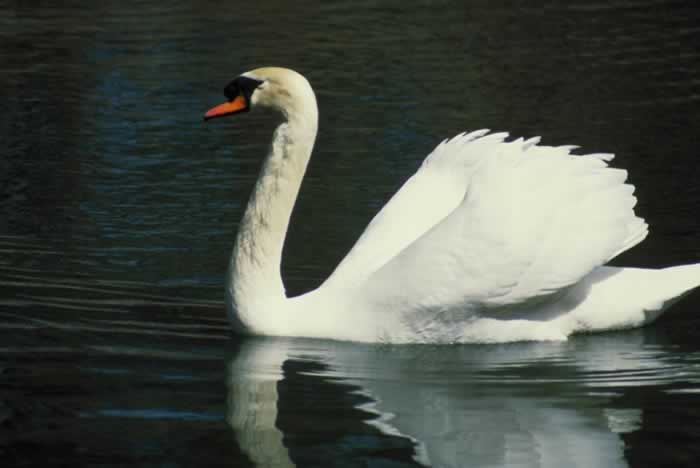
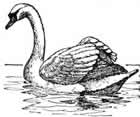
 The mute swan is 50-60 inches in length with a wingspan of about 82-94 inches. It is completely white and has a long, graceful neck; an orange bill with a
black knob at the base; a black face; and
black feet and legs. It has a pointed tail and lacy wing feathers. Males and females look alike, but the male is usually a little larger, and the
black knob at the base
of his bill is larger. The mute swan is 50-60 inches in length with a wingspan of about 82-94 inches. It is completely white and has a long, graceful neck; an orange bill with a
black knob at the base; a black face; and
black feet and legs. It has a pointed tail and lacy wing feathers. Males and females look alike, but the male is usually a little larger, and the
black knob at the base
of his bill is larger.
Range
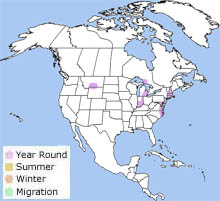 The mute swan is an exotic species that was introduced to North America when Europeans brought it over from Europe in the 19th century. It is now found in the wild on the Atlantic Coast from New Hampshire south to North Carolina and in the the Great Lakes region.
Mute swans are also found in Europe, Asia, and Africa. The mute swan is an exotic species that was introduced to North America when Europeans brought it over from Europe in the 19th century. It is now found in the wild on the Atlantic Coast from New Hampshire south to North Carolina and in the the Great Lakes region.
Mute swans are also found in Europe, Asia, and Africa.
Habitat
The mute swan
is found on
shallow ponds, estuaries, bogs, lakes, and
sheltered bays.
Diet
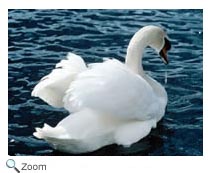 The mute swan plunges its long neck underwater to forage for aquatic plants. It also eats insects, fish, worms, and frogs. Mute swans also swallow gravel to help them digest their food! The mute swan plunges its long neck underwater to forage for aquatic plants. It also eats insects, fish, worms, and frogs. Mute swans also swallow gravel to help them digest their food!
|
|
|




 Least Concern